Is Great Britain A Country
The question of whether Great Britain is a country often arises due to the complex political and geographical distinctions within the United Kingdom. Many people use the terms Great Britain,” “United Kingdom,” and “England” interchangeably, which can lead to confusion. To understand if Great Britain is a country, it is important to examine its geography, political structure, and historical background. Great Britain is a significant landmass in northwestern Europe and has played a central role in global history, but its classification as a country depends on the perspective from which it is considered.
Geography of Great Britain
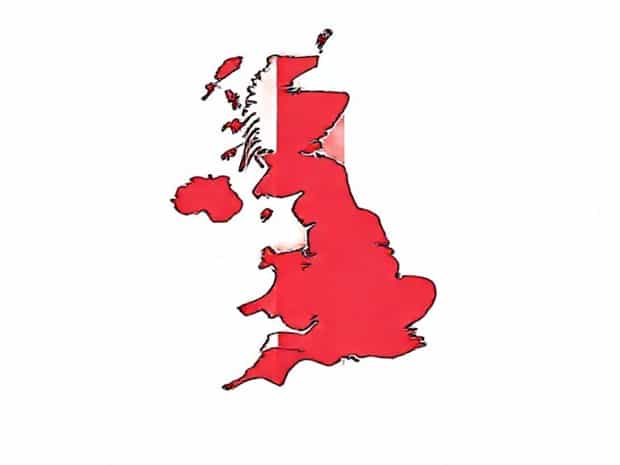
Great Britain is the largest island of the British Isles, situated to the northwest of mainland Europe. It comprises three constituent countries England, Scotland, and Wales. The island is surrounded by the Atlantic Ocean, the North Sea, the English Channel, and the Irish Sea. With a diverse landscape of mountains, plains, rivers, and coastlines, Great Britain has been shaped by natural processes over millions of years. Geographically, it is a single landmass, but politically, it is divided into separate entities, which complicates the question of whether it is a country.
Constituent Countries of Great Britain
- England The largest and most populous region, known for cities like London, Manchester, and Birmingham.
- Scotland Located in the northern part of Great Britain, famous for its highlands, lochs, and cultural heritage.
- Wales Positioned to the west, known for its mountains, coastal areas, and Welsh language.
Political Structure and the United Kingdom
Politically, Great Britain is not a sovereign state on its own. Instead, it forms the largest part of the United Kingdom of Great Britain and Northern Ireland (UK). The UK is a country recognized internationally and consists of four countries England, Scotland, Wales, and Northern Ireland. While the island of Great Britain contains three of these countries, Northern Ireland is located on the island of Ireland. The United Kingdom functions as a single sovereign state, with a central government in London, but each constituent country has varying degrees of administrative and legislative autonomy.
Devolved Governments
- Scotland Has its own parliament and government with powers over education, health, and justice.
- Wales Governed by the Senedd (Welsh Parliament), managing devolved responsibilities such as health and education.
- England Directly governed by the UK Parliament, with no separate parliament for England alone.
Historical Context
The term “Great Britain” has historical roots dating back to the early 18th century. In 1707, the Acts of Union joined the Kingdom of England (which included Wales) and the Kingdom of Scotland into the Kingdom of Great Britain. This political union marked the first official use of “Great Britain” as a recognized entity, but it was not a single country in the modern sense. Instead, it was a unified kingdom containing multiple nations. Later, in 1801, Ireland joined the union, forming the United Kingdom of Great Britain and Ireland, which eventually became the current UK after the partition of Ireland in 1921.
Significance of the Name
- Great Britain refers specifically to the island, not the entire United Kingdom.
- The United Kingdom is the internationally recognized sovereign state, including Northern Ireland.
- Historically, the term “Great Britain” emphasized the union of England and Scotland, with Wales included under England.
Common Misconceptions
Many people mistakenly call Great Britain a country because it is a major political and cultural entity. Maps and atlases sometimes label it as a single country, leading to confusion. Additionally, sports teams, such as the Olympic team representing Great Britain, reinforce the idea of Great Britain as a country. However, from a legal and political standpoint, the island itself is not a sovereign state. The United Kingdom, which includes Great Britain and Northern Ireland, is the country recognized under international law.
Key Distinctions
- Great Britain Geographical term for the island containing England, Scotland, and Wales.
- United Kingdom Sovereign state comprising Great Britain and Northern Ireland.
- England, Scotland, Wales, Northern Ireland Constituent countries within the UK, each with unique cultural identities.
Cultural Identity of Great Britain
Despite not being a country politically, Great Britain has a strong cultural identity. The island has been a center of literature, music, science, and political thought for centuries. Each constituent country contributes to the overall British identity, with shared history, language, and institutions. Festivals, traditions, and historical landmarks across England, Scotland, and Wales reinforce the sense of Great Britain as a unified cultural region, even if it is not a single country legally.
Tourism and International Perception
- Tourists often refer to visiting Great Britain, encompassing England, Scotland, and Wales.
- International media and organizations sometimes use the term Great Britain interchangeably with the UK.
- Sports teams, cultural events, and historical references highlight Great Britain as a recognizable entity.
Great Britain is not a country in the legal sense. It is the largest island in the British Isles, containing three countries England, Scotland, and Wales. Politically, it is part of the United Kingdom of Great Britain and Northern Ireland, which is the sovereign state recognized internationally. While Great Britain has a strong cultural and historical identity, its classification as a country is not accurate under modern political definitions. Understanding the distinctions between Great Britain, the United Kingdom, and its constituent countries is essential for clear communication and accurate representation. Recognizing these nuances helps explain why people sometimes mistakenly refer to Great Britain as a country while also appreciating its significance as a major cultural and geographical entity in Europe and the world.