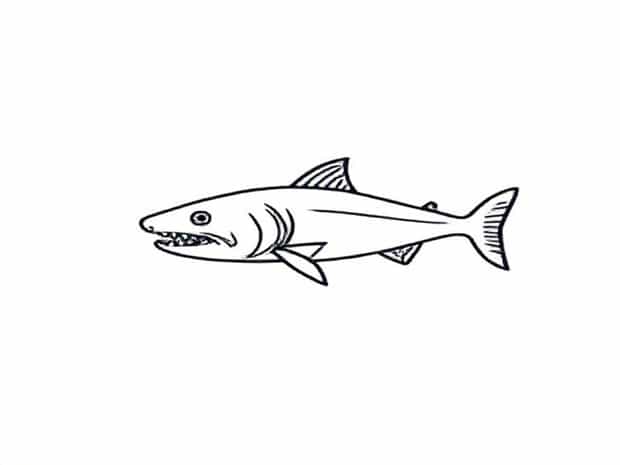
How To Draw A Piranha
Drawing a piranha can be an exciting and creative challenge for artists of all levels. These infamous freshwater fish are known for their sharp teeth, powerful jaws, and sleek, compact bodies. Capturing the essence of a piranha in a drawing requires attention to detail, understanding of its anatomy, and the ability to convey a sense of motion and aggression. Whether you want to create a realistic depiction for a biology project or a stylized version for illustration purposes, learning how to draw a piranha involves several essential steps that focus on shape, proportion, and texture.
Understanding the Piranha Anatomy
Before starting your drawing, it is important to study the basic anatomy of a piranha. Piranhas have a distinctive body shape, with a rounded, laterally compressed body that tapers toward the tail. Their head is relatively large, with a blunt snout and a strong jaw lined with sharp, triangular teeth. The eyes are usually small but expressive, often conveying alertness or aggression. Fins play a critical role in movement, with a dorsal fin located near the middle of the back, pectoral fins on either side, a small pelvic fin, and a forked tail fin for swift swimming. Understanding these features helps you create a believable and anatomically correct piranha illustration.
Materials Needed
Gathering the right materials can make the drawing process smoother and more enjoyable. Some essential materials include
- Pencils A range of pencils from HB to 4B is ideal for sketching and shading.
- Eraser A soft eraser helps correct mistakes and refine details.
- Paper Medium-weight sketch paper works well for both pencil and ink drawings.
- Optional coloring tools Colored pencils, watercolors, or markers can add depth and realism.
- Reference images Photos or illustrations of piranhas are helpful for studying details and proportions.
Step 1 Sketching Basic Shapes
Start your drawing by outlining the basic shapes of the piranha. Use an oval or egg-shaped figure for the main body and a smaller circle for the head if necessary. Draw a line through the center of the body to serve as a guideline for symmetry. Sketch simple shapes for the fins and tail to position them accurately before adding details. This initial sketch should be light and flexible, allowing you to adjust proportions as needed. Focusing on basic shapes helps create a solid foundation for the final drawing.
Step 2 Drawing the Head and Mouth
The head is one of the most critical aspects of a piranha drawing, as it conveys the fish’s aggressive nature. Refine the outline of the head, emphasizing a slightly rounded snout. Draw the mouth slightly open to show the sharp triangular teeth. Piranhas have strong jaws, so make the upper and lower jawlines thick and pronounced. Pay attention to the placement and size of the eyes, positioning them slightly above the midpoint of the head. Adding small details such as nostrils or subtle lines around the eyes can increase realism.
Step 3 Defining the Body and Fins
Next, refine the shape of the body by adding curves and contour lines to indicate the fish’s musculature and streamlined form. Sketch the dorsal fin along the back, tapering it to a point, and draw the pectoral fins on either side. The pelvic and anal fins should be drawn smaller but aligned to maintain anatomical accuracy. Finally, draw the forked tail fin, ensuring it is proportional to the body and angled to suggest movement. Dynamic fin placement can make the piranha appear as if it is swimming aggressively or turning quickly.
Step 4 Adding Texture and Scales
Piranhas have a scaly texture that can be represented with fine, repetitive strokes. Start with a light outline of the scales, following the curve of the body. You can use cross-hatching or stippling techniques to suggest texture and depth. Adding shading along the sides, under the belly, and around the fins helps create a three-dimensional effect. Remember to maintain the direction of light when shading to make the drawing appear more lifelike.
Step 5 Shading and Detailing Teeth
One of the most distinctive features of a piranha is its sharp teeth. Carefully draw each tooth in the upper and lower jaw, making them triangular and slightly curved. Teeth closer to the front should be larger, while those at the sides can be smaller. Use shading to add depth to the mouth and jaw, emphasizing the contrast between teeth and the interior of the mouth. Adding subtle shadows along the body and fins enhances the sense of volume and realism.
Step 6 Background and Environment
While optional, adding a background can enhance your drawing and provide context. Piranhas are freshwater fish commonly found in rivers and lakes, so sketching water, plants, or rocks can make the scene more engaging. Light pencil strokes or watercolor washes can suggest movement in the water, giving the impression that the piranha is actively swimming. Including bubbles or ripples around the fish can add energy and make the illustration more dynamic.
Step 7 Coloring and Finishing Touches
If you choose to add color, use reference images to select accurate tones. Piranhas often have silver or gray bodies with reddish or orange tints around the belly and fins. Layer colors gradually to create a natural gradient, and use darker shades to accentuate shadows and depth. Highlight areas that catch light, such as the top of the body and the edges of the fins, to make the fish appear three-dimensional. Finishing touches like tiny scratches, water droplets, or reflection effects can enhance realism.
Step 8 Tips for Success
- Start with light sketching and gradually refine details.
- Observe real-life or photographic references to understand anatomy and proportions.
- Focus on the piranha’s unique features teeth, fins, and muscular body.
- Experiment with different poses to make the drawing dynamic.
- Take breaks to review your work and adjust proportions if necessary.
Drawing a piranha combines artistic creativity with careful observation of the fish’s anatomy and behavior. By following steps such as sketching basic shapes, refining the head and fins, adding scales and texture, and applying shading or color, you can create a compelling and lifelike illustration. Practicing these techniques helps improve accuracy and style, allowing you to explore dynamic poses and expressive details. Whether for educational purposes, artistic projects, or personal enjoyment, learning how to draw a piranha provides a rewarding way to develop your skills while capturing the essence of one of the most fascinating and feared fish in freshwater habitats.