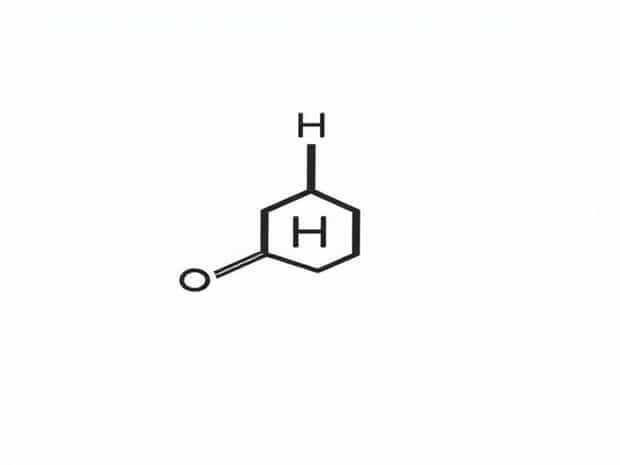
Draw The Structure Of Phenol
Phenol is an important organic compound widely studied in chemistry due to its unique properties and versatile applications. Its structure forms the basis for understanding reactivity in aromatic compounds and the behavior of hydroxyl groups attached to benzene rings. Learning to draw the structure of phenol accurately is essential for students, chemists, and researchers, as it serves as a foundation for studying electrophilic substitution reactions, hydrogen bonding, and acidity trends. Phenol’s structural representation helps visualize electron distribution, resonance effects, and the orientation of substituents, making it a critical concept in both academic and practical chemistry contexts.
Understanding the Structure of Phenol
Phenol is composed of a benzene ring, which is a six-membered carbon ring with alternating double and single bonds, and a hydroxyl group (-OH) attached directly to one of the carbon atoms in the ring. This hydroxyl group makes phenol an alcohol derivative, but its attachment to the aromatic system significantly alters its chemical behavior compared to aliphatic alcohols. The resonance effect in the benzene ring allows for delocalization of electrons, which stabilizes the phenoxide ion formed when phenol loses a proton (H+). This resonance stabilization contributes to the acidity of phenol, which is higher than typical alcohols.
Steps to Draw the Structure of Phenol
Drawing the structure of phenol requires understanding both the benzene ring geometry and the orientation of the hydroxyl group. The following steps guide the process
- Start by drawing a regular hexagon to represent the benzene ring. Each corner of the hexagon corresponds to a carbon atom in the aromatic ring.
- Indicate alternating double and single bonds inside the hexagon. This represents the resonance structure of benzene, though some chemists prefer drawing a circle in the center to symbolize delocalized electrons.
- Attach a hydroxyl group (-OH) to one of the carbon atoms on the ring. The position is often designated as carbon-1, and this carbon becomes the point of reference for naming other substituents in substituted phenols.
- Add hydrogen atoms to the remaining carbon atoms to complete the valency of carbon. Each carbon in the benzene ring forms three sigma bonds, leaving one electron for delocalization in the pi system.
Resonance and Electron Delocalization
The hydroxyl group in phenol participates in resonance with the benzene ring. The lone pair of electrons on the oxygen atom can delocalize into the ring, creating several resonance structures. This electron delocalization stabilizes the molecule and influences its reactivity, particularly in electrophilic substitution reactions. When drawing phenol, understanding resonance helps predict which positions on the ring are more reactive toward substitution, typically the ortho and para positions relative to the hydroxyl group.
Acidity and Phenoxide Ion Formation
The presence of the hydroxyl group directly attached to the aromatic ring increases the acidity of phenol compared to aliphatic alcohols. When phenol donates a proton (H+) from the hydroxyl group, it forms a phenoxide ion. The negative charge on the oxygen is delocalized throughout the benzene ring due to resonance, providing additional stability. This property is essential in organic synthesis and understanding reactions like nitration, halogenation, and sulfonation of phenols.
Nomenclature and Substituted Phenols
Drawing phenol accurately also requires knowledge of chemical nomenclature. The simplest form is called phenol, but when other substituents are attached to the benzene ring, their positions are indicated using ortho, meta, and para prefixes. For example, a methyl group attached adjacent to the hydroxyl group results in o-cresol, while a methyl group opposite the hydroxyl group results in p-cresol. Correctly representing the positions of substituents in the structural formula is crucial for communicating chemical information and predicting reactivity.
Practical Applications of Phenol Structure
Understanding and drawing the structure of phenol has practical implications in several fields
- PharmaceuticalsMany drugs, such as aspirin, are derivatives of phenol, where the hydroxyl group’s reactivity is essential for drug synthesis.
- Industrial ChemistryPhenol is a precursor for plastics, resins, and synthetic fibers. Knowledge of its structure allows chemists to manipulate it for desired products.
- Laboratory AnalysisStructural diagrams of phenol help in predicting reactions, interpreting spectra, and designing experiments in organic chemistry.
- Environmental ChemistryPhenol and its derivatives are common pollutants. Understanding their structure helps in devising methods for detection and removal.
Common Mistakes When Drawing Phenol
While drawing phenol seems straightforward, several mistakes can occur
- Omitting the hydroxyl group or placing it incorrectly on the ring.
- Failing to represent resonance or delocalized electrons correctly.
- Ignoring hydrogen atoms or valency rules on the carbon atoms.
- Confusing ortho, meta, and para positions in substituted phenols.
Tips for Accurate Representation
To avoid mistakes and ensure accurate structural diagrams of phenol
- Always start with the benzene ring and ensure proper geometry.
- Clearly indicate the hydroxyl group attachment and its position.
- Include hydrogen atoms or indicate them with a simplified notation where appropriate.
- Use resonance arrows if explaining electron delocalization in reactions.
Drawing the structure of phenol is a fundamental skill in organic chemistry that combines knowledge of aromatic systems, hydroxyl group chemistry, and electron delocalization. Phenol consists of a benzene ring with an attached hydroxyl group, and its unique structure dictates its chemical behavior, acidity, and reactivity. Understanding how to accurately represent phenol in diagrams is essential for students, chemists, and researchers working with aromatic compounds, pharmaceuticals, and industrial chemicals. Mastery of phenol’s structure also lays the foundation for studying substituted phenols, resonance effects, and various organic reactions, making it a cornerstone of chemical education and practical applications.