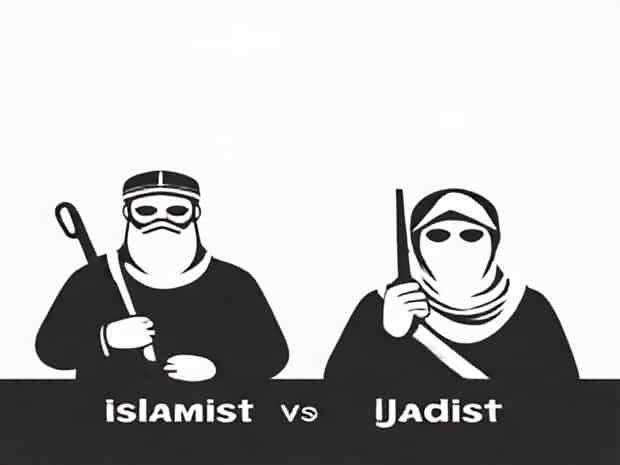
Difference Between Islamist And Jihadist
In today’s global discussions on politics and security, the terms Islamist and Jihadist are often used interchangeably, yet they carry distinct meanings and implications. Understanding the difference between these two concepts is crucial for analyzing current events, media reports, and scholarly debates on religion, extremism, and political movements. While both terms relate to Islam, they represent fundamentally different ideologies, objectives, and methods, and confusing them can lead to misinterpretation and oversimplification of complex issues.
Defining Islamism
Islamism refers to a political ideology that seeks to implement Islamic principles and laws within the framework of governance and society. Islamists believe that Islam should influence not only personal faith and religious practices but also public policy, legal systems, and social structures. The core idea of Islamism is that political governance should align with the ethical and moral teachings of Islam, as interpreted by its proponents.
Characteristics of Islamists
- Political FocusIslamists often engage in political activism, running for office, or advocating for legislation based on Islamic law.
- Varied ApproachesIslamism includes a spectrum ranging from moderate parties seeking reform through democratic means to more conservative movements advocating stricter implementation of Sharia law.
- Non-Violent StrategiesMany Islamists pursue goals through political participation, education, and social programs rather than armed conflict.
- Ideological DiversityIslamism encompasses multiple schools of thought, including Sunni and Shia interpretations, and is influenced by cultural and regional contexts.
Defining Jihadism
Jihadism, on the other hand, is a militant ideology that emphasizes the use of armed struggle to achieve religious or political goals. Jihadists interpret the concept of jihad, which in Islam can refer to spiritual struggle or self-improvement, as a call to violent action against perceived enemies of Islam. Unlike Islamists, who may focus on political engagement, jihadists prioritize militant methods, often targeting governments, civilians, or foreign powers.
Characteristics of Jihadists
- Militant OrientationJihadists typically resort to violence, terrorism, or insurgency to achieve their objectives.
- Extremist InterpretationJihadist ideology often relies on radical interpretations of Islamic texts to justify violence.
- Global and Local FocusWhile some jihadist groups pursue local or national objectives, others have transnational aims, seeking to influence or overthrow governments worldwide.
- Anti-Western or Anti-Establishment SentimentsJihadists frequently oppose Western influence, secular governments, and moderate Muslim leaders.
Key Differences Between Islamists and Jihadists
Despite occasional overlaps in rhetoric or ideology, the distinction between Islamists and jihadists is significant
1. Methods of Achieving Goals
Islamists primarily pursue political, social, and educational avenues to influence society, whereas jihadists rely on armed struggle, terrorism, and militant campaigns. Islamists may participate in elections and advocate policy changes, while jihadists often reject conventional political processes as insufficient or corrupt.
2. Ideological Scope
Islamism is a broad political ideology with varying degrees of conservatism or reformism, while jihadism is a narrower militant doctrine. Not all Islamists are violent, but all jihadists embrace the use of violence to advance their agenda.
3. Perception and Public Image
Islamists are generally seen as political actors within the Muslim world, engaging with society to promote Islamic principles. Jihadists, in contrast, are often labeled as extremists or terrorists due to their violent tactics and global impact, attracting international attention and counterterrorism measures.
4. Relation to Religious Texts
Islamists interpret Islamic teachings as a framework for governance and social order, emphasizing ethical, moral, and legal guidance. Jihadists interpret the same texts with an emphasis on violent struggle, focusing on what they consider religious duty to fight against enemies of Islam.
Examples and Contexts
Understanding these distinctions is easier with real-world examples. Political parties such as the Muslim Brotherhood in Egypt or Ennahda in Tunisia represent Islamism, advocating for the integration of Islamic principles within democratic frameworks. In contrast, groups like Al-Qaeda and ISIS exemplify jihadism, pursuing violent campaigns to impose their interpretation of Islamic law and challenge international systems.
Impact on Global Security
Islamists, especially moderate ones, contribute to political discourse and social reform in their countries. They often engage with international bodies, NGOs, and civil society. Jihadists, however, are associated with terrorism, armed insurgency, and destabilization, posing direct threats to global security. Recognizing this difference allows policymakers and security agencies to craft targeted responses, distinguishing between political engagement and violent extremism.
Common Misconceptions
One of the major misconceptions is that all Islamists are extremists or that all Muslims supporting political Islam are violent. Similarly, not all jihadists are part of large, organized terrorist networks; some may operate as small cells or lone actors. Clarifying the distinction helps prevent stereotyping and improves public understanding of complex socio-political dynamics.
Addressing Stereotypes
- Acknowledge the diversity within Islamic political movements.
- Differentiate between non-violent political activism and violent extremism.
- Promote nuanced media reporting that avoids conflating Islamism with jihadism.
In summary, the difference between Islamists and jihadists lies in their ideology, methods, and objectives. Islamists focus on integrating Islamic principles into governance and society, often through non-violent political and social means. Jihadists embrace militant strategies, using violence to achieve religious or political goals. Understanding this distinction is vital for accurate analysis of global events, informed policymaking, and responsible media reporting. By distinguishing between political Islam and violent extremism, societies can engage with diverse Islamic movements constructively while addressing the threat of jihadist violence effectively.