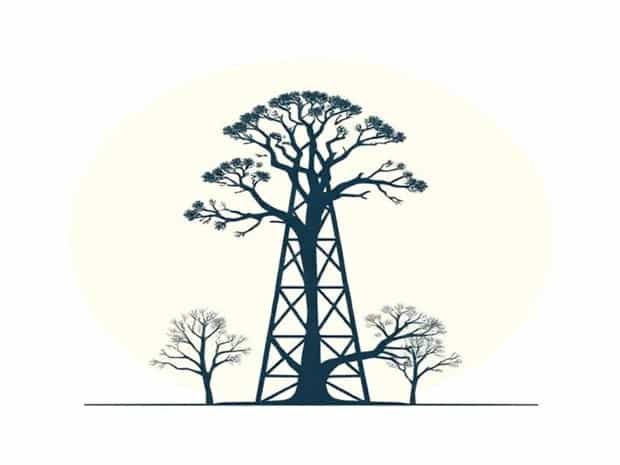
Cell Tower Disguised As Tree
In many cities and suburban areas, people may walk by a tall pine or palm tree without realizing that it is not a tree at all, but rather a cell tower disguised as tree. These camouflaged structures have become increasingly common as mobile networks expand and communities demand solutions that blend in with the natural landscape. Instead of large, industrial-looking towers, companies now build towers hidden inside artificial trees that appear less intrusive to the environment. This unique mix of technology and design raises important questions about aesthetics, urban planning, and how people connect to their mobile devices every day.
The Concept Behind Disguised Cell Towers
The idea of disguising a cell tower as a tree comes from the need to balance infrastructure development with community concerns. Traditional cell towers are often seen as unattractive and disruptive to scenic views. By creating a cell tower disguised as tree, network providers can hide technology in plain sight while still ensuring strong connectivity. These towers are especially popular in residential neighborhoods, tourist destinations, and areas with strict zoning laws that prioritize environmental appearance.
Why Communities Prefer Tree Towers
There are several reasons why disguised towers have become an appealing choice
- Aesthetic appealThey look more natural and less industrial than exposed steel towers.
- Regulatory approvalLocal governments may be more willing to approve hidden towers over visible ones.
- Property value protectionHomeowners often worry that large visible towers could affect real estate values, so a tree design reduces that impact.
- Public acceptanceCommunities are more likely to support infrastructure that fits in with local surroundings.
How Cell Towers Are Disguised as Trees
The process of creating a cell tower disguised as tree involves both engineering and artistry. The structure is typically built using steel poles, with branches and leaves made of synthetic materials attached to it. These materials are designed to resist weather conditions while maintaining the appearance of a natural tree. The antennas are carefully placed within the branches, where they remain hidden but still function efficiently.
Types of Artificial Trees Used
Different regions use different tree disguises depending on the local environment
- Pine treesPopular in suburban and mountain areas where evergreen trees are common.
- Palm treesOften seen in coastal or desert regions with natural palm growth.
- Oak or deciduous treesUsed in regions where broad-leaf trees are dominant.
The goal is to select a tree species that matches the surrounding landscape, making the tower blend in more effectively.
Advantages of Cell Towers Disguised as Trees
There are multiple benefits to using camouflaged towers beyond aesthetics
- Improved community relationsResidents may be more supportive when infrastructure does not clash with the environment.
- Reduced visual pollutionScenic areas remain beautiful and appealing to visitors.
- Support for growing connectivity needsMore towers are needed as demand for mobile data grows, and disguising them helps reduce resistance to installation.
- Long-term durabilityMany disguised towers are built with high-quality materials that last for years with minimal maintenance.
Challenges and Criticisms
While a cell tower disguised as tree offers benefits, there are also challenges and concerns associated with them
- CostDisguised towers are often more expensive to design and build compared to standard towers.
- MaintenanceArtificial branches and leaves can fade or degrade over time, requiring upkeep.
- Limited camouflageIn some cases, the fake trees still stand out, especially if they are much taller than the surrounding vegetation.
- Health debatesSome community members still raise concerns about radiation from cell towers, disguised or not.
Examples Around the World
Cell towers disguised as trees are found globally, from urban centers to remote tourist destinations. In the United States, they are common in suburban neighborhoods where residents want strong mobile coverage but dislike the look of metal towers. In Europe, disguised towers are often used in rural areas to protect historical landscapes. In Asia and the Middle East, palm tree disguises are popular in desert regions, blending in naturally with local vegetation.
Urban vs. Rural Applications
The location of these towers affects how they are designed
- Urban areasDisguised towers may be placed in parks or near highways to avoid clashing with city skylines.
- Rural areasThey are often integrated into forested zones where natural trees are abundant, making camouflage more convincing.
The Future of Disguised Cell Towers
As mobile technology evolves, the use of cell towers disguised as trees may expand further. With the rollout of 5G and future technologies, more towers are needed to handle the demand for high-speed data. Communities that value both connectivity and natural beauty may continue to push for camouflaged solutions.
Innovations in Tower Camouflage
Designers are experimenting with new materials and structures that make disguised towers more realistic. Advances in synthetic foliage help create towers that are nearly indistinguishable from real trees. Some companies are even working on towers disguised as streetlights, flagpoles, or church steeples, broadening the possibilities of hidden infrastructure.
Balancing Technology and Nature
The rise of cell towers disguised as trees shows the effort to balance technological progress with environmental aesthetics. While they are not a perfect solution, they demonstrate a creative compromise between modern connectivity needs and the desire to preserve natural views. Whether it’s a pine tower in the suburbs or a palm tower by the beach, these disguised structures are becoming part of the modern landscape without drawing too much attention.
A cell tower disguised as tree is more than just a clever design; it represents how society adapts technology to fit into existing environments. By blending essential infrastructure with the landscape, communities can enjoy reliable mobile service without sacrificing their natural surroundings. Although challenges such as cost and maintenance remain, the trend toward camouflaged towers highlights a growing recognition that technology should not only function well but also coexist harmoniously with nature.