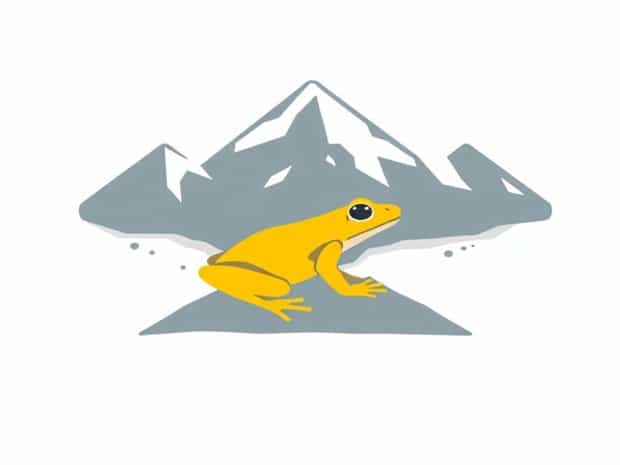
Mountain Yellow Legged Frog
The mountain yellow-legged frog is a unique amphibian species native to the high-elevation lakes, streams, and rivers of the Sierra Nevada and southern California mountains. Known for its bright yellow underside and distinctive calling patterns, this frog plays a crucial role in the ecosystems it inhabits. Over the past several decades, populations of the mountain yellow-legged frog have declined dramatically due to factors such as habitat loss, disease, and introduced predators. Understanding the biology, habitat, and conservation needs of this frog is essential for protecting not only the species but also the fragile alpine and subalpine ecosystems it supports.
Physical Characteristics
The mountain yellow-legged frog is a small to medium-sized amphibian, with adults typically ranging from 2 to 5 centimeters in length. One of its most distinguishing features is the bright yellow or orange coloration on its legs and belly, which contrasts with the brown or olive-gray dorsal surface. This coloration can serve as a warning to potential predators and also aids in camouflage among rocky streams and alpine vegetation. Their skin is smooth but can appear slightly rough or granular in some individuals, and they have relatively long hind limbs adapted for jumping and swimming in fast-flowing waters.
Coloration and Sexual Dimorphism
Both males and females exhibit yellow coloration, but males tend to have slightly darker dorsal markings and may develop nuptial pads on their forelimbs during the breeding season. These pads assist in gripping the female during amplexus, which is the mating embrace typical of frogs. Females are generally larger and more robust, reflecting their role in producing and carrying large numbers of eggs during the breeding season.
Habitat and Range
Mountain yellow-legged frogs are found exclusively in high-altitude habitats, often above 1,500 meters in elevation. They are highly dependent on cold, clear, and well-oxygenated streams, lakes, and ponds, often surrounded by granite boulders and sparse alpine vegetation. These habitats provide the necessary conditions for breeding, foraging, and shelter. Historically, the species was found throughout the Sierra Nevada mountains, but its range has become fragmented due to environmental pressures and human activity.
Environmental Requirements
- Cold, clear, and fast-flowing water bodies for breeding and development
- Rocky substrates for shelter and predator avoidance
- Subalpine and alpine vegetation providing food and cover
- High oxygen levels to support larval and adult metabolism
Diet and Feeding Behavior
The mountain yellow-legged frog is primarily carnivorous, feeding on a variety of aquatic and terrestrial invertebrates. Its diet includes insects, spiders, and other small arthropods, which it captures using a rapid tongue flick. Juvenile frogs tend to consume smaller prey such as microinvertebrates, while adults are capable of capturing larger insects and occasional small aquatic organisms. The frog’s foraging behavior is often opportunistic, and its activity is influenced by temperature, water availability, and seasonal changes.
Predation and Defense
Despite its small size, the mountain yellow-legged frog faces predation from a range of animals, including birds, snakes, and introduced fish species such as trout. Its yellow coloration may serve as a warning or camouflage in rocky habitats, and the frog can quickly leap into water to escape threats. Tadpoles also face predation and have evolved rapid swimming and hiding behaviors to avoid being eaten. The species’ decline has been exacerbated by predation from non-native species, which were introduced for recreational fishing in many alpine lakes.
Reproduction and Lifecycle
Breeding typically occurs during the late spring and summer months when snowmelt increases water flow in streams and lakes. Males produce a distinctive mating call to attract females, often calling from rocks or shallow water near breeding sites. Females lay clusters of eggs attached to submerged rocks or vegetation, which hatch into aquatic larvae known as tadpoles. The tadpoles undergo metamorphosis over several months, developing limbs and absorbing their tails before emerging as juvenile frogs. The species’ long larval period, often spanning one to three years depending on elevation and temperature, makes it particularly vulnerable to environmental changes and predation.
Challenges in Reproduction
- Variable water flow and temperature fluctuations can affect egg survival.
- Introduced fish species prey on eggs and tadpoles, reducing recruitment.
- Habitat fragmentation limits access to suitable breeding sites.
- Disease outbreaks, particularly chytridiomycosis, can decimate populations during breeding.
Threats and Conservation Status
The mountain yellow-legged frog is considered critically endangered, with populations declining by over 90% in some areas. Primary threats include habitat destruction, disease, introduced predators, climate change, and pollution. The chytrid fungus, Batrachochytrium dendrobatidis, has caused dramatic population declines worldwide and has severely impacted this species. Introduced fish, such as trout, prey on both eggs and tadpoles, further reducing reproductive success. Conservation efforts are underway to mitigate these threats and restore populations through habitat restoration, captive breeding, and reintroduction programs.
Conservation Efforts
- Removal of non-native fish from alpine lakes to reduce predation.
- Captive breeding programs to increase juvenile survival and reintroduce frogs into the wild.
- Monitoring and controlling the spread of chytrid fungus in high-altitude habitats.
- Habitat protection and restoration to maintain suitable water quality and shelter.
- Public education and outreach to promote awareness of the species’ plight.
Importance in Ecosystems
Mountain yellow-legged frogs play a key role in alpine and subalpine ecosystems. As both predators and prey, they help maintain invertebrate populations while providing food for higher-level predators. Tadpoles contribute to nutrient cycling in streams by grazing on algae and organic matter, which helps regulate primary productivity. The presence of these frogs is often an indicator of healthy, pristine aquatic ecosystems, making them an important species for monitoring environmental quality and biodiversity.
Ecological Indicators
- High sensitivity to pollution and water quality changes
- Indicator of intact alpine and subalpine ecosystems
- Reflects the impacts of climate change and human activity on freshwater habitats
- Supports broader ecological research and conservation planning
The mountain yellow-legged frog is a remarkable species with unique adaptations to high-altitude aquatic environments. Its bright coloration, specialized habitat requirements, and intricate lifecycle highlight the delicate balance of alpine ecosystems. Conservation of this frog is essential not only for preserving biodiversity but also for maintaining the health and integrity of mountain freshwater systems. Through dedicated conservation efforts, public awareness, and continued scientific research, there is hope that populations of the mountain yellow-legged frog can recover, ensuring that this iconic species continues to thrive in its native habitats for generations to come.