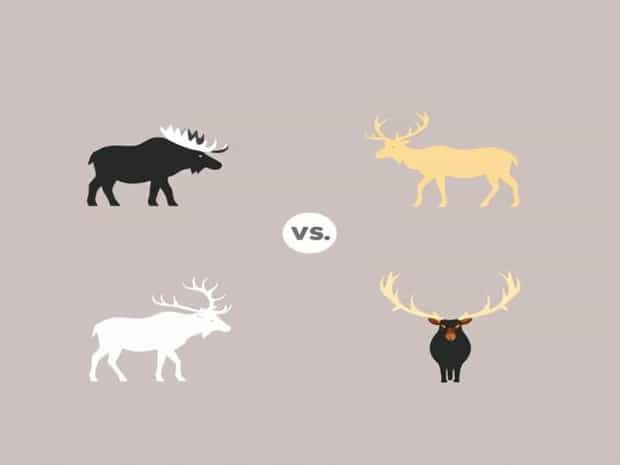
Moose Vs Caribou Vs Elk
Moose, caribou, and elk are three of the most iconic members of the deer family, found across North America and parts of Eurasia. While they share certain similarities, each species has unique characteristics that distinguish them in terms of size, behavior, habitat, and diet. Understanding the differences and similarities between these large herbivores is important for wildlife enthusiasts, hunters, and conservationists alike. Comparing moose, caribou, and elk allows us to appreciate their adaptations to different environments, their ecological roles, and their interactions with humans and other wildlife.
Physical Differences
One of the most obvious ways to differentiate moose, caribou, and elk is through their size and physical appearance. Each species has evolved features suited to their habitats and lifestyles.
Moose
Moose are the largest members of the deer family, with males, known as bulls, weighing between 800 and 1,500 pounds. They have long legs, a hump on their shoulders, and a distinctive elongated nose. Their large, palmate (broad and flat) antlers are one of their most recognizable features, though females do not have antlers. Moose are built for dense forests and wetlands, with long legs that allow them to wade through deep snow and water.
Caribou
Caribou, also known as reindeer in Eurasia, are generally smaller than moose but well-adapted for cold environments. Males weigh between 350 and 400 pounds, while females are smaller. Both sexes grow antlers, although the males’ are larger and more branched. Caribou have specialized hooves with sharp edges that help them travel across snow and ice, and their dense fur provides insulation against freezing temperatures. Their body shape is streamlined for long-distance migration.
Elk
Elk are intermediate in size, larger than caribou but smaller than moose. Bulls can weigh between 700 and 1,100 pounds. Elk have large, branching antlers, but unlike moose, their antlers are more pointed and cylindrical rather than broad and flat. Elk have muscular bodies and long legs, allowing them to inhabit a variety of environments from forests to open meadows. They have lighter fur compared to moose, usually reddish-brown in summer and darker in winter.
Behavioral Differences
The behavior of moose, caribou, and elk reflects their adaptations to different environments and lifestyles. Observing their daily activities and social structures helps highlight key distinctions.
Moose Behavior
Moose are mostly solitary animals except during the mating season, known as the rut. They are less social than caribou or elk and often maintain exclusive territories. Moose are also excellent swimmers and may spend a significant portion of their time in water to feed on aquatic vegetation. Their solitary nature makes them more elusive and less likely to form large groups.
Caribou Behavior
Caribou are highly social and known for their massive migratory herds, which can number in the tens of thousands. These migrations cover hundreds of miles each year, following seasonal patterns to access food and calving grounds. Caribou rely on coordinated group behavior for protection against predators such as wolves and bears. Their social structure is highly dynamic, with frequent changes in herd composition during migration.
Elk Behavior
Elk are social animals but less migratory than caribou. They form herds that vary in size depending on the season, with males often gathering harems during the rut. Elk communicate through vocalizations, such as bugling calls during mating season, to assert dominance and attract females. They are grazers, feeding mainly on grasses and shrubs, and often move between forested areas and open meadows.
Habitat and Distribution
The habitats of moose, caribou, and elk vary widely, influenced by climate, vegetation, and geography. Each species has adapted to survive in distinct ecological niches.
Moose Habitat
Moose are typically found in boreal forests, wetlands, and near rivers and lakes. They prefer areas with dense vegetation and water access, which provides both food and protection. Moose are primarily distributed across northern North America, including Canada, Alaska, and northern parts of the contiguous United States, as well as parts of northern Europe and Asia.
Caribou Habitat
Caribou are adapted to arctic and subarctic regions, including tundra and taiga ecosystems. They thrive in cold climates with seasonal variations, relying on lichens, mosses, and other tundra vegetation for food. Caribou populations are highly migratory, moving between wintering and calving grounds across vast distances in North America, Greenland, and northern Europe.
Elk Habitat
Elk inhabit diverse ecosystems ranging from forests and grasslands to mountainous regions. They are highly adaptable and can survive in a variety of climates, although they prefer areas with abundant grasses and shrubs for grazing. Elk are primarily found in western North America, including the Rocky Mountains, as well as parts of Europe and Asia.
Dietary Differences
Moose, caribou, and elk have distinct diets influenced by their habitat and physiology. Understanding their feeding habits highlights their ecological roles and adaptations.
Moose Diet
- Primarily browsers, feeding on shrubs, leaves, twigs, and aquatic vegetation.
- Favor willow, birch, and aspen during the growing season.
- Consume submerged plants in lakes and wetlands for nutrients.
- Diet varies seasonally depending on vegetation availability.
Caribou Diet
- Feed mainly on lichens in winter, supplemented by mosses, grasses, and shrubs in summer.
- Migration patterns are influenced by food availability across seasons.
- Specialized digestive systems allow them to extract nutrients from tough arctic plants.
- Diet is critical to support energy demands during long migrations.
Elk Diet
- Primarily grazers, feeding on grasses, forbs, and shrubs.
- Occasionally browse on trees and woody plants, especially in winter.
- Adaptable feeding habits allow them to exploit a range of habitats.
- Diet influences herd movement patterns and seasonal behavior.
Conservation Status
The conservation status of these species varies depending on habitat, human impact, and population trends. Efforts to protect their ecosystems are essential to maintain biodiversity and ecological balance.
Moose Conservation
Moose populations are generally stable but face threats from habitat loss, climate change, and disease. Conservation strategies focus on protecting wetlands and forested areas while monitoring population health.
Caribou Conservation
Caribou populations are declining in many regions due to habitat fragmentation, climate change, and human activity. Conservation measures include preserving migration corridors, reducing industrial development in sensitive areas, and monitoring herd health.
Elk Conservation
Elk populations have recovered in many areas due to conservation and reintroduction programs. They remain vulnerable to habitat loss and hunting pressures, and sustainable management practices are crucial to maintain healthy populations.
Moose, caribou, and elk are all members of the deer family, but they differ significantly in size, behavior, habitat, and diet. Moose are solitary giants adapted to wetlands and forests, caribou are migratory specialists of arctic and subarctic regions, and elk are social grazers found in diverse ecosystems. Understanding these differences helps in appreciating their ecological roles, managing wildlife populations, and conserving habitats. By studying moose, caribou, and elk, we gain insight into the diversity and adaptability of large herbivores, highlighting the importance of preserving these iconic species for future generations.