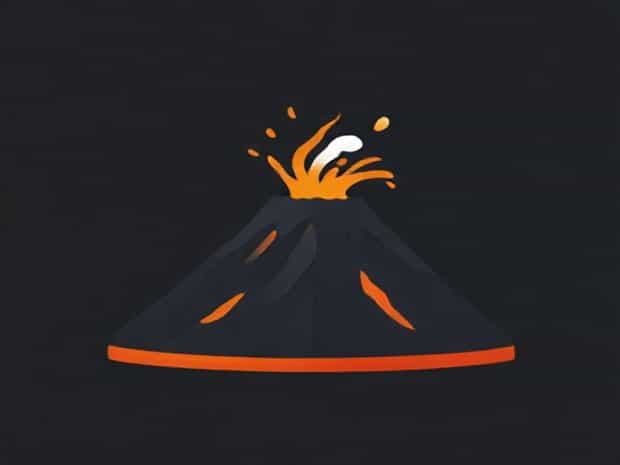
Model Of Volcanic Eruption
Volcanic eruptions are among the most powerful and fascinating natural phenomena on Earth, capable of reshaping landscapes and affecting climates over vast areas. Scientists have long studied these eruptions to understand their mechanisms and predict their behavior. One of the most important tools in this research is the development of models of volcanic eruption. These models help researchers simulate volcanic activity, analyze potential hazards, and educate the public about volcanic risks. By studying the different types of eruptions, magma properties, and eruption dynamics, volcanologists can create accurate representations that guide emergency planning and scientific exploration.
Understanding Volcanic Eruption Models
A model of volcanic eruption is a scientific or computational representation designed to mimic the behavior of an actual volcanic eruption. These models can be physical, mathematical, or computer-based, each offering unique insights into eruption processes. The primary goal of these models is to predict the flow of lava, ash dispersion, gas emissions, and potential impacts on the surrounding environment.
1. Physical Models
Physical models involve small-scale experiments that replicate volcanic activity in controlled laboratory settings. These models often use materials like sand, clay, and molten wax to simulate magma movement and eruption dynamics. Physical modeling allows researchers to observe the effects of pressure, gas content, and magma viscosity on eruption patterns. These experiments can be particularly helpful for visualizing lava flow, pyroclastic density currents, and ash plume behavior.
2. Mathematical Models
Mathematical models use equations to represent the physical and chemical processes occurring during a volcanic eruption. These models consider factors such as magma viscosity, gas content, pressure changes, and heat transfer. By solving complex equations, scientists can estimate eruption intensity, lava flow paths, and the likelihood of explosive events. Mathematical models are often combined with observational data from past eruptions to increase their accuracy.
3. Computational Models
Computational models employ advanced software to simulate volcanic eruptions on a computer. These models can integrate data from geological surveys, satellite imagery, and seismic monitoring to produce realistic scenarios. Computational modeling is particularly useful for predicting the impact of eruptions on populated areas and infrastructure. High-resolution simulations can model ash dispersion over thousands of kilometers, helping authorities plan evacuations and emergency responses.
Key Factors in Volcanic Eruption Modeling
Several critical factors influence how volcanic eruption models are designed and interpreted. Understanding these variables is essential for creating accurate and reliable predictions.
1. Magma Composition
The chemical composition of magma affects its viscosity, gas content, and potential for explosive activity. Basaltic magma, which is low in silica, tends to produce fluid lava flows, while rhyolitic magma, rich in silica, can generate highly explosive eruptions. Models take magma composition into account to predict eruption style, flow rate, and ash production.
2. Gas Content
Volcanic gases, including water vapor, carbon dioxide, and sulfur dioxide, play a crucial role in driving eruptions. High gas content increases pressure within the magma chamber, often leading to explosive eruptions. Models simulate the escape and expansion of gases to determine eruption intensity and the likelihood of pyroclastic flows.
3. Pressure and Temperature
The pressure inside a volcano and the temperature of magma are vital parameters in eruption modeling. Rising magma experiences decreasing pressure, causing dissolved gases to exsolve and create bubbles. This process, known as degassing, can trigger explosive activity. Temperature influences magma viscosity and flow behavior, both of which are key to accurate predictions.
4. Topography and Environmental Factors
The shape of the volcanic cone, surrounding terrain, and local climate conditions affect lava flow paths and ash dispersion. Models incorporate topographical data to simulate how lava and pyroclastic materials will move across the landscape. Weather patterns, wind speed, and rainfall can also influence the spread of volcanic ash and gases.
Types of Volcanic Eruption Models
Volcanologists use different types of models to study various eruption scenarios. Each type provides unique insights into the behavior of volcanoes and potential hazards.
1. Lava Flow Models
Lava flow models simulate the movement of molten rock from the volcano vent across the landscape. These models predict flow speed, direction, and thickness, helping authorities plan evacuation routes and risk zones. Factors like slope angle, lava viscosity, and cooling rate are essential inputs for these models.
2. Ash Dispersion Models
Ash dispersion models focus on predicting the spread of volcanic ash in the atmosphere. They account for wind patterns, eruption column height, and ptopic size. Accurate ash modeling is crucial for aviation safety, public health, and agriculture, as ash can disrupt air travel, contaminate water supplies, and damage crops.
3. Pyroclastic Flow Models
Pyroclastic flows are fast-moving, high-temperature currents of gas, ash, and rock fragments that can devastate areas near a volcano. Models of pyroclastic flows help predict their speed, temperature, and path, providing essential information for hazard mapping and emergency response planning.
4. Gas Emission Models
Gas emission models simulate the release of volcanic gases such as sulfur dioxide and carbon dioxide. Monitoring gas emissions is vital for predicting eruptions, as sudden increases often precede explosive activity. These models also assess the environmental and health impacts of volcanic gases on surrounding communities.
Applications of Volcanic Eruption Models
Volcanic eruption models have a wide range of applications in both scientific research and public safety.
- Hazard assessment and risk mapping for communities near active volcanoes.
- Emergency planning and evacuation strategies based on predicted lava flow and ash distribution.
- Education and training for volcanologists, emergency responders, and the public.
- Climate studies, as large eruptions can influence global temperatures and weather patterns.
- Urban and infrastructure planning to minimize damage from future eruptions.
Challenges in Volcanic Eruption Modeling
Despite advancements in technology, modeling volcanic eruptions remains challenging due to the complex and unpredictable nature of volcanic processes. Variability in magma composition, eruption triggers, and environmental factors can lead to significant uncertainties. Continuous monitoring, data collection, and refinement of models are necessary to improve their reliability and accuracy.
1. Data Limitations
High-quality data on subsurface magma chambers and eruption dynamics are difficult to obtain. Limited data can reduce the accuracy of both mathematical and computational models.
2. Complexity of Natural Systems
Volcanoes are highly dynamic systems influenced by geology, hydrology, and atmospheric conditions. Modeling all these factors simultaneously is complex and computationally intensive.
3. Predictive Uncertainty
Even the most sophisticated models cannot predict the exact timing or magnitude of an eruption. Models are better suited for estimating probabilities and potential impact areas rather than providing precise forecasts.
Models of volcanic eruption are essential tools for understanding and mitigating the risks associated with volcanic activity. By simulating lava flows, ash dispersion, pyroclastic currents, and gas emissions, these models provide valuable insights for scientists, emergency planners, and communities living near active volcanoes. Despite the challenges of complexity and data limitations, continuous improvements in computational power, data collection, and experimental methods are making volcanic eruption models increasingly accurate and reliable. Ultimately, these models help protect lives, reduce economic losses, and enhance our understanding of one of nature’s most dramatic phenomena.