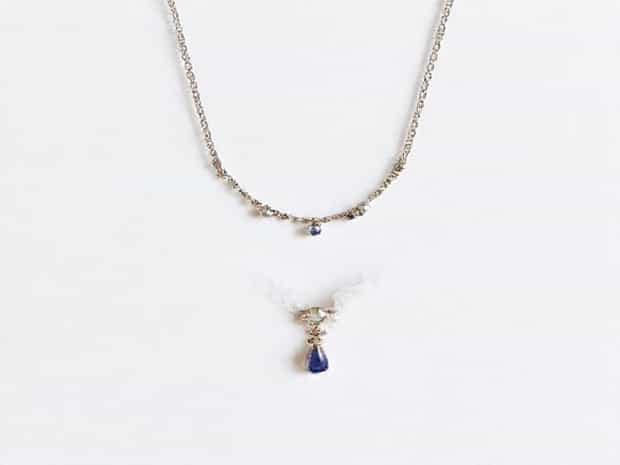
Marie Antoinette Stomacher Necklace
Among the treasures of European history, few pieces of jewelry carry as much allure as the Marie Antoinette stomacher necklace. This extravagant jewel was not merely an accessory but a statement of power, wealth, and the elaborate fashion of 18th-century France. Adorned with diamonds and intricate craftsmanship, the stomacher necklace reflected the queen’s taste for opulence and her role in setting trends at the royal court. Even today, its history sparks fascination among historians, collectors, and enthusiasts of fine jewelry, as it represents both the glamour and the controversies tied to Marie Antoinette’s reign.
The Significance of Stomachers in 18th-Century Fashion
In the 1700s, a stomacher was an important part of women’s court dress. Positioned at the front of the bodice, it served as a decorative panel that could be richly embroidered or encrusted with jewels. When crafted with precious stones, the stomacher became more than clothing it turned into a magnificent jewel that symbolized aristocratic wealth and prestige. For Marie Antoinette, the stomacher necklace embodied both fashion and political power, showcasing her position as queen of France and one of the most influential women of her time.
Marie Antoinette’s Love for Jewelry
Marie Antoinette was known for her passion for extravagant fashion and jewels. She worked closely with jewelers who supplied her with diamonds, pearls, and other precious gems. The stomacher necklace, often composed of numerous large diamonds arranged in complex patterns, reflected her desire to impress both the French court and foreign dignitaries. While critics accused her of indulgence, her jewelry choices helped set styles that would influence European fashion for decades.
Design and Craftsmanship of the Stomacher Necklace
The Marie Antoinette stomacher necklace was not a single piece but a series of detachable jewels that could be worn together or separately. This modular design made it versatile, allowing the queen to adapt it for different occasions. The craftsmanship was extraordinary, with diamonds arranged in cascading designs that sparkled under candlelight at royal events. Jewelers of the time used innovative techniques to maximize brilliance, making the stomacher necklace a masterpiece of artistry as much as luxury.
Key Characteristics
- Lavish use of diamonds, often in multiple shapes and sizes
- Symmetrical designs with floral and ribbon motifs
- Detachable sections for flexibility in wear
- Large size to cover much of the bodice, creating dramatic effect
The Role of the Necklace in Royal Image
For Marie Antoinette, jewelry was not only personal adornment but also a political tool. At court, every detail of the queen’s appearance was scrutinized, and the stomacher necklace communicated authority and magnificence. By wearing such jewels, she reinforced her position as a fashion leader while projecting the grandeur of the monarchy. However, these same displays of wealth also contributed to her reputation as a symbol of excess during a time of growing unrest in France.
The Diamond Necklace Affair
When discussing Marie Antoinette and jewelry, one cannot ignore the infamous Diamond Necklace Affair of the 1780s. Although the stomacher necklace itself was separate from this scandal, the association of diamonds with the queen played a role in shaping public perception. The affair involved a fraudulent purchase of a massive diamond necklace, and though Marie Antoinette was innocent, she was falsely implicated. This scandal damaged her reputation, fueling resentment against her perceived extravagance. As a result, even magnificent jewels like her stomacher necklace became linked with controversy in the eyes of the public.
Fate of the Marie Antoinette Stomacher Necklace
After the French Revolution, much of the queen’s jewelry was confiscated, dispersed, or sold. Some pieces resurfaced in collections, while others vanished into private hands. The stomacher necklace, like many of her jewels, was broken apart, with diamonds reused or reset in new designs. While the original arrangement no longer exists in its entirety, historical records and surviving gems remind us of its former splendor. Today, fragments of jewels once belonging to Marie Antoinette can be found in museums or private collections, continuing to captivate admirers of royal history.
Symbolism of the Stomacher Necklace
The stomacher necklace carries layers of symbolism. To contemporaries, it was a dazzling display of royal wealth and the artistry of French jewelers. To later generations, it became a reminder of the queen’s lavish lifestyle, often contrasted with the struggles of ordinary citizens. Modern historians view it as a complex artifact both a fashion masterpiece and a symbol of the social tensions that ultimately led to revolution.
Influence on Modern Jewelry
Although stomacher necklaces are no longer part of everyday fashion, their influence can still be seen in modern jewelry design. Large statement necklaces, chandelier earrings, and detachable jewels draw inspiration from the boldness of 18th-century adornments. Designers today sometimes recreate stomacher-style pieces for haute couture fashion shows or special exhibitions, paying tribute to the grandeur of Marie Antoinette’s era.
Modern Interpretations
- Statement necklaces inspired by cascading diamond designs
- High jewelry collections referencing 18th-century motifs
- Bridal jewelry incorporating detachable elements for versatility
Why the Stomacher Necklace Still Fascinates
Centuries after her death, Marie Antoinette remains one of the most iconic figures in European history. Her stomacher necklace fascinates because it embodies the contradictions of her life beauty and extravagance alongside political turmoil and eventual tragedy. The piece is a window into the opulent world of Versailles and the artistry of French jewelers, as well as a reminder of the fragility of power and reputation. Collectors and historians continue to study such jewels not only for their craftsmanship but also for their role in shaping cultural memory.
Collecting and Preserving Royal Jewelry
Surviving jewels linked to Marie Antoinette are considered treasures of immense historical and financial value. Auction houses, museums, and private collectors compete for these rare items whenever they surface. Preservation is key, as such jewels require expert care to maintain their brilliance over centuries. The stomacher necklace, though largely lost as a complete piece, still lives on through its surviving elements, archival sketches, and written descriptions.
The Marie Antoinette stomacher necklace stands as one of the most fascinating jewels in history, blending artistry, opulence, and political symbolism. It highlighted the queen’s role as a fashion icon while also fueling her image of extravagance during turbulent times. Although the original piece has been dismantled, its legacy endures through records, surviving diamonds, and its influence on jewelry design. The stomacher necklace remains a testament to the power of adornment, reminding us that jewelry can hold meaning far beyond its sparkle.