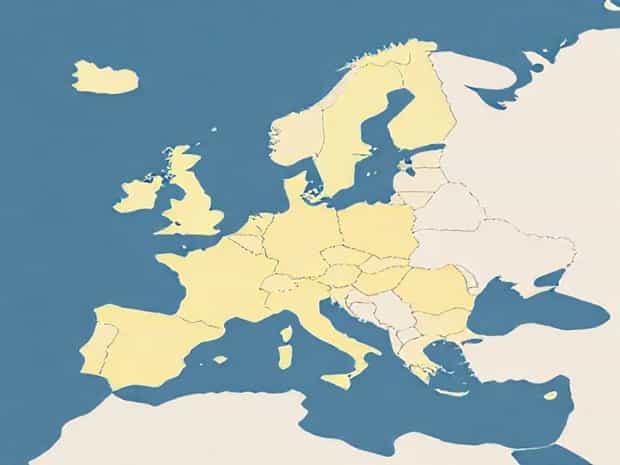
Map Of Western Europe
A map of Western Europe provides a comprehensive view of one of the most historically, culturally, and economically significant regions in the world. Western Europe is renowned for its rich heritage, diverse landscapes, and influential nations that have shaped global history, trade, and politics. By examining a map, one can understand the spatial relationships between countries, major cities, rivers, mountains, and coastlines, as well as transportation networks and economic hubs. Such maps are essential for travelers, students, researchers, and policymakers to navigate and appreciate the complexity of the region.
Geographical Overview of Western Europe
Western Europe typically includes countries such as France, Germany, the Netherlands, Belgium, Luxembourg, Switzerland, Austria, and sometimes Spain, Portugal, and the British Isles. The region is characterized by a mix of coastal plains, river valleys, mountain ranges, and fertile agricultural areas. Maps illustrate these geographical features, showing how natural landscapes influence settlement patterns, infrastructure development, and cultural regions. From the Pyrenees in the southwest to the Alps in the east, Western Europe’s topography is diverse and offers insight into both historical and modern human activity.
Major Countries and Capitals
- France – Paris A central hub for culture, politics, and commerce.
- Germany – Berlin Known for its historical landmarks and economic power.
- Belgium – Brussels Headquarters of the European Union and NATO.
- Netherlands – Amsterdam Famous for canals, trade, and cultural heritage.
- Switzerland – Bern Known for its mountains, neutrality, and banking industry.
- Austria – Vienna A cultural center with a rich history in music and art.
- Luxembourg – Luxembourg City A small but economically significant nation.
- United Kingdom – London A global financial and cultural capital.
Maps highlight the relative positions of these countries, showing international borders, major transportation routes, and proximity to seas and oceans such as the North Sea, Atlantic Ocean, and Mediterranean Sea.
Topographical Features
Western Europe’s landscape is diverse, encompassing mountains, rivers, forests, and plains. The Alps, Pyrenees, and Jura Mountains dominate the southern and eastern parts, while rolling plains stretch across France, Belgium, and the Netherlands. Rivers such as the Rhine, Seine, Danube, and Thames are essential for transportation, agriculture, and industry. Maps help visualize these topographical features, providing context for understanding historical settlement patterns and economic development.
Key Mountain Ranges and Rivers
- The Alps Spanning France, Switzerland, Austria, and Germany, important for tourism and alpine sports.
- The Pyrenees Form a natural border between Spain and France, rich in biodiversity.
- The Rhine River Vital for commerce and transportation, connecting industrial regions in Germany, the Netherlands, and Switzerland.
- The Seine River Central to Paris and French trade historically and today.
- The Danube River Flows through Austria, connecting Central and Eastern Europe.
- The Thames River Runs through London, essential for trade and urban development.
Economic and Urban Centers
Maps of Western Europe showcase the concentration of major economic hubs. Cities such as Paris, London, Frankfurt, Amsterdam, and Zurich are highlighted as centers of finance, industry, and culture. The region benefits from high connectivity through highways, railways, ports, and airports, which are often represented on detailed maps. Understanding the location of these urban and economic centers helps in planning travel, trade, or study of demographic trends and economic activities.
Major Cities and Their Significance
- Paris Fashion, culture, political significance, and tourism.
- London Global finance, commerce, cultural diversity, and historical heritage.
- Frankfurt Financial hub, European Central Bank headquarters.
- Amsterdam Trade, culture, and innovative infrastructure.
- Zurich Banking and finance center, tourism, and high quality of life.
- Vienna Cultural hub, historic architecture, and music heritage.
Cultural and Historical Highlights
Western Europe is rich in history, which is reflected in its cities, monuments, and landscapes. Maps often indicate UNESCO World Heritage sites, museums, and historically significant areas. From medieval castles and cathedrals to modern architectural landmarks, understanding the geography helps contextualize the cultural and historical development of the region. The spatial arrangement of heritage sites along rivers, coasts, and trade routes highlights how geography has shaped civilization.
Important Cultural Sites
- Notre-Dame Cathedral in Paris Gothic architecture and historical significance.
- Cologne Cathedral in Germany Religious landmark and tourism icon.
- Anne Frank House in Amsterdam Reflecting historical events of the 20th century.
- Palace of Versailles Symbol of French monarchy and cultural history.
- Edinburgh Castle Scotland’s historical stronghold and tourist attraction.
Transportation and Connectivity
Maps of Western Europe show extensive transportation networks, including highways, railways, airports, and seaports. The region’s infrastructure supports both domestic and international travel, enhancing economic and cultural exchange. High-speed trains such as the TGV in France, Eurostar connecting London and Paris, and the German ICE trains facilitate efficient travel. Major airports, including Heathrow, Charles de Gaulle, and Frankfurt, link Western Europe to global destinations.
Transport Infrastructure Highlights
- Highways Dense networks connecting urban and rural areas.
- Railways High-speed and regional trains supporting commerce and tourism.
- Airports Major international hubs in London, Paris, Frankfurt, and Amsterdam.
- Ports Rotterdam, Hamburg, and Antwerp serve as major European maritime gateways.
Tourism and Natural Attractions
Western Europe offers diverse tourist attractions, from historical cities to natural landscapes. Coastal areas along the Mediterranean, Atlantic, and North Sea provide beaches and marine tourism opportunities. Mountain ranges like the Alps and Pyrenees offer skiing, hiking, and adventure tourism. Maps help tourists identify these attractions, plan travel routes, and access accommodations and local services. They also illustrate protected areas, national parks, and scenic regions that are essential for sustainable tourism development.
Tourist Destinations
- French Riviera Coastal tourism, luxury resorts, and Mediterranean climate.
- Swiss Alps Skiing, mountaineering, and eco-tourism.
- Italian and French countryside Vineyards, cultural heritage, and gastronomy.
- Amsterdam canals and historic districts Cultural tourism and city exploration.
- London and Edinburgh Historical and modern urban attractions.
A map of Western Europe provides far more than just geographic information; it represents the interplay between culture, economy, history, and natural landscapes. By illustrating the location of countries, cities, rivers, mountains, and infrastructure, maps help residents, travelers, and researchers gain a deeper understanding of the region. They reveal the distribution of urban centers, transport networks, tourist sites, and economic zones, allowing for informed decisions and enriched experiences. Understanding Western Europe through mapping offers valuable insights into its historical significance, modern connectivity, and diverse natural and cultural landscapes, making it an indispensable tool for exploration and planning.