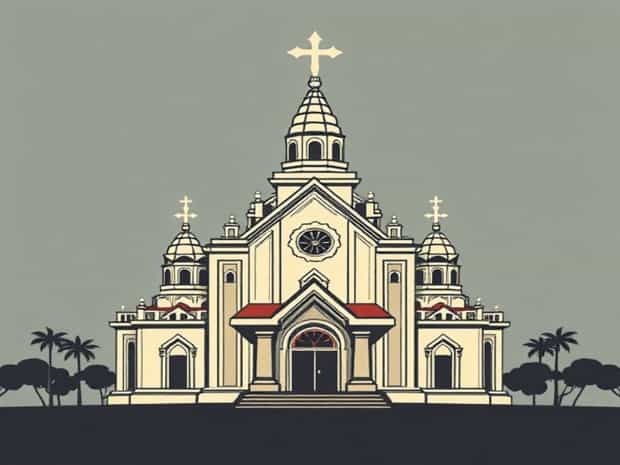
Major Archiepiscopal Churches In Kerala
Kerala, often called the land of spices and backwaters, is also a land with a rich Christian heritage. Among the unique features of Christianity in Kerala are the major archiepiscopal churches that hold an important place in both the global Catholic Church and the cultural identity of the state. These churches trace their origins back centuries, often connecting to the traditions of St. Thomas the Apostle, who is believed to have brought Christianity to India in the first century. Understanding the role of major archiepiscopal churches in Kerala gives insight into their history, hierarchy, and ongoing contributions to the faithful and society at large.
Understanding Major Archiepiscopal Churches
A major archiepiscopal church is a particular church in the Catholic communion that is self-governing, similar to an Eastern Catholic patriarchal church but without the patriarchal title. These churches are led by a major archbishop, who has authority over liturgical, administrative, and pastoral matters, subject to communion with the Pope in Rome. In Kerala, two Eastern Catholic churches have major archiepiscopal status the Syro-Malabar Catholic Church and the Syro-Malankara Catholic Church. Both are in full communion with the Holy See but preserve their own ancient liturgical traditions, languages, and customs.
The Significance of Eastern Catholicism in Kerala
Kerala is home to one of the largest concentrations of Eastern Catholics in the world. The existence of major archiepiscopal churches in Kerala highlights the diversity within Catholicism and the strong heritage of Christianity in India. These churches are living examples of how local traditions and ancient liturgical practices can thrive within the universal Catholic communion. Their presence also contributes to ecumenical dialogue and cultural harmony in a region marked by religious pluralism.
The Syro-Malabar Catholic Church
The Syro-Malabar Church is one of the largest Eastern Catholic churches and the biggest major archiepiscopal church in Kerala. It follows the East Syriac liturgical tradition, often called the Chaldean rite. Its origins are traced back to the early Christian communities founded by St. Thomas the Apostle. Over centuries, this church developed a unique identity that blends Indian culture with Eastern Christian liturgy.
Leadership and Structure
The Syro-Malabar Catholic Church is led by the Major Archbishop of Ernakulam-Angamaly, who is considered the head of the entire church. The Synod of Bishops plays a central role in governance, with decisions covering liturgical matters, appointments, and missionary work. This structure allows the church to maintain autonomy while remaining in communion with Rome.
Liturgy and Spiritual Life
The liturgy of the Syro-Malabar Church is rich in symbolism, prayers, and ancient chants. Conducted in Malayalam, Syriac, or English depending on the context, the liturgy emphasizes the Eucharist as the heart of Christian life. The preservation of the East Syriac tradition, along with adaptations for modern times, makes the worship experience deeply spiritual and culturally rooted.
Missionary and Social Contributions
The Syro-Malabar Catholic Church has an extensive network of parishes, schools, hospitals, and charitable institutions. Its contributions to education and healthcare in Kerala and beyond are remarkable. Many missionary priests and nuns from this church serve across India and abroad, strengthening its global presence. This outreach reflects the missionary zeal that has always been a part of Kerala’s Christian identity.
The Syro-Malankara Catholic Church
The Syro-Malankara Catholic Church is another major archiepiscopal church in Kerala, formed through the reunion of a group of Malankara Christians with the Catholic Church in 1930. It follows the West Syriac liturgical tradition and has its own distinctive customs and theology. While younger than the Syro-Malabar Church in terms of union with Rome, it has grown rapidly in influence and community strength.
Historical Background
The Malankara Church traces its roots to the same apostolic beginnings as the Syro-Malabar Church but developed along the West Syriac liturgical line after historical events and connections with the Antiochian tradition. The reunion with the Catholic Church, led by Archbishop Mar Ivanios in 1930, gave birth to the Syro-Malankara Catholic Church. Its recognition as a major archiepiscopal church underscores its importance within the Catholic communion.
Governance and Leadership
The Syro-Malankara Catholic Church is headed by the Major Archbishop-Catholicos of Trivandrum, who oversees both liturgical and administrative matters. The Synod of Bishops provides collective decision-making, ensuring that the church maintains its unity and traditions while addressing contemporary challenges.
Liturgy and Cultural Identity
The West Syriac liturgy of the Syro-Malankara Church is distinct, featuring elaborate prayers, incense, and rich symbolism. The liturgical language often includes Malayalam and Syriac, offering a blend of accessibility and tradition. This worship style reflects the spiritual depth of the community and its efforts to preserve its cultural heritage while engaging with modern realities.
Shared Contributions of Major Archiepiscopal Churches
Though distinct in liturgical traditions and historical development, both the Syro-Malabar and Syro-Malankara Catholic Churches share a commitment to evangelisation, education, and social service. Their presence in Kerala is not only religious but also cultural, contributing significantly to the social fabric of the state.
- EducationBoth churches run schools, colleges, and universities that serve people from all communities.
- HealthcareHospitals and clinics managed by these churches provide medical care to thousands every year.
- Charitable WorkOrphanages, homes for the elderly, and social welfare programs are part of their mission.
- Global PresencePriests, nuns, and lay missionaries from Kerala serve in many parts of the world, strengthening the global Catholic community.
The Role of Major Archiepiscopal Churches in Modern Kerala
Today, the major archiepiscopal churches in Kerala play a vital role in addressing contemporary challenges. Secularization, migration, and interfaith dialogue are issues that shape the religious landscape. These churches offer a strong sense of identity and belonging for the faithful while encouraging engagement with society at large. Their ability to combine tradition with innovation ensures that they remain relevant in modern Kerala.
Interfaith Dialogue
Kerala is known for its religious diversity, with Hindus, Muslims, and Christians living side by side. The major archiepiscopal churches actively participate in interfaith dialogue, promoting harmony and cooperation. This approach is vital in maintaining peace and mutual respect in a pluralistic society.
Preservation of Heritage
By maintaining ancient liturgical traditions, languages, and cultural practices, these churches preserve a heritage that is not only religious but also historical. This heritage attracts researchers, historians, and visitors interested in understanding the deep Christian roots of Kerala.
The major archiepiscopal churches in Kerala, namely the Syro-Malabar Catholic Church and the Syro-Malankara Catholic Church, are living symbols of faith, tradition, and service. Their unique identities, rooted in ancient apostolic traditions, make them central to the Catholic Church in India and influential in the global Catholic world. Through their liturgy, leadership, and contributions to society, they continue to shape the spiritual and cultural landscape of Kerala. These churches stand as testaments to the enduring presence of Christianity in India and its ability to thrive in harmony with diverse traditions.