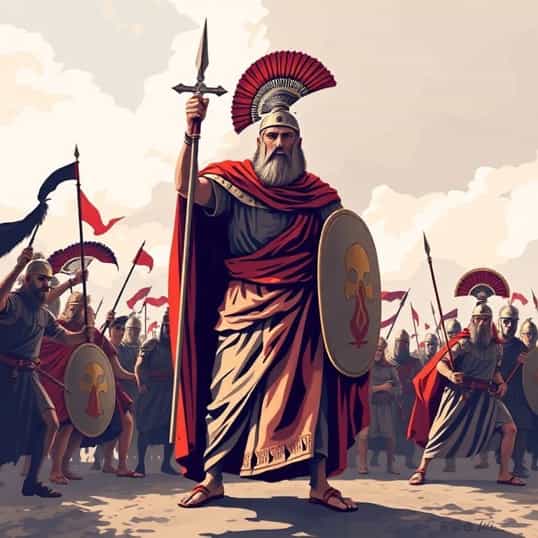
Leader Of Rome During Punic Wars
The Punic Wars were a series of three monumental conflicts between Rome and Carthage that shaped the course of ancient history. These wars, spanning from 264 BCE to 146 BCE, involved massive military campaigns, strategic innovations, and influential leaders whose decisions determined the fates of empires. The leadership of Rome during these conflicts was pivotal in securing victories against Carthage, despite facing formidable generals like Hannibal. Understanding who led Rome during the Punic Wars offers insight into Roman politics, military strategy, and the qualities that enabled Rome to expand its influence across the Mediterranean world.
Overview of the Punic Wars
The Punic Wars consisted of three separate conflicts
- First Punic War (264-241 BCE)Primarily a naval war for control of Sicily.
- Second Punic War (218-201 BCE)Marked by Hannibal’s daring campaigns across the Alps into Italy.
- Third Punic War (149-146 BCE)Resulted in the complete destruction of Carthage and Roman dominance over the western Mediterranean.
During each of these wars, Rome’s leadership combined political authority with military command. Roman leaders were often consuls, elected annually, who took direct charge of legions and naval forces. Their effectiveness was critical in overcoming Carthaginian strategies and achieving Rome’s long-term goals.
Leaders During the First Punic War
The First Punic War began over control of Sicily, with Rome building a formidable navy to challenge Carthage’s maritime supremacy. Roman leadership was characterized by consular generals who alternated command each year.
Consuls Leading Rome
- Gaius Lutatius CatulusPlayed a decisive role in the Battle of the Aegates Islands in 241 BCE, which secured Rome’s victory at sea.
- Marcus Atilius RegulusCommanded Roman forces in Africa and achieved early successes, though he was eventually captured by Carthage.
The consuls during the First Punic War were responsible for organizing Rome’s first large-scale naval forces, introducing innovations such as the corvus boarding device, and coordinating logistics for campaigns far from the Italian peninsula. Their leadership set the foundation for Rome’s expansion into the Mediterranean.
Leadership During the Second Punic War
The Second Punic War is often remembered for Hannibal’s audacious crossing of the Alps, which brought the war directly to Roman soil. Rome’s response required exceptional leadership, strategic patience, and political unity, despite repeated defeats in battles such as Trebia, Lake Trasimene, and Cannae.
Key Roman Leaders
- Publius Cornelius Scipio (Scipio Africanus)A young general who later defeated Hannibal at the Battle of Zama in 202 BCE. He exemplified innovation, bold strategy, and adaptability in warfare.
- Fabius Maximus CunctatorKnown as the Delayer, he advocated for cautious tactics to wear down Hannibal’s forces rather than engaging in direct confrontation, preserving Roman strength for later decisive battles.
- Gaius FlaminiusElected consul and responsible for mobilizing forces early in the war, though he was killed at the Battle of Lake Trasimene.
Fabius Maximus’s strategy of attrition became a cornerstone of Roman resistance, preventing total disaster and buying time for Scipio Africanus to rise as a leader capable of turning the tide of the war. The combination of political leadership and military acumen during this period exemplified the Roman approach to crisis management.
Leaders of the Third Punic War
The Third Punic War culminated in the siege and ultimate destruction of Carthage, a campaign requiring meticulous planning and persistent effort. Roman leadership during this war was decisive and ruthless.
Prominent Figures
- Scipio AemilianusGrandson of Scipio Africanus, he commanded the Roman forces that besieged Carthage and ensured its complete destruction in 146 BCE. His leadership demonstrated both strategic brilliance and determination.
- Consular LeadershipVarious consuls coordinated the mobilization of legions, supply lines, and siege operations, reflecting the structured Roman system of annual leadership alternating between elected officials.
The destruction of Carthage marked the end of the Punic Wars and solidified Rome’s hegemony in the western Mediterranean. Leaders like Scipio Aemilianus exemplified the Roman virtues of discipline, resilience, and tactical innovation, which allowed Rome to triumph over a historically powerful rival.
Political and Military Structure of Roman Leadership
Roman leadership during the Punic Wars was deeply intertwined with the Republic’s political institutions. The consuls, elected annually, held supreme military authority during wartime, often leading armies in person. This dual role as political and military leaders ensured accountability and facilitated coordination between the Senate, the legions, and allied states. In addition to consuls, other magistrates, such as praetors and quaestors, assisted in administration, logistics, and finance, ensuring that Rome’s war effort was sustainable over long periods.
Role of the Senate
The Roman Senate played a critical role in determining strategy, authorizing troop mobilization, and directing resources. While individual consuls commanded armies in the field, the Senate provided oversight, intelligence, and political stability, which was crucial during extended conflicts like the Punic Wars.
Military Innovations and Leadership
Roman leaders were also responsible for tactical innovations that contributed to their victories. From naval devices like the corvus to new legion formations, leaders combined practical ingenuity with disciplined command to counter Carthaginian strengths. This adaptability underlines the importance of leadership in ensuring that Roman forces remained effective despite facing renowned generals such as Hannibal.
Legacy of Roman Leadership in the Punic Wars
The leaders of Rome during the Punic Wars left a lasting legacy in both military history and political governance. Figures like Fabius Maximus and Scipio Africanus became enduring symbols of Roman strategy, courage, and tactical excellence. Their actions not only secured Roman victories but also influenced future military doctrines and leadership principles. The combination of strategic foresight, political skill, and adaptability became hallmarks of Roman leadership, contributing to the Republic’s expansion and eventual transformation into an empire.
The Punic Wars were a defining period in Roman history, shaped by the leadership of consuls, generals, and statesmen who guided the Republic through unprecedented challenges. Leaders like Gaius Lutatius Catulus, Marcus Atilius Regulus, Fabius Maximus, Scipio Africanus, and Scipio Aemilianus demonstrated strategic brilliance, resilience, and innovation. Their ability to coordinate military campaigns, manage resources, and adapt to evolving situations ensured Rome’s survival and dominance over Carthage. Understanding who led Rome during the Punic Wars offers deep insight into the mechanisms of Roman political and military leadership, highlighting the interplay between individual initiative and institutional support that enabled one of history’s greatest civilizations to thrive.