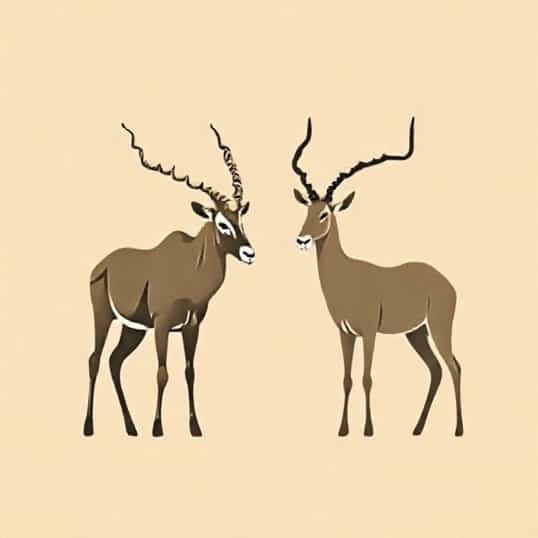
Kudu Vs Eland Size
The African savannah is home to a variety of large antelope species, each with unique characteristics and adaptations that allow them to thrive in their respective environments. Among these, the kudu and the eland are two of the most impressive and frequently compared due to their size, behavior, and ecological roles. Understanding the differences in size between a kudu and an eland, as well as other distinguishing features, is essential for wildlife enthusiasts, ecologists, and hunters who are interested in these majestic animals. Size comparison not only highlights physical differences but also sheds light on their ecological niches, feeding habits, and social structures.
Overview of the Kudu
The kudu is a large antelope species native to eastern and southern Africa, known for its striking spiral horns and elegant appearance. There are two main species the greater kudu and the lesser kudu. The greater kudu is the larger of the two and is often the species referenced in discussions about size. Male kudus, or bulls, are particularly notable for their impressive horns, which can reach up to 1.8 meters in length. These horns are used in sparring during mating competitions and serve as a symbol of maturity and strength.
Physical Size of the Kudu
The greater kudu is a formidable antelope, with adult males typically weighing between 190 and 270 kilograms (420 to 600 pounds), while females are generally smaller, weighing 120 to 210 kilograms (265 to 460 pounds). In terms of height, males stand approximately 1.4 to 1.5 meters (4.6 to 5 feet) at the shoulder, with females slightly shorter. Length from head to tail can range from 2.3 to 2.5 meters (7.5 to 8.2 feet). The lesser kudu, by contrast, is smaller and lighter, with males weighing around 90 to 110 kilograms (198 to 243 pounds) and standing about 1 meter (3.3 feet) tall at the shoulder.
Overview of the Eland
The eland is one of the largest antelope species in Africa, renowned for its massive body size, distinctive dewlap, and spiral horns. There are two primary species the common eland (Taurotragus oryx) and the giant eland (Taurotragus derbianus). Elands are social animals, often found in herds, and are adapted to a variety of habitats, including savannahs, woodlands, and semi-arid regions. Their large size allows them to travel long distances in search of food and water and to defend themselves against predators.
Physical Size of the Eland
Elands are significantly larger than kudus, with adult males of the common eland weighing between 400 and 1,000 kilograms (880 to 2,200 pounds), depending on age and habitat conditions. Females are smaller but still impressive, typically weighing 300 to 600 kilograms (660 to 1,320 pounds). In terms of height, males can stand up to 1.6 to 1.8 meters (5.2 to 5.9 feet) at the shoulder, with females slightly shorter. The body length ranges from 2.4 to 3 meters (7.9 to 9.8 feet), making the eland one of the largest antelope species in the world. The giant eland is even larger, with bulls occasionally reaching up to 1,200 kilograms (2,645 pounds).
Comparative Size Analysis Kudu vs Eland
When comparing the kudu and eland in terms of size, several key differences emerge. Elands are generally much larger and heavier than kudus, with significant differences in body mass, height, and overall length. While a male greater kudu may weigh up to 270 kilograms, a male common eland can easily surpass 400 kilograms, with some individuals doubling that weight in favorable habitats. Height-wise, elands can stand taller than kudus, giving them an advantage in spotting predators and accessing higher foliage.
Horn Size and Shape
Both kudu and eland males feature impressive horns, but they differ in shape and function. Kudu horns are long, spiraled, and slender, sometimes reaching 1.8 meters in length. These horns are primarily used for display and sparring. Eland horns are also spiraled but tend to be shorter and thicker relative to body size, averaging 60 to 90 centimeters (24 to 35 inches) for males. Both species’ horns serve as tools for defense and mating competition, but the visual impact of kudu horns is often more striking due to their length and elegance.
Weight and Body Mass Comparison
Body mass is one of the most significant distinctions between the two species. Elands are heavier and more robust, which allows them to store more energy and survive in harsher environments with seasonal food shortages. The kudu, while muscular and agile, is lighter and more adapted for quick movement through dense bush and woodland. This difference in weight also influences their predator avoidance strategies, with kudus relying on agility and camouflage, and elands relying on size and herd defense.
Behavioral Implications of Size Differences
Size impacts many aspects of behavior and ecology for both species. Elands’ larger size allows them to form larger herds, which provides protection against predators such as lions and hyenas. Their size also enables them to feed on a wider range of vegetation, including tougher grasses and leaves. Kudus, being smaller and more agile, tend to form smaller groups and rely on stealth and camouflage for survival. These differences influence mating strategies, social structures, and daily movement patterns within their respective habitats.
Habitat and Distribution Considerations
Kudus are typically found in eastern and southern Africa, favoring dense bushlands, woodlands, and savannah edges. Their smaller size and agility allow them to navigate thick vegetation and avoid predators. Elands, on the other hand, are more widely distributed across sub-Saharan Africa, with common elands inhabiting savannahs and open woodlands, and giant elands preferring more forested or mountainous areas. The larger body size of elands provides advantages in open terrain, where visibility and stamina are key survival traits.
In summary, the comparison between kudu and eland size reveals significant differences in body mass, height, and overall length, with elands being the larger and heavier species. Kudus are elegant, agile antelopes with long, spiraled horns, adapted for maneuvering through dense vegetation. Elands are massive, robust antelopes capable of surviving in diverse habitats and forming large protective herds. Understanding these size differences provides insight into their ecological roles, behavior, and survival strategies. For wildlife enthusiasts, hunters, and ecologists, recognizing the physical and behavioral distinctions between kudu and eland is essential for appreciating the diversity and complexity of Africa’s large antelope species.