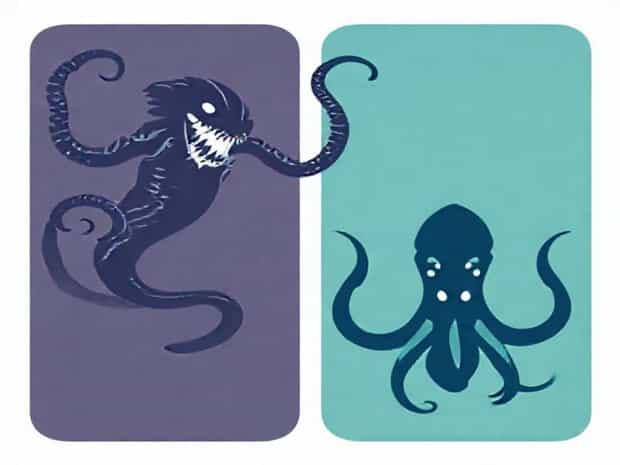
Kraken Vs Cthulhu Vs Leviathan
The legends of the Kraken, Cthulhu, and Leviathan have fascinated humanity for centuries, each representing monstrous forces of the deep that inspire fear, awe, and imagination. These mythical creatures, originating from different cultural and literary traditions, share similarities in their depiction as enormous sea-dwelling entities but also exhibit distinct characteristics, origins, and symbolic meanings. The Kraken emerges from Scandinavian folklore, Cthulhu from the literary imagination of H.P. Lovecraft, and Leviathan from ancient biblical texts. Comparing these legendary beings offers insight into the human fascination with the unknown, the ocean’s mysteries, and the concept of cosmic and natural terror. Exploring their stories, abilities, and cultural significance allows enthusiasts to understand why these creatures remain popular in modern media, literature, and mythology.
The Kraken Scandinavian Sea Monster
The Kraken is a legendary sea monster said to dwell off the coasts of Norway and Greenland. Often described as a giant squid or octopus, the Kraken is notorious for its immense size and its ability to drag entire ships beneath the waves. Sailors’ tales from the 18th and 19th centuries portrayed the Kraken as a threat to maritime navigation, capable of creating massive whirlpools and generating terror among seafarers. Its tentacles, sometimes described as hundreds of feet long, symbolize the uncontrollable and mysterious nature of the ocean.
Origins and Legends
The earliest references to the Kraken appear in Scandinavian folklore and travel literature. The creature was reportedly observed by sailors in the North Atlantic, often during storms or near rocky outcrops. Although largely mythological, the Kraken may have been inspired by sightings of giant squids, which can grow to significant lengths and inhabit deep ocean regions. Folklore emphasized the danger of the unknown in the seas, and the Kraken became a symbol of maritime peril, embodying the fear of natural forces beyond human control.
Abilities and Symbolism
- Massive tentacles capable of crushing or dragging ships
- Creation of whirlpools and violent ocean currents
- Representation of the uncontrollable forces of nature
- Symbol of fear, mystery, and maritime adventure
- Inspiration for modern nautical literature and films
Cthulhu Cosmic Horror from Literature
Cthulhu is a fictional cosmic entity created by H.P. Lovecraft in his 1928 short story The Call of Cthulhu. Unlike the Kraken, which is rooted in folklore, Cthulhu belongs to the literary tradition of cosmic horror, representing the insignificance of humanity in the vast universe. Described as a towering creature with an octopus-like head, dragon-like wings, and scaly appendages, Cthulhu is said to lie dormant beneath the Pacific Ocean in the sunken city of R’lyeh. Lovecraft’s creation has become a cornerstone of horror literature and a symbol of unknowable, incomprehensible terror.
Characteristics and Influence
Cthulhu’s primary attributes include immense size, immense strength, and the ability to induce madness in humans through psychic influence. Unlike the Kraken, Cthulhu’s power extends beyond the physical; it is a force of existential dread, embodying the unknowable aspects of the cosmos. The story of Cthulhu explores themes of human vulnerability, the fragility of sanity, and the limitations of perception, making it a profound and philosophical monster rather than merely a maritime threat.
Impact on Culture
- Originator of the Cthulhu Mythos, inspiring numerous authors and media
- Represents existential and cosmic horror
- Symbolizes humanity’s insignificance in a vast universe
- Appears in games, films, literature, and art
- Encourages exploration of fear beyond natural or physical boundaries
Leviathan Biblical and Mythological Sea Serpent
The Leviathan originates from ancient biblical texts, including the Book of Job and Psalms, where it is depicted as a monstrous sea serpent. Leviathan embodies chaos, power, and divine might, often representing the untamable aspects of creation. Its imagery combines fearsome physical traits such as massive jaws, impenetrable scales, and overwhelming size with symbolic meanings connected to spiritual and moral themes. Unlike the Kraken or Cthulhu, Leviathan is deeply embedded in religious and mythological narratives, illustrating the cosmic order and humanity’s relationship with divine forces.
Characteristics and Symbolism
Leviathan’s abilities, according to scripture and myth, include devouring ships, controlling the seas, and resisting capture by human means. Symbolically, Leviathan represents chaos, sin, and the untamable nature of the natural world. In theological interpretations, it can also embody evil forces or obstacles that humans must navigate in life. Over centuries, Leviathan has influenced literature, art, and cultural imagination as a metaphor for overwhelming challenges and the mysteries of creation.
Modern Cultural Influence
- Appears in literature, fantasy, and video games as a sea monster
- Represents human struggle against overwhelming forces
- Used in philosophical and theological discussions about chaos and order
- Influences symbolic depictions of the ocean and monstrous creatures
- Serves as a metaphor for both natural and moral challenges
Comparing Kraken, Cthulhu, and Leviathan
While all three entities share common themes of immense size and power, they differ significantly in origin, purpose, and symbolic meaning. The Kraken is primarily a naturalistic monster rooted in folklore, representing the dangers of the sea. Cthulhu is a literary creation embodying cosmic horror, existential dread, and human insignificance. Leviathan, on the other hand, is a mythological and religious figure symbolizing divine power, chaos, and spiritual trials.
Key Differences
- OriginKraken – Scandinavian folklore; Cthulhu – Lovecraftian literature; Leviathan – Biblical and mythological texts
- NatureKraken – physical and maritime; Cthulhu – cosmic and psychological; Leviathan – symbolic and spiritual
- AbilitiesKraken – ship destruction, whirlpools; Cthulhu – psychic influence, terror; Leviathan – chaos control, overwhelming strength
- SymbolismKraken – natural fear; Cthulhu – existential horror; Leviathan – divine power and moral challenges
- Cultural InfluenceKraken – nautical tales and films; Cthulhu – horror literature and media; Leviathan – religious teachings and artistic interpretations
Why These Creatures Continue to Fascinate
The enduring fascination with Kraken, Cthulhu, and Leviathan stems from humanity’s fascination with the unknown, the vastness of the ocean, and the mysteries of existence. Each creature taps into different aspects of fear the Kraken embodies the physical danger of nature, Cthulhu explores psychological and cosmic terror, and Leviathan conveys spiritual and moral challenges. Modern adaptations in literature, film, and games continue to reimagine these beings, ensuring that they remain relevant symbols of awe and terror. By examining their origins and characteristics, enthusiasts gain a deeper appreciation of how myths, folklore, and literature shape cultural perceptions of monsters and the unknown.
Modern Depictions
- Kraken – featured in nautical adventure films, novels, and folklore-inspired media
- Cthulhu – appears in horror novels, tabletop games, and graphic novels
- Leviathan – depicted in fantasy series, religious allegories, and artistic interpretations
- All three – serve as metaphors for human fears, unknown forces, and challenges beyond comprehension
- Adaptations continue to blend traditional lore with contemporary storytelling
The legends of Kraken, Cthulhu, and Leviathan highlight humanity’s enduring fascination with enormous, mysterious, and terrifying entities. Each creature embodies unique aspects of fear and symbolism the Kraken as a natural and maritime threat, Cthulhu as a cosmic and existential horror, and Leviathan as a mythological representation of chaos and divine power. By comparing their origins, abilities, and cultural significance, it becomes clear why these entities remain central to folklore, literature, and popular culture. Their stories continue to inspire imagination, cautionary tales, and artistic creations, demonstrating the timeless human fascination with the unknown and the profound mysteries of the deep.