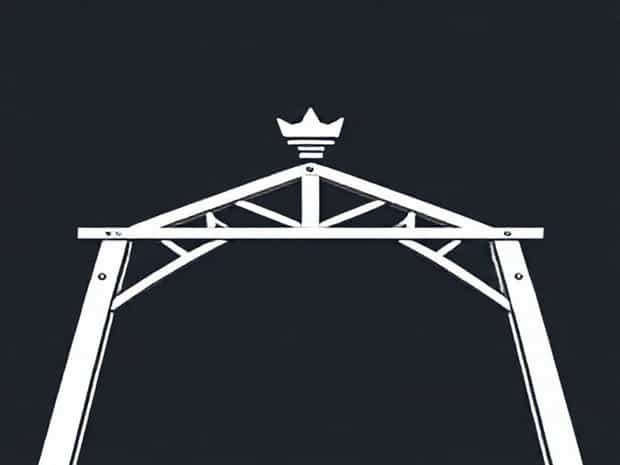
King Post Truss Details
The king post truss is one of the simplest and most commonly used truss designs in construction, especially for residential roofs and small-scale structures. Its straightforward design provides excellent stability and support while being cost-effective and relatively easy to construct. Understanding king post truss details is essential for architects, engineers, and builders to ensure proper implementation, durability, and safety. This type of truss has been utilized for centuries and continues to be a popular choice due to its efficient load distribution and simplicity in design.
Overview of King Post Truss
The king post truss consists of a central vertical post called the king post, two inclined rafters, and a horizontal tie beam. The king post serves as the main support element that connects the apex of the roof to the tie beam at the base. This truss design effectively transfers the roof load from the apex down to the walls, reducing bending stresses in the rafters. Its triangular shape provides rigidity and stability, making it an ideal solution for small to medium spans, typically up to 30 feet.
Components of a King Post Truss
Understanding the individual components of a king post truss is crucial for accurate construction and load management
- King PostThe central vertical member that supports the apex and connects to the tie beam, transferring load to the foundation.
- RaftersTwo inclined beams that form the roof slope, extending from the apex to the wall plates.
- Tie BeamA horizontal member at the base that prevents the walls from spreading outward and provides stability.
- Struts or BracesOptional diagonal members that provide additional support and reduce bending in the rafters.
- ConnectionsJoints and fasteners that secure the members together, typically using nails, screws, or metal plates.
Load Distribution in King Post Truss
One of the key advantages of the king post truss is its efficient load distribution. The weight of the roof is transmitted through the rafters to the king post, which then transfers the load to the tie beam. The tie beam distributes the forces to the supporting walls, preventing lateral spread and ensuring structural integrity. This design minimizes bending moments in the rafters and reduces stress on individual components, making it highly effective for smaller spans where heavy loads are not a concern.
Applications of King Post Truss
The king post truss is versatile and can be applied in various construction scenarios. Some common applications include
- Residential roof structures for small to medium houses.
- Garden sheds, garages, and small utility buildings.
- Pedestrian bridges and lightweight structures.
- Historic or heritage buildings requiring traditional roof designs.
Construction Details of King Post Truss
Constructing a king post truss requires careful attention to dimensions, angles, and connections. Typically, the construction process involves selecting appropriate timber or steel members, cutting them to size, and assembling them in a triangular configuration. The apex angle of the rafters should be carefully calculated to ensure proper roof slope and load distribution. The tie beam should be securely connected to the king post, and any additional struts or braces must be correctly positioned to enhance structural stability.
Material Selection
Material choice significantly affects the performance and durability of a king post truss. Timber is commonly used for residential applications due to its availability, ease of handling, and aesthetic appeal. Structural steel can also be employed for longer spans or where higher load capacity is required. The materials must be properly treated or coated to resist environmental factors such as moisture, insects, or corrosion, ensuring a long-lasting structure.
Advantages of King Post Truss
The king post truss offers several benefits that make it an attractive option for small to medium construction projects
- Simplicity in design, reducing construction time and labor costs.
- Efficient load distribution that minimizes bending in rafters.
- Cost-effective due to fewer members compared to more complex trusses.
- Suitable for a wide range of roofing materials, including tiles, shingles, and metal sheets.
- Can be easily adapted for decorative or exposed roof designs.
Limitations of King Post Truss
While highly effective for smaller structures, the king post truss has certain limitations
- Not suitable for long spans exceeding approximately 30 feet without additional reinforcement.
- Limited flexibility for irregular roof shapes or complex architectural designs.
- Timber trusses require proper maintenance to prevent decay or insect damage.
Design Considerations
When designing a king post truss, several factors must be considered to ensure structural safety and efficiency. These include the span of the roof, the type of roofing material, local building codes, wind and snow loads, and the spacing between trusses. Proper engineering calculations are necessary to determine the appropriate dimensions and angles of the rafters, king post, and tie beam. Additionally, connections and fasteners must be designed to handle the expected loads and environmental conditions.
Modern Adaptations
In contemporary construction, king post trusses can be adapted using engineered timber, laminated wood, or steel members. These materials allow for greater spans and improved durability while maintaining the traditional triangular design. Modern truss connectors, metal plates, and precision fabrication techniques also enhance the ease of assembly and overall performance of the truss.
The king post truss is a fundamental structural design that combines simplicity, efficiency, and reliability. Its straightforward configuration, consisting of a central king post, rafters, and tie beam, provides excellent load distribution for small to medium spans. Understanding king post truss details, including components, load management, construction practices, and material selection, is essential for architects, engineers, and builders. While it has limitations in terms of span and complexity, its advantages in terms of cost-effectiveness, ease of construction, and structural integrity make it a timeless solution for residential roofs, small buildings, and traditional structures. By carefully considering design parameters and materials, the king post truss continues to be a practical and durable choice in modern construction.