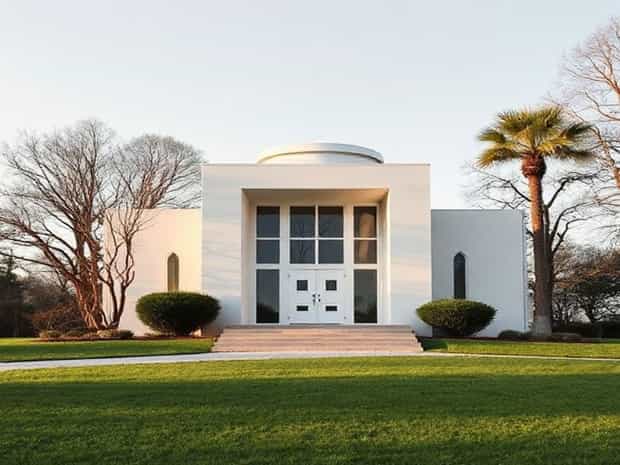
Joseph Maria Olbrich Secession Building
The Secession Building in Vienna, designed by Joseph Maria Olbrich, stands as one of the most iconic monuments of early modern architecture and the Vienna Secession movement. Completed in 1898, this distinctive building was conceived as an exhibition hall for artists who sought to break away from the conservative art institutions of the time. Olbrich’s innovative design combines geometric simplicity with elaborate symbolic ornamentation, creating a striking visual statement that reflects the ideals of the Secession movement. Today, the building remains a landmark of Vienna’s cultural heritage, celebrated for its artistic and architectural significance.
Historical Context of the Secession Building
The Secession Building emerged during a period of cultural and artistic upheaval in Vienna at the end of the 19th century. The Vienna Secession was founded in 1897 by a group of artists, including Gustav Klimt, Josef Hoffmann, and Koloman Moser, who were dissatisfied with the prevailing academic art scene. They sought to create a platform for innovative, contemporary art that embraced new forms, techniques, and ideas. The building, designed by Joseph Maria Olbrich, was intended as both an exhibition space and a symbol of this artistic revolution, embodying the movement’s motto, To every age its art, to art its freedom.”
Fun Fact 1 Symbolism in Design
Olbrich incorporated a wealth of symbolic details in the Secession Building, most notably the gilded laurel leaf dome, often referred to as the “golden cabbage.” This dome serves as a metaphor for artistic victory and the triumph of modern ideas over traditional constraints. The geometric patterns, clean lines, and ornamental elements throughout the building all carry symbolic meaning, reflecting the Secessionists’ commitment to a new artistic philosophy that emphasized creativity, individuality, and the unity of arts and crafts.
Architectural Features of the Secession Building
The architecture of the Secession Building is notable for its combination of minimalism and decorative flourish, which distinguishes it from the heavily ornamented historicist buildings that dominated Vienna at the time. The façade is primarily white, emphasizing geometric forms and symmetry, while the golden dome provides a dramatic contrast. The building’s interior was designed to function efficiently as an exhibition space, with open floor plans, natural lighting, and flexible wall arrangements that allowed for diverse artistic displays. Olbrich’s design successfully merges functional utility with symbolic and aesthetic considerations.
Fun Fact 2 The Beethoven Frieze
Inside the Secession Building, visitors can view Gustav Klimt’s famous Beethoven Frieze, created in 1902 as a part of a temporary exhibition. This monumental artwork was commissioned specifically for the Secessionists and is a stunning example of Art Nouveau style, with flowing lines, symbolic imagery, and expressive forms. The frieze complements Olbrich’s architectural vision, illustrating the harmonious relationship between building design and the art it houses.
Joseph Maria Olbrich The Architect
Joseph Maria Olbrich, born in 1867 in Austria, was a pioneering architect and a central figure in the Vienna Secession movement. Trained in Vienna and influenced by both classical architecture and emerging modernist trends, Olbrich developed a style that emphasized clarity, geometry, and symbolic ornamentation. His work on the Secession Building represents the culmination of his ideas, combining innovative design principles with a deep understanding of materials, proportions, and artistic expression. Olbrich’s influence extended beyond Vienna, inspiring architects and designers throughout Europe who embraced the Art Nouveau and modernist movements.
Fun Fact 3 Olbrich’s Early Success
The Secession Building was one of Olbrich’s earliest independent commissions, yet it established him as a leading architect of his generation. At just 30 years old, Olbrich demonstrated remarkable creativity and vision, successfully translating the ideals of the Vienna Secession into a physical structure that remains admired over a century later. This early success propelled him to further opportunities, including designing buildings in Darmstadt for the Darmstadt Artists’ Colony, another key center of Art Nouveau innovation.
The Role of the Secession Building in Vienna
Since its completion, the Secession Building has played a vital role in Vienna’s cultural life. It provided a venue for groundbreaking exhibitions, giving emerging artists a platform to challenge traditional norms and present experimental works. The building also became a visual symbol of the city’s progressive art scene, attracting attention from international artists, critics, and visitors. Its significance lies not only in its architecture but also in its role as a catalyst for artistic dialogue and innovation, reflecting Vienna’s status as a hub for modern art during the late 19th and early 20th centuries.
Fun Fact 4 The Motto of the Secessionists
Above the entrance of the building, the famous motto “To every age its art, to art its freedom” is inscribed. This phrase encapsulates the philosophy of the Secessionists, emphasizing the importance of artistic independence and the rejection of rigid academic conventions. The motto continues to inspire contemporary artists and visitors, reinforcing the building’s identity as a symbol of creative freedom.
Design Innovations and Influence
The Secession Building introduced several design innovations that influenced subsequent developments in architecture. Olbrich’s use of geometric clarity, minimal ornamentation on structural elements, and symbolic decorative motifs helped pave the way for early modernist architecture. Additionally, the integration of interior and exterior design, along with careful attention to lighting and spatial arrangement, set new standards for exhibition spaces. Architects and designers around Europe drew inspiration from the Secession Building, adopting similar principles in residential, public, and commercial projects.
Fun Fact 5 Blend of Function and Aesthetics
One of the building’s most remarkable qualities is how it balances functional requirements with artistic expression. The open floor plan facilitates exhibitions, while the exterior communicates the ideals of the Secession movement through its iconic dome and ornamental detailing. This blend of functionality and aesthetics exemplifies Olbrich’s architectural philosophy and contributes to the building’s enduring appeal.
Preservation and Legacy
Today, the Secession Building is preserved as a cultural and historical landmark in Vienna. It continues to host contemporary art exhibitions, maintaining its original purpose as a space for artistic innovation. Preservation efforts have focused on maintaining the building’s distinctive white façade, golden dome, and interior features, ensuring that future generations can experience Olbrich’s vision firsthand. The building’s legacy extends beyond Vienna, representing a milestone in the development of modern architecture and the international Art Nouveau movement.
Fun Fact 6 Continued Relevance
Despite being over a century old, the Secession Building remains a vibrant part of Vienna’s cultural scene. Contemporary artists, designers, and architects continue to study Olbrich’s work for inspiration, appreciating the seamless integration of symbolism, aesthetics, and function. The building is both a historical artifact and a living space for art, demonstrating the timeless nature of Olbrich’s architectural achievements.
The Secession Building by Joseph Maria Olbrich is a landmark of architectural and artistic innovation, reflecting the ideals of the Vienna Secession movement and the Art Nouveau era. Its combination of geometric clarity, symbolic ornamentation, and functional design continues to captivate visitors and inspire architects worldwide. From the golden laurel dome to the iconic Beethoven Frieze inside, every aspect of the building communicates a commitment to artistic freedom and modern expression. As a cultural, historical, and architectural treasure, the Secession Building remains a testament to Olbrich’s vision and the enduring influence of the Vienna Secession on the world of art and architecture.
“