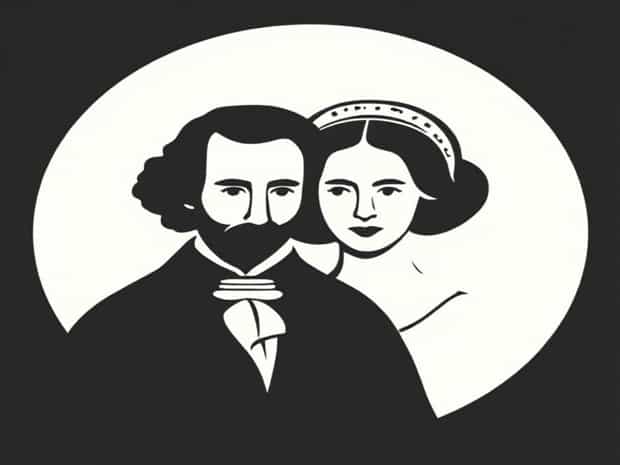
John Stuart Mill Mary Wollstonecraft
John Stuart Mill and Mary Wollstonecraft are two towering figures in the history of political philosophy and feminist thought, separated by time but connected by their revolutionary ideas about liberty, equality, and human rights. Mill, a 19th-century British philosopher and economist, expanded on ideas of liberty and individual freedom, while Wollstonecraft, writing in the late 18th century, laid the foundation for modern feminist philosophy. Their writings continue to resonate today, influencing debates on gender equality, education, and social justice across the globe.
Mary Wollstonecraft A Pioneer of Feminist Thought
Mary Wollstonecraft, born in 1759 in London, was a trailblazer for women’s rights. Her most famous work,A Vindication of the Rights of Woman(1792), argued for the education and empowerment of women, challenging the societal norms that relegated women to domestic roles. Wollstonecraft believed that women were not naturally inferior to men but had been rendered so by a lack of educational opportunities and social constraints. Her advocacy for reason, rationality, and moral development for women was radical for her time and inspired subsequent generations of feminist thinkers.
Core Ideas of Wollstonecraft
- EducationWollstonecraft emphasized that women should receive the same education as men to develop their reasoning and moral capacities.
- EqualityShe argued that women deserved equal opportunities in society, including in politics, professions, and family life.
- AutonomyWollstonecraft championed the idea that women should exercise autonomy over their lives and make informed choices rather than being dependent on men.
- RationalityCentral to her philosophy was the belief that reason should guide both men and women, breaking the cycle of ignorance and subordination.
John Stuart Mill Advocate of Liberty and Women’s Rights
John Stuart Mill, born in 1806, was heavily influenced by the utilitarian philosophy of his father, James Mill, and the writings of Jeremy Bentham. While Mill is widely recognized for his workOn Liberty(1859), which explored the limits of government authority and individual freedom, he also made significant contributions to feminist thought. His essayThe Subjection of Women(1869) is a landmark text that echoes many of Wollstonecraft’s ideas, arguing for the legal and social equality of women. Mill contended that the subordination of women was a social convention rather than a natural condition and that society would benefit from granting women equal rights.
Core Principles of Mill
- Individual LibertyMill advocated for personal freedom, arguing that individuals should be free to pursue their own happiness as long as they do not harm others.
- Equality of WomenHe insisted that women should have the same legal, political, and educational rights as men.
- Social ProgressMill believed that society as a whole would advance if all individuals, regardless of gender, could develop their talents and participate fully in public life.
- Rational DebateLike Wollstonecraft, Mill emphasized the importance of reason and informed discussion in overcoming prejudice and social injustice.
Comparative Analysis Wollstonecraft and Mill
Although separated by nearly a century, the philosophies of Mary Wollstonecraft and John Stuart Mill share significant commonalities. Both thinkers argued that social inequality, especially regarding gender, was not natural but constructed by societal norms. They emphasized the transformative power of education, rational thought, and moral development in achieving equality. However, Mill expanded the discussion to include political and legal frameworks, advocating for reforms that would institutionalize gender equality.
Influence on Feminist Theory
Wollstonecraft’s writings provided the foundation for modern feminist thought, inspiring activists and writers in the 19th and 20th centuries. Mill, in turn, built upon this foundation, using his influence as a philosopher and politician to argue for practical reforms, including women’s suffrage. Together, their ideas created a continuum of thought that links early feminist philosophy with later movements advocating for civil and political rights for women.
Education and Empowerment
Both Wollstonecraft and Mill saw education as central to human empowerment. Wollstonecraft’s argument that women should be educated to develop their reasoning and moral faculties aligns closely with Mill’s belief that a free and rational society depends on the education of all its members. They understood that ignorance and social subjugation were mutually reinforcing and that education could break the cycle of oppression, allowing individuals to contribute meaningfully to society.
Legacy and Modern Relevance
The ideas of Wollstonecraft and Mill continue to resonate in contemporary discussions about gender equality, education, and social justice. Modern feminist movements frequently draw on Wollstonecraft’s insistence on rationality and equality, while policymakers and thinkers reference Mill’s advocacy for liberty and institutional reforms. Their combined influence is evident in debates over equal pay, reproductive rights, educational access, and political representation, demonstrating that their philosophies remain highly relevant more than two centuries after they were first articulated.
Mary Wollstonecraft and John Stuart Mill remain seminal figures in the history of philosophy and social thought. Wollstonecraft’s pioneering advocacy for women’s education and equality laid the groundwork for future feminist movements, while Mill’s philosophical and political writings expanded on these ideas to promote broader social reforms. Together, they underscore the enduring importance of reason, education, and liberty in the pursuit of a more equitable society. Their work serves as a reminder that progress is often achieved by challenging entrenched social norms and advocating for justice and equality across all facets of life.