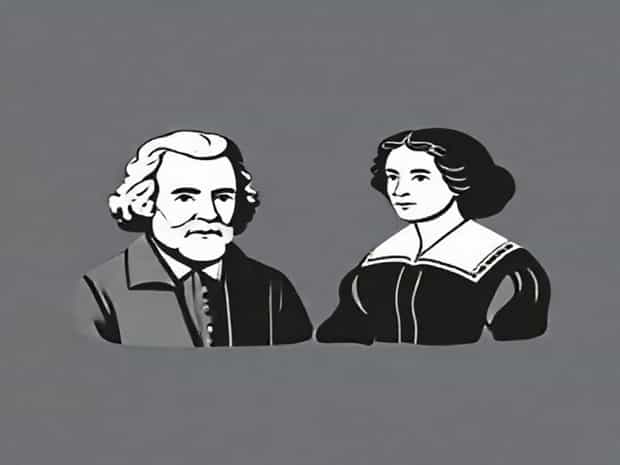
John Locke And Mary Wollstonecraft
John Locke and Mary Wollstonecraft are two of the most influential thinkers in the history of political philosophy and education. While separated by nearly a century, their ideas share a common concern for human rights, individual liberty, and the importance of reason in shaping society. Locke, a 17th-century English philosopher, laid the groundwork for modern liberalism, emphasizing natural rights and the social contract. Wollstonecraft, an 18th-century advocate for women’s rights, built on some of these principles to argue for equality in education and political representation. Together, their philosophies have left a lasting impact on democratic thought and human rights discourse.
John Locke Life and Philosophical Contributions
John Locke was born in 1632 in Wrington, Somerset, England. Educated at the prestigious Westminster School and later at Oxford University, Locke developed a keen interest in philosophy, politics, and science. His writings on epistemology, particularly An Essay Concerning Human Understanding,” challenged traditional notions of innate ideas, arguing that human knowledge is derived from experience and reflection. This empirical approach influenced his views on politics and society.
Locke’s Political Philosophy
Locke is perhaps best known for his political writings, especially “Two Treatises of Government.” In these works, he argued that all individuals possess natural rights to life, liberty, and property. According to Locke, governments exist to protect these rights, and any authority that fails to do so can be justly overthrown. This concept of the social contract laid the foundation for modern democracy and inspired revolutionary movements, including the American and French revolutions.
Locke on Education
Locke also emphasized the importance of education in shaping moral and rational individuals. In “Some Thoughts Concerning Education,” he advocated for a practical approach that nurtures reason, self-discipline, and virtue. Locke believed that education should prepare individuals to participate responsibly in society, reflecting his broader commitment to liberty and civic engagement. While Locke’s writings primarily addressed the education of men, his ideas about reason and human potential influenced later thinkers who extended these principles to women.
Mary Wollstonecraft Life and Advocacy
Mary Wollstonecraft was born in 1759 in London, England. Her early life was marked by financial instability and a struggle for education, which profoundly influenced her later advocacy for women’s rights. Wollstonecraft emerged as a pioneering intellectual during the Enlightenment, a period that emphasized reason, science, and individual rights. Her most famous work, “A Vindication of the Rights of Woman,” published in 1792, challenged prevailing notions of female inferiority and argued that women deserve the same educational opportunities as men.
Wollstonecraft’s Political Philosophy
In “A Vindication of the Rights of Woman,” Wollstonecraft argued that social inequalities between men and women were not natural but the result of poor education and social conditioning. She advocated for women’s inclusion in civic life, claiming that educated women could contribute meaningfully to society and the state. Wollstonecraft’s arguments echoed Locke’s emphasis on natural rights and rationality, extending these principles to include women and emphasizing the moral and intellectual potential of all human beings.
Wollstonecraft on Education
Education was central to Wollstonecraft’s vision of equality. She argued that denying women access to education perpetuated their subordination and limited their ability to participate in public life. By equipping women with knowledge and critical thinking skills, society would benefit from their contributions as informed citizens, mothers, and professionals. Wollstonecraft’s educational philosophy directly challenged contemporary norms and anticipated modern ideas about gender equality and universal education.
Connections Between Locke and Wollstonecraft
Although Locke and Wollstonecraft wrote in different centuries, their ideas intersect in several key ways. Both philosophers emphasized reason as the foundation for human development and social organization. Locke’s notion of natural rights and the social contract influenced Wollstonecraft’s arguments for women’s political and educational equality. By applying Locke’s principles of liberty and equality to the status of women, Wollstonecraft expanded the scope of Enlightenment thought and contributed to early feminist theory.
Reason and Rationality
Locke’s belief in the power of reason to guide human behavior is mirrored in Wollstonecraft’s advocacy for rational education for women. Both thinkers saw rationality as essential for moral and civic responsibility. Locke argued that reason allows individuals to understand their rights and obligations, while Wollstonecraft contended that women must be educated to exercise their reason effectively and participate fully in society.
Natural Rights and Equality
Locke’s concept of natural rights provided a philosophical foundation for Wollstonecraft’s arguments. She extended the idea of inherent human rights to women, asserting that the denial of education and political agency violated these rights. By doing so, Wollstonecraft connected individual liberty to social justice, demonstrating that equality is essential for a just and flourishing society.
Impact on Modern Thought
The legacies of John Locke and Mary Wollstonecraft continue to influence contemporary political and educational thought. Locke’s ideas underpin modern liberal democracy, emphasizing individual rights, the rule of law, and the accountability of government. Wollstonecraft’s work laid the groundwork for the women’s rights movement, advocating for gender equality in education, employment, and political participation. Together, their philosophies inform ongoing debates about human rights, civic responsibility, and social reform.
Influence on Education Policy
Locke and Wollstonecraft both highlighted the importance of education in fostering informed and responsible citizens. Their ideas continue to shape educational theory and policy, emphasizing critical thinking, moral development, and equal access to learning opportunities. Contemporary movements for educational equity and gender parity can trace their intellectual roots to the combined influence of these two thinkers.
Influence on Feminist and Political Movements
Wollstonecraft’s application of Locke’s principles to women’s rights has inspired generations of feminist thinkers and activists. Her arguments for rational education and social equality resonate with modern campaigns for gender justice. Locke’s broader influence on political philosophy ensures that concepts like natural rights, liberty, and the social contract remain central to debates about democracy and human rights worldwide.
John Locke and Mary Wollstonecraft stand as towering figures in the history of philosophy and social thought. Locke’s emphasis on reason, natural rights, and the social contract provided the foundation for modern democratic societies, while Wollstonecraft extended these principles to advocate for women’s education and equality. Their shared commitment to rationality, human dignity, and civic responsibility highlights the enduring relevance of their ideas. By examining their work together, we gain insight into the evolution of Enlightenment thought and its profound impact on modern notions of rights, equality, and justice. The combined legacies of Locke and Wollstonecraft continue to inspire educators, policymakers, and activists seeking to create a more just and equitable world.