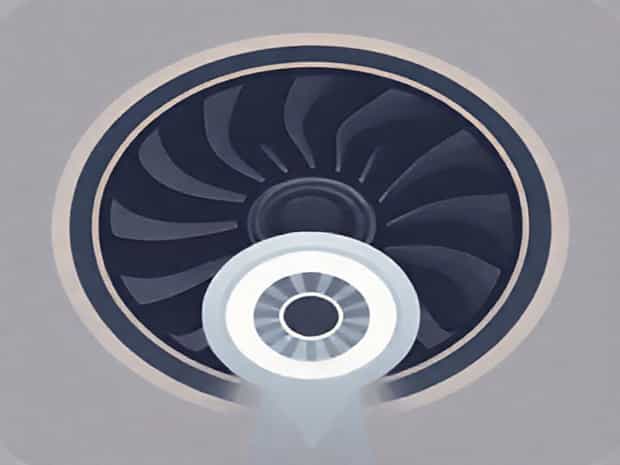
Jet Engine Vs Turbofan
The world of aviation has long been fascinated by the power and efficiency of jet propulsion systems. From commercial airliners to military aircraft, engines that can generate immense thrust are at the heart of modern flight. Among these engines, two of the most discussed and widely used types are the turbojet and the turbofan. While both rely on similar principles of air compression, combustion, and exhaust to produce thrust, they differ significantly in design, performance, efficiency, and applications. Understanding the distinctions between jet engines and turbofans is crucial for anyone interested in aviation technology, aerospace engineering, or even the dynamics of air travel. This topic explores these differences in detail, highlighting how each engine type works, their advantages, limitations, and why certain aircraft use one over the other.
Understanding Jet Engines
A jet engine, also known as a turbojet, is the classic design that most people imagine when thinking of aircraft propulsion. Turbojets operate on a simple yet powerful principle air is drawn into the engine, compressed by a series of rotating blades, mixed with fuel, and ignited in a combustion chamber. The high-speed exhaust gases are expelled through a nozzle, generating thrust in the opposite direction, according to Newton’s third law of motion. This design is highly efficient at high speeds and altitudes, making it ideal for supersonic aircraft.
Key Features of Turbojets
- High-speed performance suitable for military and supersonic aircraft.
- Relatively simple design with few moving parts compared to turbofans.
- Exhaust gases produce maximum thrust directly from the combustion process.
- High fuel consumption at lower speeds, making them less efficient for commercial airliners.
Introduction to Turbofan Engines
Turbofan engines are a more modern evolution of the turbojet. While they share the same core mechanism of air intake, compression, combustion, and exhaust, turbofans incorporate a large fan at the front of the engine. This fan forces a significant amount of air around the engine core instead of through the combustion chamber. The ratio of air bypassing the core compared to air passing through it is known as the bypass ratio. High bypass ratios are common in commercial airliners because they improve fuel efficiency and reduce noise.
Key Features of Turbofans
- Large front fan pushes air around the engine core for additional thrust.
- High bypass ratio improves fuel efficiency and reduces noise.
- Excellent performance at subsonic speeds, ideal for commercial aviation.
- More complex design due to the fan, gear systems, and additional components.
Comparing Performance
One of the main distinctions between turbojets and turbofans lies in performance characteristics. Turbojets generate all thrust from the core engine, resulting in extremely high exhaust velocities. This makes them ideal for supersonic flight, but they are less efficient at lower speeds and consume more fuel per mile. Turbofans, on the other hand, generate a significant portion of their thrust from the bypassed air pushed by the fan, which moves slower but in larger volume. This improves fuel efficiency and reduces noise, making turbofans better suited for long-distance commercial flights.
Speed and Efficiency
- Turbojets excel at high-speed, high-altitude flight, with top speeds often exceeding Mach 2.
- Turbofans are optimized for cruising speeds around Mach 0.8 to 0.85, which is typical for modern airliners.
- Fuel consumption in turbojets is higher at subsonic speeds compared to turbofans.
- Turbofans can achieve longer range due to better fuel efficiency and larger thrust at lower speeds.
Noise Considerations
Noise reduction is another critical factor in engine design. Turbojets are inherently louder because the high-velocity exhaust creates significant pressure waves. This is one reason why supersonic military jets are noticeably louder than commercial airliners. Turbofans, especially those with high bypass ratios, produce lower exhaust velocities, and the bypassed air helps muffle the engine noise. This makes turbofans more environmentally friendly in terms of noise pollution, which is essential for airport regulations and urban areas surrounding flight paths.
Applications and Use Cases
The choice between turbojet and turbofan engines is largely determined by the aircraft’s intended role. Military fighter jets, interceptors, and experimental supersonic aircraft often use turbojets for their unmatched high-speed performance. Commercial airliners, regional jets, and even business jets predominantly use turbofans because they strike a balance between thrust, efficiency, and noise control. Some advanced military aircraft may employ low-bypass turbofans to achieve a mix of speed and fuel efficiency suitable for tactical missions.
Military vs Commercial Use
- Turbojets Favored for supersonic speed, quick acceleration, and lightweight design for maneuverable fighters.
- Turbofans Preferred for fuel efficiency, lower noise, and reliable performance in subsonic cruising for passenger transport.
- Some modern military jets use afterburners on low-bypass turbofans to temporarily boost thrust for combat situations.
Maintenance and Durability
Turbojets tend to have simpler mechanical designs but can experience higher wear due to extremely high operating temperatures and exhaust velocities. Turbofans, while mechanically more complex, benefit from lower core temperatures and reduced stress on internal components, which can extend engine life and reduce maintenance frequency. However, the large fan and additional moving parts in turbofans may require specialized maintenance procedures and monitoring for optimal performance.
Environmental Impact
Environmental considerations have become increasingly important in aviation. Turbojets are less fuel-efficient at subsonic speeds and produce higher emissions per mile, making them less environmentally friendly for commercial aviation. Turbofans, with their high bypass ratios, consume less fuel and generate lower emissions for the same distance traveled. Noise pollution is also significantly reduced, which is critical for compliance with airport noise regulations worldwide.
In summary, the difference between jet engines and turbofan engines revolves around design, efficiency, noise, and intended application. Turbojets are optimized for speed and high-altitude performance, making them suitable for military and supersonic aircraft, but they are less efficient at lower speeds. Turbofans offer a balance of thrust, fuel efficiency, and noise reduction, making them ideal for commercial aviation and modern passenger aircraft. Understanding these distinctions helps aviation professionals, engineers, and enthusiasts appreciate the technological innovations behind modern flight and the factors influencing aircraft engine design choices. Both engine types have unique strengths and limitations, and their selection depends on the mission profile, operational environment, and performance requirements of the aircraft.