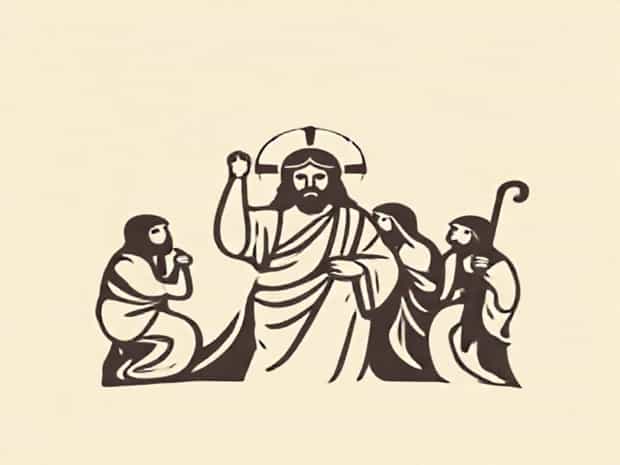
Jesus And The Maccabees
The story of Jesus and the Maccabees is a fascinating intersection of Jewish history and early Christian thought, offering insight into the cultural, religious, and political landscape of the time. The Maccabees, a Jewish rebel family, led a successful revolt against the Seleucid Empire in the 2nd century BCE, establishing a period of Jewish independence and reinvigorating Jewish religious practices. While Jesus lived several centuries later, the legacy of the Maccabees influenced the social, religious, and political context into which He was born, providing a backdrop for understanding His teachings, His mission, and the responses of the Jewish community to His ministry.
Historical Background of the Maccabees
The Maccabean revolt began in 167 BCE when Antiochus IV Epiphanes, the Seleucid king, sought to suppress Jewish religious practices and impose Hellenistic culture. This led to a period of intense persecution, including the desecration of the Jewish Temple in Jerusalem. Mattathias, a priest, and his sons, collectively known as the Maccabees, organized a resistance movement that ultimately reclaimed the Temple, restored Jewish worship, and established the Hasmonean dynasty. Their story is celebrated during Hanukkah, a holiday that commemorates the rededication of the Temple and the miraculous oil that lasted eight days.
The Maccabees’ Influence on Jewish Society
- Religious RestorationThe Maccabees restored the practice of Torah observance and Temple worship, reinforcing Jewish religious identity in a period of external cultural pressures.
- Political IndependenceThey established a semi-autonomous Jewish state under the Hasmonean dynasty, which had implications for Jewish governance and autonomy.
- Legacy of ResistanceThe Maccabees became symbols of resistance and faithfulness, inspiring future generations to uphold Jewish traditions against oppression.
The Time of Jesus and the Shadow of the Maccabees
By the time Jesus was born, the Jewish people were living under Roman occupation. Although the political landscape had shifted, the memory of the Maccabean revolt and the independence achieved by the Hasmoneans remained influential. Jewish groups such as the Pharisees, Sadducees, and Zealots were shaped by the historical experiences of resistance, religious fidelity, and struggles for autonomy. Understanding the Maccabean legacy helps contextualize Jesus’ ministry, His message, and the expectations many Jews held for a Messiah who might restore Israel’s independence and spiritual vitality.
Jesus’ Teachings in Relation to Maccabean Themes
While the Maccabees focused on military resistance and political sovereignty, Jesus’ mission emphasized spiritual transformation, love, and reconciliation. However, there are thematic parallels that reflect continuity in Jewish thought
- Faithfulness to GodBoth the Maccabees and Jesus emphasized devotion to God and adherence to divine commandments, though their approaches differed significantly.
- RedemptionThe Maccabees sought physical and political redemption, while Jesus preached spiritual redemption and eternal life.
- Community IdentityBoth stressed the importance of communal identity, whether through preservation of Jewish law and worship or through building the Kingdom of God among believers.
Contrasts Between Jesus and the Maccabees
While connections exist, there are also stark contrasts between Jesus and the Maccabees. The Maccabees were warriors who used military action to defend and restore their nation. In contrast, Jesus preached nonviolence, forgiveness, and love for enemies. His teachings often subverted expectations shaped by Maccabean history, challenging Jews to think beyond political liberation and toward spiritual renewal. The kingdom He proclaimed was not an earthly political kingdom but a spiritual realm characterized by justice, mercy, and God’s reign.
Responses to Oppression
The Maccabees responded to oppression with armed resistance, reflecting the norms of their time. Jesus, however, offered a radical alternative by promoting moral courage, faith, and patience under persecution. His approach redefined what it meant to resist evil, focusing on the transformation of the heart rather than the sword. This contrast underscores the shift from temporal liberation to spiritual salvation in the New Testament narrative.
Legacy and Influence
The Maccabees left a legacy of Jewish identity, cultural preservation, and historical pride, which continued to shape Jewish consciousness during Jesus’ era. Many of His contemporaries would have been aware of the heroic acts of the Maccabees and the hope they represented for a restored Israel. This awareness likely influenced the messianic expectations of some Jews who hoped for a political savior. Jesus’ mission, however, expanded the concept of salvation to encompass all people and emphasized inner transformation over external political victory.
Connections in Religious Thought
- Messianic ExpectationsThe Maccabean success fueled hope for a Messiah who would deliver Israel, creating a backdrop for Jesus’ announcement of a spiritual kingdom.
- Faith Under TrialJust as the Maccabees endured hardship to uphold the law, Jesus endured trials to fulfill God’s plan, demonstrating faithfulness in different contexts.
- Commemoration and InspirationHanukkah and other commemorations of the Maccabees continue to inspire reflection on courage and divine providence, resonating with themes in Jesus’ teachings.
The relationship between Jesus and the Maccabees illustrates a compelling narrative of continuity and contrast in Jewish history. The Maccabees’ struggle for religious and political freedom set the stage for understanding the world into which Jesus entered, providing context for the hopes, expectations, and challenges faced by His ministry. While the Maccabees focused on military and political strategies, Jesus emphasized spiritual renewal, forgiveness, and the Kingdom of God. Recognizing both the historical impact of the Maccabees and the revolutionary nature of Jesus’ teachings allows believers and scholars alike to appreciate the depth of Jewish heritage and the transformative power of Jesus’ message. The story of Jesus and the Maccabees serves as a reminder that faith, perseverance, and dedication to God can take many forms, and each generation interprets these ideals within its unique historical and cultural context.