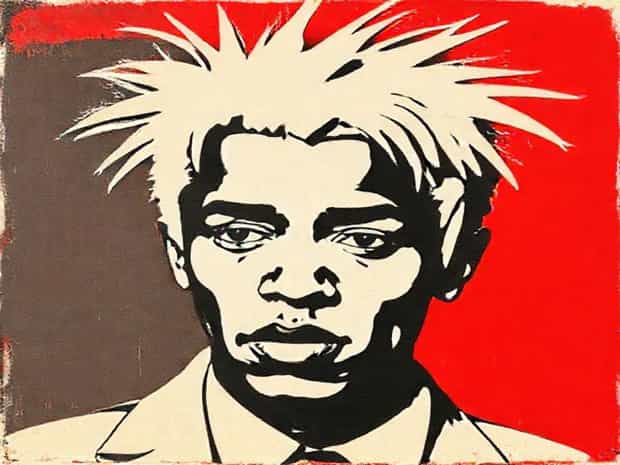
Jean Michel Basquiat Warhol
The collaboration between Jean-Michel Basquiat and Andy Warhol stands as one of the most remarkable partnerships in contemporary art history. Emerging during the vibrant New York art scene of the early 1980s, Basquiat and Warhol combined their distinct artistic styles to produce works that challenged traditional boundaries and captivated collectors and critics alike. Basquiat, known for his raw, expressive, and often socially charged imagery, brought energy and spontaneity to the partnership. Warhol, a pioneer of pop art and a master of commercial culture, contributed his polished, iconic visual language. Together, they created artworks that merged street art with pop culture, chaos with structure, and personal narrative with commercial iconography, leaving a lasting impact on the art world that continues to influence artists and audiences today.
The Origins of the Basquiat-Warhol Collaboration
Jean-Michel Basquiat began his career as a graffiti artist under the pseudonym SAMO in the late 1970s, gaining attention for his raw, provocative imagery and cryptic social commentary. Andy Warhol, already a globally recognized figure in pop art, admired Basquiat’s talent and energy. The two artists were introduced by curator Bruno Bischofberger in the early 1980s, who saw the potential for their contrasting styles to complement each other. Basquiat was drawn to Warhol’s fame and mastery of the commercial art world, while Warhol was intrigued by Basquiat’s rebellious spirit and unfiltered creativity. Their partnership quickly developed into a professional collaboration, as well as a complex friendship, bridging the worlds of underground street art and mainstream commercial success.
Artistic Styles and Influences
Basquiat and Warhol approached art from very different perspectives. Basquiat’s work was heavily influenced by his experiences as a young Black man in New York, incorporating social and political commentary, African-American history, and jazz culture into his visual language. His style was characterized by bold colors, fragmented text, and a spontaneous, almost chaotic energy. Warhol, in contrast, focused on repetition, mass production, and celebrity culture, using silkscreens to create iconic images of Marilyn Monroe, Campbell’s soup cans, and other commercial symbols. When combined, their styles produced a unique hybrid Warhol’s structured, recognizable imagery provided a backdrop for Basquiat’s expressive and chaotic marks, creating a dynamic tension that became the hallmark of their collaborative works.
Notable Collaborative Works
The Basquiat-Warhol collaboration resulted in numerous paintings and exhibitions that captured the attention of the art world. One of their most famous joint projects is the 1984-1985 series, which included works such as Zenith and Arm and Hammer. These paintings often feature Warhol’s repeated commercial motifs overlaid with Basquiat’s text, graffiti-like marks, and raw figurative elements. The contrast between Warhol’s polished pop aesthetics and Basquiat’s frenetic, expressive gestures created a sense of controlled chaos that challenged viewers’ expectations. Critics noted that the collaboration blurred the lines between fine art and street art, high culture and popular culture, making their work both accessible and provocative.
Critical Reception
The critical reception of Basquiat and Warhol’s collaborative work was mixed. Some critics praised the partnership for its innovative blending of styles and the fresh energy it brought to the contemporary art scene. Others questioned the authenticity of the collaboration, suggesting that Basquiat’s raw creativity was overshadowed by Warhol’s celebrity influence. Despite these critiques, the commercial success of their joint pieces was undeniable. Art collectors eagerly sought works that bore the combined signatures, and exhibitions featuring their collaborations drew significant attention, solidifying their status as one of the most compelling artistic partnerships of the 20th century.
The Personal Dynamics Between Basquiat and Warhol
Beyond their professional collaboration, the personal relationship between Basquiat and Warhol played a crucial role in shaping their art. Warhol served as a mentor figure to Basquiat, introducing him to influential collectors, gallery owners, and the inner circles of the New York art world. Basquiat, in turn, invigorated Warhol with a sense of youthful rebellion and spontaneity, pushing him to explore more experimental approaches in his own work. Their friendship was not without tension, as differences in background, fame, and artistic approach occasionally led to disagreements. However, this tension often fueled their creative output, resulting in works that reflected both conflict and harmony.
Impact on the Art Market
The collaboration between Basquiat and Warhol significantly influenced the art market in the 1980s and beyond. Their joint works commanded high prices at galleries and auctions, reflecting the demand for pieces that combined two distinct artistic voices. Basquiat’s rise to fame accelerated through the association with Warhol, while Warhol’s relevance was reinforced by engaging with the emerging street art scene. Today, their collaborative works are highly sought after by collectors, often selling for millions of dollars at international auctions. The financial and cultural impact of their partnership has contributed to the ongoing study and appreciation of both artists’ individual and joint legacies.
Legacy and Influence
The Basquiat-Warhol collaboration continues to inspire contemporary artists and art enthusiasts around the world. Their work demonstrated the potential for cross-generational and cross-stylistic partnerships, showing that contrasting artistic approaches could produce innovative and meaningful outcomes. Museums and galleries frequently exhibit their joint works, highlighting the enduring fascination with the dynamic interplay between Basquiat’s expressive intensity and Warhol’s commercial precision. Scholars and critics study their collaboration as a pivotal moment in the history of modern art, emphasizing its role in bridging underground and mainstream culture, and influencing the trajectory of contemporary visual expression.
Influence on Contemporary Artists
Many contemporary artists cite the Basquiat-Warhol partnership as an inspiration for exploring collaborations that challenge conventional boundaries. The juxtaposition of raw, emotional expression with polished, commercial imagery has become a recurring theme in modern art. Street artists, graphic designers, and multimedia creators draw on the energy and experimentation that characterized the collaboration, seeking to merge personal narrative with broader cultural commentary. By examining their work, emerging artists gain insight into how collaboration can expand creative possibilities and introduce new ways of engaging audiences.
The collaboration between Jean-Michel Basquiat and Andy Warhol remains a defining moment in contemporary art history. Their partnership merged the raw, expressive energy of Basquiat with the iconic, polished imagery of Warhol, resulting in works that were visually striking, culturally relevant, and commercially successful. While critical opinions varied, the artistic, personal, and financial impact of their collaboration cannot be overstated. Today, their joint works continue to captivate audiences, inspire artists, and influence the art market, securing Basquiat and Warhol as enduring figures in the narrative of modern art. Their collaboration exemplifies how contrasting styles, backgrounds, and perspectives can combine to create art that is greater than the sum of its parts, leaving a legacy that resonates across generations.