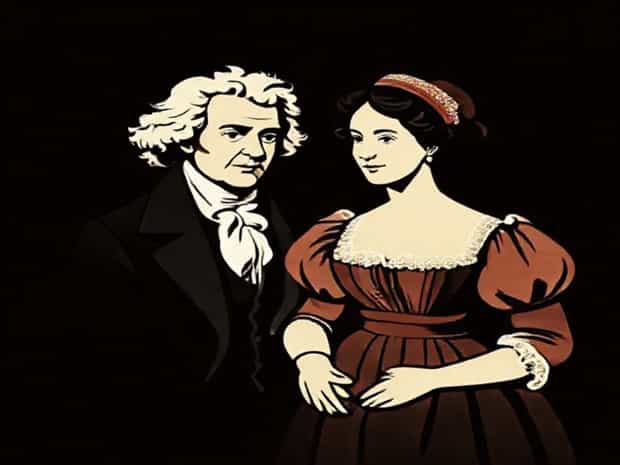
Jean Jacques Rousseau And Mary Wollstonecraft
Jean-Jacques Rousseau and Mary Wollstonecraft are two of the most influential thinkers in the history of philosophy and political thought, particularly in the context of education, human nature, and social equality. While Rousseau laid the foundations for ideas about natural human goodness and social contracts, Wollstonecraft challenged societal norms, advocating for the education and rights of women. Examining their ideas together provides insight into the Enlightenment era’s debates on freedom, morality, and the structure of society. Both thinkers sought to understand the relationship between individuals and the society they inhabit, but they approached these questions from different perspectives, often in ways that complement and challenge one another.
Jean-Jacques Rousseau Human Nature and Society
Rousseau, a prominent eighteenth-century philosopher, is best known for his writings on the natural state of humans and the social contract. He argued that humans are innately good but are corrupted by the artificial constraints of society. In his seminal work, The Social Contract, Rousseau proposes that legitimate political authority arises from a collective agreement to promote the general will, balancing individual freedom with communal responsibility. Rousseau’s philosophy emphasizes the tension between personal liberty and societal obligations, highlighting the importance of moral development and civic engagement.
Rousseau’s Views on Education
Rousseau’s ideas on education are most clearly articulated in Emile, or On Education. He advocates for an approach that respects the natural development of the child, promoting learning through experience rather than strict instruction. Rousseau emphasizes the cultivation of moral character and emotional intelligence, arguing that education should foster independent thinking and a sense of responsibility toward oneself and society. By encouraging children to interact with their environment and develop self-awareness, Rousseau believes education can preserve the innate goodness of human beings while preparing them to participate ethically in social life.
Rousseau and the Role of Women
Rousseau’s perspective on women, particularly in Emile, has been controversial. He contends that women’s education should focus primarily on preparing them to be supportive companions and caretakers, rather than independent thinkers. While he acknowledges women’s moral and emotional capacities, he restricts their social roles to domestic spheres. This view reflects the gender norms of his time and sparked significant critique from later thinkers, most notably Mary Wollstonecraft.
Mary Wollstonecraft Advocacy for Women’s Rights
Mary Wollstonecraft, an eighteenth-century British philosopher and writer, is best known for her groundbreaking work, A Vindication of the Rights of Woman. She challenged the prevailing notion that women were inherently inferior to men and argued that their perceived weaknesses were the result of limited educational opportunities and social conditioning. Wollstonecraft insisted that women should receive the same rigorous education as men, enabling them to develop reason, moral judgment, and independence. Her advocacy laid the foundation for modern feminist thought and highlighted the importance of equality in both education and societal participation.
Wollstonecraft’s Critique of Rousseau
Wollstonecraft directly engages with Rousseau’s ideas on women and education, particularly his emphasis on domesticity and emotional training. She criticizes his view that women exist primarily to please men, arguing that such a framework perpetuates inequality and limits women’s potential. Wollstonecraft contends that women, like men, are capable of reason and virtue, and that education should nurture these qualities to allow women to contribute meaningfully to society. Her critique of Rousseau underscores the tension between Enlightenment ideals of liberty and the societal practices that restricted certain groups from fully participating in civic life.
Education and Moral Development
Both Rousseau and Wollstonecraft emphasize education as essential for moral development, but they differ in scope and inclusivity. Rousseau focuses on cultivating virtue within the context of male civic responsibility, while Wollstonecraft advocates for equal access to education regardless of gender. For Wollstonecraft, education is a tool for social reform, empowering women to become rational, independent, and ethical members of society. Her work extends Rousseau’s ideas on moral cultivation by arguing that societal progress depends on the intellectual and moral development of all citizens, not just men.
Philosophical and Social Implications
The dialogue between Rousseau and Wollstonecraft highlights broader philosophical and social questions about human nature, equality, and the purpose of education. Rousseau’s emphasis on the natural goodness of humans and the necessity of social structures provides a framework for considering how society shapes individual behavior. Wollstonecraft’s critique exposes the limitations of these frameworks when applied selectively, emphasizing the need for inclusivity and equal opportunity. Together, their ideas encourage a more holistic understanding of human development and social responsibility.
Impact on Modern Thought
- Political Philosophy Rousseau’s concept of the social contract influenced democratic theory, emphasizing collective responsibility and civic engagement.
- Feminist Theory Wollstonecraft’s advocacy for women’s education and rights paved the way for modern feminism and gender equality movements.
- Education Reform Both thinkers contributed to educational philosophy, highlighting the importance of moral and intellectual development through experiential learning.
- Human Rights The intersection of their ideas underscores the necessity of equality, justice, and ethical treatment for all members of society.
- Continued Debate Their contrasting views continue to inspire discussions on gender roles, societal norms, and the ethical responsibilities of citizens.
Integrating Rousseau and Wollstonecraft
While Rousseau and Wollstonecraft approached questions of human nature, education, and social roles from different perspectives, their ideas can be seen as complementary when considering a more inclusive vision of society. Rousseau’s emphasis on natural development and moral cultivation aligns with Wollstonecraft’s insistence on rational education and empowerment, suggesting that a fully virtuous and ethical society requires opportunities for all individuals to develop their capacities. Integrating their insights allows for a broader understanding of liberty, equality, and social responsibility.
Practical Applications
- Inclusive Education Implementing curricula that foster critical thinking, moral reasoning, and experiential learning for both boys and girls.
- Gender Equality Encouraging societal reforms that provide equal opportunities and challenge traditional gender norms.
- Ethical Citizenship Promoting civic education that emphasizes both individual responsibility and collective welfare.
- Empathy and Social Awareness Using literature, discussion, and reflection to cultivate moral sensitivity and understanding of diverse perspectives.
- Lifelong Learning Emphasizing continuous personal and moral development throughout life to contribute positively to society.
Jean-Jacques Rousseau and Mary Wollstonecraft offer profound insights into the nature of human development, the purpose of education, and the organization of society. Rousseau’s emphasis on natural goodness, moral cultivation, and civic responsibility provides a foundational understanding of how individuals interact with societal structures. Wollstonecraft’s critique of gender inequality and her advocacy for women’s education expand these ideas, highlighting the necessity of inclusivity and equal opportunity. Together, their philosophies encourage reflection on the ethical, educational, and social frameworks that shape human potential. By integrating Rousseau’s and Wollstonecraft’s insights, contemporary society can strive toward a more equitable and morally grounded future, ensuring that education, personal development, and civic engagement empower all individuals to contribute meaningfully to the common good.