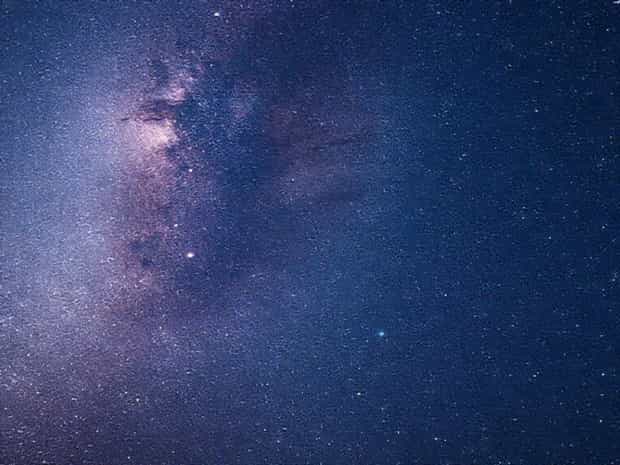
Is The Milky Way A Galaxy?
The Milky Way has fascinated humans for centuries, stretching across the night sky as a hazy band of light visible to the naked eye. Ancient civilizations told myths and stories about its origin, while modern science has revealed its true nature as an immense collection of stars, planets, gas, and dust. Understanding whether the Milky Way is a galaxy involves examining its structure, composition, and position within the broader universe. This exploration allows astronomers and enthusiasts alike to comprehend the scale of our cosmic neighborhood and our place within it. Far from being just a streak of light, the Milky Way is a vast system that exemplifies the characteristics of a galaxy in every sense.
Defining a Galaxy
A galaxy is a gravitationally bound system of stars, stellar remnants, interstellar gas, dust, and dark matter. Galaxies vary greatly in size, shape, and composition, from small dwarf galaxies to enormous spiral and elliptical systems. They are fundamental units of the universe, containing billions or even trillions of stars. Galaxies often host star-forming regions, black holes, and clusters of stars, all interacting through gravity. To determine if the Milky Way qualifies as a galaxy, it is important to compare its characteristics to this definition.
Characteristics of the Milky Way
The Milky Way is a barred spiral galaxy, meaning it has a central bar-shaped structure composed of stars, with spiral arms extending outward. Its diameter is estimated to be around 100,000 light-years, containing an estimated 100 to 400 billion stars, along with countless planets, moons, and other celestial bodies. The galaxy also contains large amounts of gas and dust, particularly in the spiral arms, which are sites of active star formation. At the center lies a supermassive black hole known as Sagittarius A, which influences the motion of nearby stars and the overall dynamics of the galaxy. These features align with the standard properties that define a galaxy.
The Structure of the Milky Way
Understanding the structure of the Milky Way is crucial in identifying it as a galaxy. The galaxy consists of several key components
Galactic Disk
The disk contains the spiral arms where most of the galaxy’s stars, gas, and dust are located. It is relatively thin compared to its diameter and includes star-forming regions and stellar clusters. The disk is where the familiar spiral pattern becomes visible when observed from outside the galaxy.
Galactic Bulge
The bulge is a dense, central region of the Milky Way that contains older stars and is roughly spherical in shape. It is home to the supermassive black hole and is surrounded by the galactic disk. The bulge contains less interstellar gas than the disk, so star formation occurs less frequently here.
Galactic Halo
The halo is an extended, roughly spherical region surrounding the Milky Way, containing old stars, globular clusters, and dark matter. It contributes to the galaxy’s mass and affects its gravitational dynamics, though it is largely invisible in the night sky.
Spiral Arms
The spiral arms are regions of higher density within the disk, containing many young stars and nebulae. These arms give the Milky Way its characteristic barred spiral shape and play a crucial role in star formation and galactic evolution.
Comparison to Other Galaxies
To further understand if the Milky Way is a galaxy, it helps to compare it with other known galaxies. For example, the Andromeda Galaxy, our closest spiral neighbor, shares similar features spiral arms, a central bulge, and a halo of stars and dark matter. Elliptical galaxies, in contrast, are more spherical and lack distinct arms, but they are still galaxies due to their gravitationally bound collections of stars and gas. The Milky Way fits well within the category of a barred spiral galaxy and aligns with the classification used by astronomers worldwide.
Galactic Neighbors and Local Group
The Milky Way is part of the Local Group, a cluster of over 50 galaxies that includes Andromeda, the Triangulum Galaxy, and numerous dwarf galaxies. Its membership in this group reinforces its status as a galaxy, as it participates in gravitational interactions with neighboring galaxies. Studies of these interactions help astronomers understand galactic dynamics, formation, and evolution.
Observational Evidence
Observational astronomy provides direct evidence that the Milky Way is a galaxy. Radio, infrared, and optical telescopes have revealed its spiral structure, star clusters, and supermassive black hole. Observations of stellar motion, particularly using spectroscopy, confirm the gravitational influence of unseen mass, interpreted as dark matter. These studies provide concrete proof that the Milky Way exhibits all the defining features of a galaxy.
Role in Modern Astronomy
- Helps map the structure of the Local Group and neighboring galaxies
- Serves as a laboratory for studying star formation, black holes, and galactic dynamics
- Provides insight into the evolution of spiral galaxies
- Offers opportunities to study dark matter and gravitational effects
- Enhances understanding of our place in the universe
Historical Perspective
Historically, humans did not immediately recognize the Milky Way as a galaxy. Ancient civilizations viewed it as a celestial river or pathway, giving rise to myths and legends. The realization that it is a vast system of stars came with the development of telescopes and modern astronomy. In the early 20th century, Edwin Hubble confirmed the existence of other galaxies, providing context for the Milky Way as one among billions. This historical evolution underscores the importance of observation and technology in shaping our understanding of the universe.
Scientific Significance
Recognizing the Milky Way as a galaxy has profound implications. It allows astronomers to categorize it, study its formation and evolution, and understand its role within the universe. Knowledge about the Milky Way informs research on cosmic distances, the behavior of dark matter, and the lifecycle of stars. It also helps place Earth in a cosmic perspective, demonstrating that our solar system is just one of countless star systems within a massive galactic structure.
The Milky Way is unequivocally a galaxy, fulfilling all the criteria that define these vast cosmic structures. As a barred spiral galaxy, it contains hundreds of billions of stars, interstellar gas, dust, and dark matter, all bound together by gravity. Its structure, dynamics, and position within the Local Group illustrate the complex and awe-inspiring nature of galaxies. From ancient myths to modern astrophysics, the Milky Way has been central to humanity’s understanding of the universe. Recognizing it as a galaxy not only satisfies scientific curiosity but also provides a foundation for exploring the broader cosmos and our place within it. Observing and studying the Milky Way continues to inspire awe, revealing the immense scale, beauty, and complexity of the universe that surrounds us.