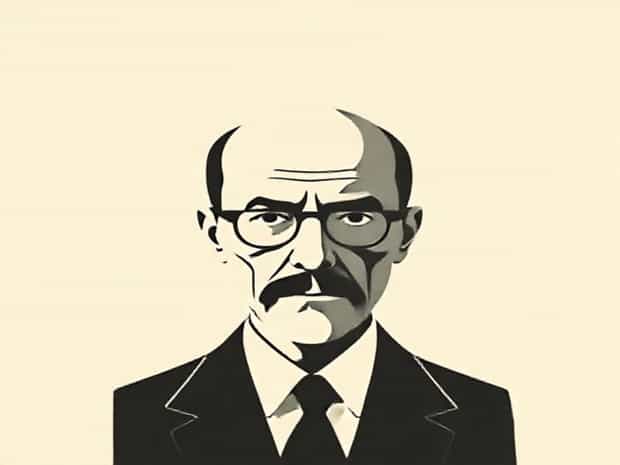
Is Michel Foucault A Postmodernist
Michel Foucault, one of the most influential philosophers and social theorists of the 20th century, is often associated with debates around postmodernism. His writings on power, knowledge, and social institutions have left a profound mark on philosophy, sociology, history, and cultural studies. While some scholars label Foucault as a postmodernist due to his critiques of universal truths and traditional structures of authority, others argue that his work cannot be neatly categorized within the postmodernist framework. Understanding Foucault’s philosophy and its relationship to postmodernism requires careful consideration of his intellectual trajectory, key concepts, and the nuances of the term postmodernist.
Foucault’s Intellectual Background
Born in 1926 in Poitiers, France, Michel Foucault was trained in philosophy and psychology, later expanding his interests to history, sociology, and political theory. Foucault’s early work was influenced by structuralism, phenomenology, and Marxism, but he eventually developed a unique critical approach that challenged conventional notions of truth, knowledge, and social order. His focus on historical epistemology and the ways in which power shapes human understanding distinguished him from other intellectual movements of his time.
Major Works and Themes
Foucault’s scholarship spans several decades and covers a wide array of subjects. Key works include Madness and Civilization, The Birth of the Clinic, Discipline and Punish, and the multi-volume History of Sexuality. Across these works, Foucault examines the relationships between power and knowledge, the construction of social norms, and the historical contingencies that shape human experience. Central to his thought is the idea that knowledge is never neutral but is always intertwined with social and political power.
Postmodernism Definition and Context
Postmodernism, as an intellectual and cultural movement, emerged in the mid-20th century as a reaction against modernist ideals of objective knowledge, universal truth, and linear progress. Postmodernists question meta-narratives, embrace pluralism, and highlight the role of language, discourse, and social constructs in shaping reality. The term encompasses a wide range of theories in philosophy, literature, art, and social sciences, and it often emphasizes skepticism toward absolute claims and authoritative structures.
Why Foucault Is Sometimes Called a Postmodernist
Foucault is frequently associated with postmodernism because of his critiques of grand narratives, his focus on the contingency of knowledge, and his analysis of power relations. Several elements of his thought resonate with postmodernist principles
- Rejection of Universal TruthsFoucault argued that truths are historically and socially constructed, rather than absolute or universal.
- Focus on Power and DiscourseHe emphasized how knowledge and power are intertwined, showing that institutions and discourses shape human behavior and understanding.
- Historical RelativismFoucault’s genealogical method traced the development of concepts such as madness, punishment, and sexuality, highlighting their historical contingency.
- Critique of Traditional AuthorityHis analyses challenge dominant structures, including the medical, legal, and educational systems.
Arguments Against Labeling Foucault as a Postmodernist
Despite these resonances, many scholars argue that Foucault should not be classified strictly as a postmodernist. Several reasons support this view
Distinct Methodology
Unlike many postmodernists who adopt a relativist or nihilistic stance, Foucault employed rigorous historical and archival methods. His work is empirical in nature, grounded in detailed historical research rather than purely theoretical speculation. This methodological rigor differentiates him from certain postmodernist thinkers who focus primarily on textual analysis or deconstruction.
Emphasis on Ethics and Resistance
Foucault’s later work, particularly in The History of Sexuality and The Government of Self and Others, explored the ethics of self-formation and the possibility of resistance to power structures. While postmodernism often emphasizes fragmentation and skepticism, Foucault retained a normative concern for how individuals could exercise freedom and agency within power relations. This focus on praxis distinguishes his thought from some postmodern perspectives.
Complex Relationship with Structuralism
Foucault’s work evolved from structuralist influences, and he himself resisted easy categorization. He rejected both traditional modernist frameworks and simple postmodernist labels, seeking instead to develop a nuanced critique of knowledge, society, and subjectivity. This intellectual independence makes it problematic to label him definitively as a postmodernist, even if his ideas influenced the postmodern movement.
Foucault’s Influence on Postmodern Thought
Although he may not be strictly a postmodernist, Foucault’s ideas have profoundly influenced postmodern theory. Scholars in literary studies, cultural criticism, sociology, and gender studies frequently draw on his concepts of power, discourse, and subjectivity. The postmodern emphasis on deconstructing dominant narratives and examining social constructions owes much to Foucault’s genealogical approach and his attention to historical context.
Applications in Various Fields
- LiteratureFoucault’s analyses of discourse and power influence literary theory, particularly in examining how texts reflect and enforce societal norms.
- Gender StudiesFeminist and queer theorists utilize Foucault’s insights into sexuality and power to challenge conventional notions of identity and social roles.
- Political ScienceHis theories inform discussions of governance, surveillance, and state power, particularly in studies of social control and civil liberties.
- Education and SociologyFoucault’s ideas help analyze institutional practices, discipline, and the shaping of knowledge in schools, hospitals, and prisons.
Michel Foucault occupies a complex position in intellectual history. While his critiques of universal truths, focus on power and discourse, and genealogical methodology align with postmodernist concerns, his empirical rigor, ethical reflections, and unique methodological approach set him apart from conventional postmodernist labeling. Whether or not he is considered a postmodernist, his influence on philosophy, social theory, and cultural studies is undeniable. Foucault’s work challenges readers to reconsider the relationships between knowledge, power, and society, encouraging critical inquiry into the historical and social construction of truth. By examining his thought, scholars and students alike gain a deeper understanding of the ways ideas shape human experience and the enduring relevance of his insights in contemporary intellectual discourse.