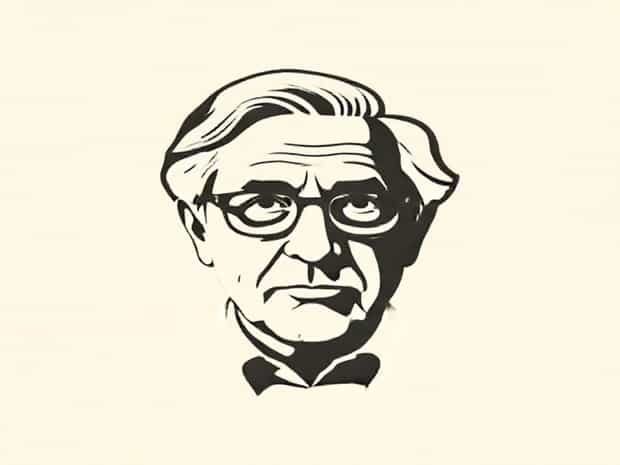
Is Chomsky A Linguist
Noam Chomsky is widely recognized as one of the most influential intellectuals of the 20th and 21st centuries, and his work has had a profound impact on the field of linguistics. Many people wonder whether Chomsky is a linguist, and the answer is a definitive yes. He is not only a linguist but also a revolutionary figure whose theories reshaped our understanding of language, cognition, and human communication. While he is also known for his political activism and writings on media and power, his foundational contributions to linguistics remain central to his legacy.
Chomsky’s Background in Linguistics
Noam Chomsky was born in 1928 in Philadelphia, Pennsylvania. He developed an early interest in language and mathematics, which would later inform his groundbreaking theories. Chomsky studied at the University of Pennsylvania, where he earned a Bachelor’s degree in linguistics, philosophy, and mathematics. He then pursued graduate studies at Harvard University, focusing on the study of language and its structures. Chomsky’s academic training provided a strong foundation for his pioneering work in generative grammar and transformational grammar.
Generative Grammar
One of Chomsky’s most significant contributions to linguistics is the development of generative grammar. Generative grammar is a theory that seeks to describe the implicit knowledge humans have about their language. According to this theory, humans possess an innate capacity for language, and the rules of grammar are part of our biological endowment. Generative grammar allows linguists to model the structure of sentences and understand how humans can produce and comprehend an infinite number of sentences using a finite set of rules.
Transformational Grammar
Closely related to generative grammar is Chomsky’s theory of transformational grammar. This theory proposes that surface structures of sentences the words and syntax we observe are derived from deeper underlying structures. Transformational rules govern how these deep structures are converted into the sentences we speak or write. This approach revolutionized the study of syntax and provided a framework for understanding how language operates cognitively, influencing both theoretical and applied linguistics.
Universal Grammar
Another key concept introduced by Chomsky is the idea of Universal Grammar. Universal Grammar posits that all human languages share a common underlying structure. According to this theory, children are born with an inherent ability to acquire language, and linguistic diversity arises from variations in parameters within a universal set of grammatical rules. This idea has been pivotal in psycholinguistics and developmental linguistics, explaining why children can acquire complex languages quickly and uniformly across different cultures.
Impact on Linguistics
Chomsky’s work transformed linguistics from a descriptive discipline to a formal, scientific field. Before Chomsky, linguistics largely focused on cataloging languages and describing their structures. Chomsky introduced a rigorous theoretical approach that emphasized underlying principles of language rather than just surface forms. His theories laid the groundwork for modern syntactic analysis, language acquisition research, and computational linguistics.
Applications of Chomsky’s Theories
- Language AcquisitionChomsky’s theories explain how children learn languages rapidly and efficiently, influencing educational practices and developmental studies.
- Computational LinguisticsGenerative grammar has applications in natural language processing, machine translation, and artificial intelligence.
- PsycholinguisticsUnderstanding deep structures and transformations informs studies of brain function and language processing.
- Comparative LinguisticsUniversal Grammar provides a framework for comparing languages and understanding linguistic universals across cultures.
Chomsky Beyond Linguistics
While Chomsky is undoubtedly a linguist, he is also known for his extensive work in political science, philosophy, and media criticism. He has authored numerous books and essays on politics, war, and media influence, often highlighting issues of power, propaganda, and social justice. Despite this broader focus, it is his contributions to linguistics that form the foundation of his scholarly reputation, and they continue to influence new generations of linguists, cognitive scientists, and philosophers of language.
Recognition and Influence
Chomsky’s work has earned him widespread recognition in the academic community. He has held prestigious academic positions, including Professor Emeritus at the Massachusetts Institute of Technology (MIT), where he spent decades developing and teaching his theories. His influence extends globally, with researchers, linguists, and educators building upon his frameworks and applying them in diverse fields such as computer science, psychology, and anthropology. Chomsky’s impact on linguistics is enduring and pervasive.
Controversies and Critiques
Although Chomsky’s theories have been revolutionary, they have not been without controversy. Some linguists argue that his models of Universal Grammar are too rigid or abstract, while others debate the extent of innate linguistic structures versus cultural and environmental influences. Nonetheless, even critics acknowledge that Chomsky’s work fundamentally shifted the paradigm of linguistic study, moving it toward a scientific and cognitive framework.
In summary, Noam Chomsky is unquestionably a linguist. His groundbreaking theories in generative grammar, transformational grammar, and Universal Grammar have redefined how we understand human language and cognition. While he is also known for his political activism and philosophical writings, it is his work in linguistics that has had the most profound and lasting impact. Chomsky’s contributions have influenced multiple disciplines, including psycholinguistics, computational linguistics, and language education, cementing his status as one of the most influential linguists in history. Understanding Chomsky’s role in linguistics helps clarify the foundational principles of language and highlights the enduring relevance of his work for scholars and learners around the world.