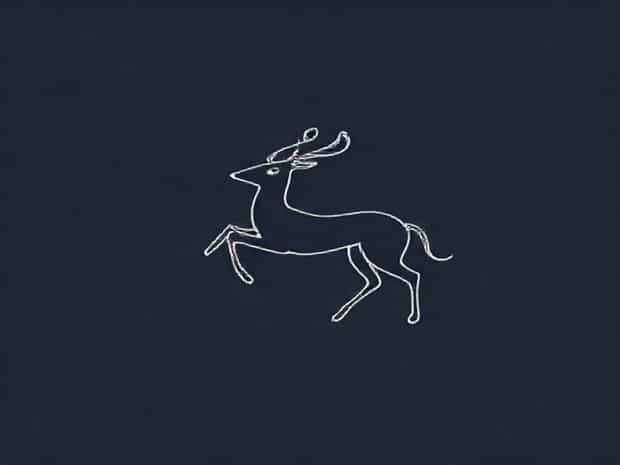
Is Camelopardalis An Ancient Constellation
The night sky has fascinated humans for thousands of years, with countless stars forming patterns that we call constellations. Among these constellations is Camelopardalis, a lesser-known yet intriguing formation located in the northern celestial hemisphere. Its name, derived from the Latin words for camel” and “leopard,” reflects the appearance of a giraffe, which the ancient astronomers imagined when they first charted these stars. Many stargazers and astronomy enthusiasts wonder if Camelopardalis is truly an ancient constellation, dating back to the earliest observations of the heavens, or if it is a more recent addition to the celestial map.
The Origins of Camelopardalis
Camelopardalis is often considered a relatively modern constellation, unlike some of the more prominent constellations such as Orion or Ursa Major. It was first introduced in the early 17th century by the Dutch astronomer Petrus Plancius, who included it in his star charts in 1612 or 1613. Plancius was known for creating several new constellations, many of which were inspired by exotic animals or objects encountered during the Age of Exploration. Camelopardalis was intended to represent a giraffe, an animal that was becoming known to Europeans through trade with Africa. Although it is positioned in the northern sky, this constellation is faint and contains no particularly bright stars, which contributes to its relatively obscure status in modern astronomy.
Historical Context
Unlike constellations such as Taurus or Leo, which have roots in ancient Mesopotamian and Greek mythology, Camelopardalis does not have a long mythological history. Ancient civilizations used star patterns for agricultural, navigational, and ceremonial purposes, often attributing stories and deities to easily recognizable constellations. Camelopardalis, however, was introduced during a period when European astronomers were mapping the skies with more precision and adding new constellations to fill in gaps in the northern celestial hemisphere. Its creation reflects both scientific curiosity and the cultural exchange of the 17th century, rather than ancient myth or legend.
Location and Visibility
Camelopardalis is located near the constellations Ursa Major, Cassiopeia, and Perseus, covering an area of approximately 757 square degrees. Despite its large size, the constellation is composed of faint stars, with the brightest, Beta Camelopardalis, reaching only magnitude 4.0. This makes Camelopardalis difficult to observe with the naked eye, especially in areas with light pollution. Its position near well-known constellations like Ursa Major helps astronomers and stargazers identify it, but its faintness has contributed to its lack of prominence in both historical records and popular culture.
Modern Recognition
Today, Camelopardalis is officially recognized by the International Astronomical Union (IAU), which standardized constellation boundaries in 1930. While it may not hold the same mythical or historical significance as ancient constellations, it serves as an important reference point for astronomers studying deep-sky objects. Camelopardalis contains several notable galaxies, including NGC 2403 and IC 342, which are of interest to researchers. Its recognition highlights the continuing evolution of how humans categorize and study the night sky.
Comparison with Ancient Constellations
Ancient constellations, such as Orion, Scorpius, and Leo, often have roots in mythology and were recorded by multiple cultures independently, including the Babylonians, Greeks, and Egyptians. These constellations typically include bright stars that are easily visible to the naked eye and serve as guides for navigation or seasonal timing. In contrast, Camelopardalis lacks the vivid storytelling and widespread recognition associated with these ancient formations. Its stars are relatively dim, and it does not have associated myths that span centuries. Therefore, it is considered a modern constellation rather than an ancient one, despite being centuries old.
Educational and Observational Importance
Even though Camelopardalis is not an ancient constellation, it plays a role in modern astronomy education. Teachers and amateur astronomers often use it to demonstrate how constellations can be added and categorized based on scientific needs rather than purely mythological or cultural significance. Observing Camelopardalis also offers the opportunity to study less prominent stars and explore galaxies and nebulae that lie within its boundaries. Its inclusion in star charts helps ensure that the northern sky is thoroughly mapped, providing a framework for identifying other celestial objects.
While Camelopardalis is not an ancient constellation with roots in mythology, it represents a fascinating chapter in the history of astronomy. Introduced in the early 17th century by Petrus Plancius, it reflects the blending of scientific discovery, cultural exchange, and human curiosity during a period of global exploration. Located in the northern sky near well-known constellations such as Ursa Major and Cassiopeia, Camelopardalis is composed of faint stars and remains less prominent in both popular culture and observational astronomy. Nevertheless, its recognition by the International Astronomical Union and its inclusion in educational materials emphasize its ongoing relevance. For stargazers, Camelopardalis offers a glimpse into the ways in which humans have expanded and refined their understanding of the night sky over the centuries, blending observation, science, and imagination to create a comprehensive celestial map.
Key Facts about Camelopardalis
- Introduced by Petrus Plancius in the early 17th century.
- Represents a giraffe, combining the features of a camel and a leopard.
- Located in the northern celestial hemisphere, near Ursa Major and Cassiopeia.
- Contains faint stars, with Beta Camelopardalis being the brightest at magnitude 4.0.
- Officially recognized by the International Astronomical Union in 1930.
- Includes several notable deep-sky objects, such as NGC 2403 and IC 342.
- Not associated with ancient myths or legends, distinguishing it from older constellations.
Observing Tips
- Best visible in northern latitudes during winter months.
- Use binoculars or a telescope to observe faint stars and galaxies within the constellation.
- Look for nearby bright constellations like Ursa Major and Cassiopeia to help locate Camelopardalis.
- Ideal for educational stargazing to learn about modern constellations and deep-sky objects.
“