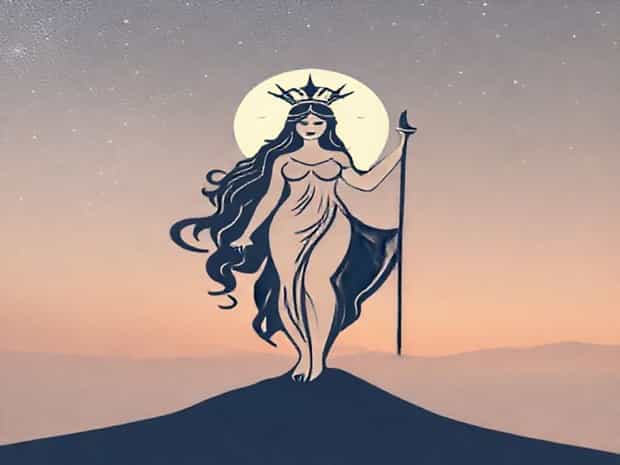
Is Andromeda A Goddess
In the rich tapestry of Greek mythology, Andromeda is a name that evokes images of bravery, beauty, and celestial stories. Many people may wonder whether Andromeda is considered a goddess, especially given her prominence in myths, constellations, and cultural references. Understanding her role requires exploring the myths surrounding her, her connection to the gods and heroes, and the ways in which her story has been interpreted over centuries. Andromeda is a central figure in several myths, often associated with themes of sacrifice, rescue, and cosmic symbolism, though her classification as a goddess is more nuanced than it might appear at first glance.
Who is Andromeda in Greek Mythology?
Andromeda is traditionally known as the daughter of Cepheus and Cassiopeia, the king and queen of the ancient kingdom of Aethiopia. According to myth, her mother’s vanity in claiming that Andromeda’s beauty surpassed that of the Nereids, sea nymphs of great reverence, angered the god Poseidon. To appease Poseidon and prevent a devastating flood, Andromeda was chained to a rock as a sacrifice to a sea monster. She was ultimately rescued by the hero Perseus, who used the head of Medusa to defeat the beast. This narrative portrays Andromeda as a mortal princess rather than a goddess, highlighting her role in human drama and heroism.
Andromeda’s Connection to the Divine
Although Andromeda is not traditionally classified as a goddess, her story is intertwined with divine elements. Poseidon, a major Olympian deity, is central to the myth, and Perseus receives supernatural aid, including winged sandals from Hermes and guidance from Athena. These divine interventions place Andromeda in close proximity to the gods, and her fate is largely shaped by divine forces. This connection underscores her significance in mythology and illustrates how mortals and gods often intersect in Greek myths.
The Constellation Andromeda
Andromeda’s story extends beyond terrestrial myths into the cosmos. Ancient Greeks immortalized her in the night sky with the constellation Andromeda. Placed near constellations representing Perseus, Cassiopeia, Cepheus, and the sea monster Cetus, the Andromeda constellation reflects the narrative of her rescue and familial ties. While this celestial naming elevates her to a symbolic, almost divine status in the sky, it does not make her a goddess. Instead, the constellation serves as a cultural and astronomical commemoration of her story.
Andromeda in Literature and Art
Throughout history, Andromeda has inspired countless works of literature, art, and music. Renaissance painters depicted her chained to the rock, emphasizing vulnerability and heroism. Poets have celebrated her beauty and endurance, while modern novels and media reinterpret her character in contemporary contexts. In these artistic portrayals, Andromeda sometimes takes on quasi-divine qualities due to her association with myth, heroism, and celestial imagery. However, these interpretations are symbolic and cultural rather than theological; she remains a mortal figure elevated by narrative and imagination.
Differences Between Mortals and Goddesses in Greek Mythology
Understanding why Andromeda is not a goddess requires examining the distinctions in Greek mythology. Goddesses are immortal beings, often with domain over natural phenomena, human affairs, or specific virtues. Examples include Athena, goddess of wisdom; Aphrodite, goddess of love; and Demeter, goddess of agriculture. Mortals like Andromeda, even when central to important myths, lack inherent divine powers and mortality is part of their narrative. While she interacts with gods and receives their protection, Andromeda’s human qualities define her story, making her a celebrated heroine rather than a deity.
Symbolic Significance of Andromeda
Andromeda’s story carries symbolic meanings that extend beyond her mortal status. Her chaining to the rock represents vulnerability and the trials faced by individuals in life. Her rescue by Perseus symbolizes heroism, courage, and divine assistance in overcoming adversity. In the constellation, she represents continuity, beauty, and the intersection between myth and the cosmos. These symbolic layers have led some cultural interpretations to imbue her with godlike significance, though this is metaphorical rather than literal.
Modern Interpretations of Andromeda
In contemporary culture, Andromeda continues to captivate audiences. References appear in novels, movies, and video games, often reimagining her as a strong and active protagonist rather than a passive damsel in distress. These adaptations sometimes blur the lines between mortal and divine, portraying her as heroic, wise, or supernatural. Despite these creative liberties, classical mythology consistently depicts her as a mortal princess who interacts with gods but does not possess divine status herself.
Andromeda is a recognized figure in Greek mythology, renowned for her beauty, resilience, and connection to heroic narratives. While she interacts with gods, inspires art and literature, and is immortalized in the stars through the Andromeda constellation, she is not considered a goddess. Instead, she is a mortal princess whose story reflects human vulnerability, divine intervention, and cultural symbolism. The question Is Andromeda a goddess? highlights the importance of distinguishing between mortal heroes and deities in mythology while appreciating how myths elevate human characters through storytelling, symbolism, and celestial commemoration. Andromeda’s enduring legacy demonstrates how mortal figures can achieve immortal recognition through myth, art, and cultural memory.