Is An Ovenbird An Edge Species
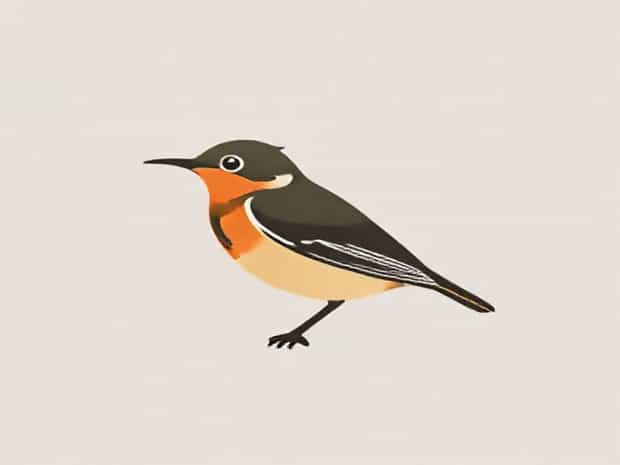
The ovenbird is a fascinating species of songbird that has captured the attention of ornithologists and birdwatchers alike due to its distinctive nesting behavior and ecological preferences. Found predominantly in North America, this small warbler is known for its unique dome-shaped nest that resembles a traditional outdoor oven, giving the bird its common name. In recent years, ecologists have sought to understand whether the ovenbird can be classified as an edge species, meaning a species that thrives in transitional zones between two different habitats, such as forest edges and open fields. Examining the behavior, habitat preferences, and population dynamics of the ovenbird helps clarify its ecological role and conservation importance.
Understanding Edge Species
Edge species are organisms that are particularly adapted to living in ecotones, which are transitional areas between two distinct ecosystems. These species often exploit the resources and environmental conditions found at habitat boundaries, such as increased sunlight, diverse vegetation, and higher insect abundance. Edge species can be sensitive to habitat fragmentation, as the creation or destruction of edges directly impacts their living conditions. While some species thrive along edges, others prefer interior habitats and may decline when their forested or open habitat is altered.
Characteristics of an Edge Species
Typical features of edge species include
- Preference for transitional areas between habitats.
- Ability to exploit resources from both adjoining ecosystems.
- Adaptations to increased predation risk or environmental variability at edges.
- Flexibility in nesting, feeding, and territorial behavior to take advantage of edge resources.
By understanding these characteristics, researchers can evaluate whether the ovenbird fits the profile of an edge species.
Habitat Preferences of the Ovenbird
The ovenbird primarily inhabits mature deciduous and mixed forests across eastern and central North America. Unlike many warblers that forage in the upper canopy, ovenbirds are ground-nesting and spend much of their time on the forest floor searching for insects and other small invertebrates. Their nesting preference for dense leaf litter and shaded areas suggests a strong affinity for interior forest environments rather than edges. Studies have consistently shown that ovenbirds avoid heavily fragmented landscapes and habitats with excessive edge exposure, which can increase predation risk on their nests.
Nesting Behavior and Predation Risks
Ovenbirds construct dome-shaped nests on the forest floor, camouflaged within leaf litter and vegetation. This nesting strategy provides protection from avian predators, but it also exposes them to mammalian predators often found near forest edges. Research indicates that ovenbird nest success declines significantly in fragmented habitats with a higher proportion of edge habitat, as predators such as raccoons, squirrels, and snakes are more abundant in these areas. This evidence suggests that ovenbirds are better adapted to interior forest environments rather than edges.
Foraging and Feeding Ecology
Ovenbirds are insectivorous and rely on a diet of ants, beetles, caterpillars, and other small invertebrates found in the forest floor’s leaf litter. The abundance of their food sources tends to be higher in undisturbed interior forests, where soil moisture and leaf litter cover are stable. Although some insects can be found near edges, the overall food availability at edges may be less predictable due to microclimatic fluctuations and human disturbance. Therefore, the foraging ecology of the ovenbird aligns more closely with interior forest specialists than with typical edge species.
Territorial Behavior and Reproduction
Ovenbirds are highly territorial during the breeding season, with males establishing territories in interior forest patches. These territories are defended vigorously, and the density of ovenbird territories tends to be higher in large, contiguous forests. The need for relatively undisturbed forest patches for successful reproduction further supports the idea that ovenbirds are not adapted to edge habitats. In fragmented landscapes, where edge-to-interior ratios are high, ovenbird populations often show lower densities and reproductive success.
Conservation Implications
Understanding whether the ovenbird is an edge species has important conservation implications. Because they are primarily forest-interior specialists, ovenbirds are vulnerable to habitat fragmentation caused by logging, urbanization, and agricultural expansion. Preserving large tracts of mature forest is critical for maintaining ovenbird populations. Edge habitats created by deforestation or human development may increase nest predation and reduce breeding success, highlighting the importance of forest connectivity and interior habitat conservation.
Management Strategies
Effective conservation strategies for ovenbirds include
- Protecting large, contiguous forest patches from fragmentation.
- Maintaining dense understory and leaf litter to support nesting and foraging.
- Minimizing the creation of artificial edges through careful land management.
- Monitoring populations to assess impacts of forest management practices.
These strategies emphasize the interior forest dependence of ovenbirds, rather than reliance on edge environments.
Scientific Evidence and Studies
Multiple studies have examined the relationship between ovenbirds and forest edges. For instance, research conducted in the northeastern United States found that ovenbird density and nest success were significantly lower near forest edges compared to interior sites. Predation rates increased within 50 meters of an edge, suggesting that edge habitats are less suitable for this species. These findings reinforce the classification of the ovenbird as a forest-interior species rather than an edge species. Additional long-term studies have highlighted the negative effects of forest fragmentation on ovenbird population dynamics, further supporting this conclusion.
Comparison with True Edge Species
Edge species, such as the indigo bunting or brown-headed cowbird, thrive in habitats where forest meets open areas. They exploit resources from both ecosystems and often increase in abundance in fragmented landscapes. In contrast, ovenbirds exhibit decreased abundance and reproductive success in these environments, clearly distinguishing them from true edge-adapted species. Their ecological traits, nesting habits, and feeding preferences collectively demonstrate that they are adapted to stable interior forest environments rather than variable edge habitats.
the ovenbird is not an edge species. Its reliance on mature, contiguous forest habitats, ground-nesting behavior, sensitivity to predation near edges, and preference for stable foraging conditions indicate that it is a forest-interior specialist. While edges may provide some resources for other species, ovenbirds are negatively impacted by habitat fragmentation and edge exposure. Conservation efforts should prioritize protecting large forest tracts, minimizing human-induced edges, and maintaining the ecological integrity of interior forest habitats. By understanding the habitat requirements of ovenbirds, conservationists can ensure the long-term survival of this iconic North American warbler and preserve the delicate balance of forest ecosystems where it thrives.