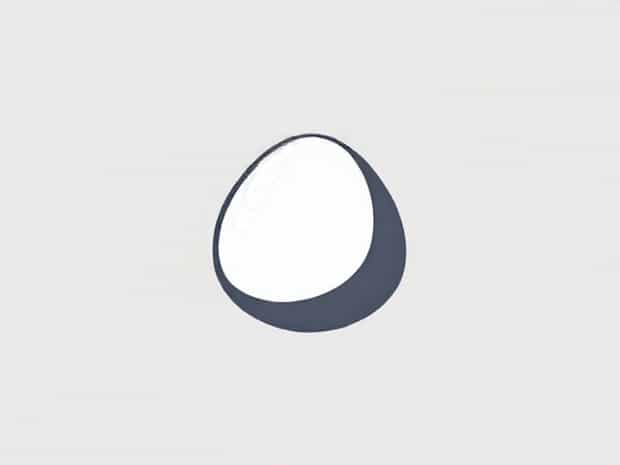
Is An Egg An Ovoid
Eggs are one of the most common and recognizable objects in both nature and everyday life, yet many people may not realize that their shape has a specific geometric classification. Commonly, eggs are described as ovoid, a term that refers to their slightly elongated, oval form. Understanding why an egg is considered ovoid involves examining its structure, the biological purpose behind its shape, and how this shape benefits both the egg and the species that lays it. From birds to reptiles and even certain insects, the ovoid form of eggs has evolved to maximize protection, facilitate incubation, and ensure proper development of the embryo.
Defining the Ovoid Shape
The term ovoid refers to a three-dimensional shape that resembles an egg, broader at one end and tapering at the other. This is different from a perfect sphere or a simple oval. In geometry, an ovoid is often described as having a long axis and a short axis, creating a shape that is symmetrical but not uniform. This specific shape is what gives eggs their characteristic appearance, distinguishing them from other natural or man-made objects.
Characteristics of an Ovoid
- One end is wider and rounder, while the other end is narrower and slightly pointed.
- The curvature changes gradually from the wider end to the narrower end, creating an elongated effect.
- The shape allows for stability when placed on a flat surface, often preventing rolling in a straight line.
These features make the ovoid shape highly functional for both biological and practical purposes.
Biological Purpose of Egg Shape
The ovoid shape of eggs is not arbitrary; it has evolved to serve several important biological functions. Birds, reptiles, and some fish lay eggs that need to withstand environmental challenges, and the shape helps protect the developing embryo inside. The broader end provides space for the embryo and essential structures, while the narrower end allows for easy positioning within the nest or protective environment.
Benefits of an Ovoid Shape
- Incubation efficiencyThe shape allows eggs to be stacked or nestled closely together, which helps retain heat during incubation.
- Structural strengthThe curvature distributes pressure evenly, reducing the likelihood of cracks under weight.
- Reduced rollingOvoid eggs tend to roll in a circular pattern rather than a straight line, keeping them closer to the nest and safer from predators.
Variations Among Species
While all eggs share the ovoid classification, there are subtle variations depending on the species. Bird eggs, for example, often exhibit asymmetry in their ovoid shape, with the narrow end slightly pointed to prevent rolling away. Reptile eggs tend to be more uniformly oval or elliptical, optimized for burial or hiding in sandy environments. Fish eggs and amphibian eggs may be spherical, but in many cases, they are still described as ovoid due to their slight elongation and rounded ends.
Examples in Nature
- Chicken eggs Classic ovoid shape with a broader base and tapered top.
- Duck eggs Slightly larger and more elongated than chicken eggs, also ovoid.
- Birds of prey Often highly pointed at one end to prevent rolling and to fit securely in nests built on cliffs.
- Reptiles Turtle eggs tend to be soft-shelled and more elongated, still fitting the ovoid description.
Scientific and Mathematical Perspective
Scientists and mathematicians have studied the ovoid shape of eggs for centuries. The shape is mathematically described as a solid of revolution generated by rotating an ellipse around its long axis or by more complex formulas that approximate the natural asymmetry. The precise shape is crucial for biological reasons, such as allowing gas exchange through the eggshell and supporting the mechanical strength required for hatching.
Practical Applications of Ovoid Shape
- Engineering Designers study egg shapes for aerodynamics and structural efficiency.
- Architecture Egg-like domes or structures draw inspiration from the strength of ovoid forms.
- Food industry Understanding egg shapes helps in packaging, transport, and cooking methods.
Eggs in Human Culture
Beyond biology, the ovoid shape of eggs has cultural significance. From decorative Easter eggs to symbols of fertility and new life, the shape itself is recognizable and meaningful across different societies. The visual simplicity and universality of the ovoid shape make it a powerful symbol in art, religion, and everyday life. Its geometric and aesthetic appeal reinforces the importance of understanding the egg as an ovoid object.
Symbolism of Ovoid Eggs
- Fertility and life Eggs symbolize new beginnings due to their role in reproduction.
- Protection and nurturing The ovoid shape represents security, housing life within a protective shell.
- Art and design The simplicity of the shape allows for creative representation in various forms of visual art.
an egg is definitively classified as an ovoid due to its unique three-dimensional, asymmetrical shape. This form is essential for both biological and functional purposes, providing strength, stability, and protection for the developing embryo. Variations in the ovoid shape across species reflect adaptations to different environments and reproductive strategies. The study of eggs as ovoids extends beyond biology, influencing mathematics, engineering, and human culture. Recognizing an egg as an ovoid helps us appreciate the intricate design of nature and the practical applications that arise from this simple yet remarkable shape.