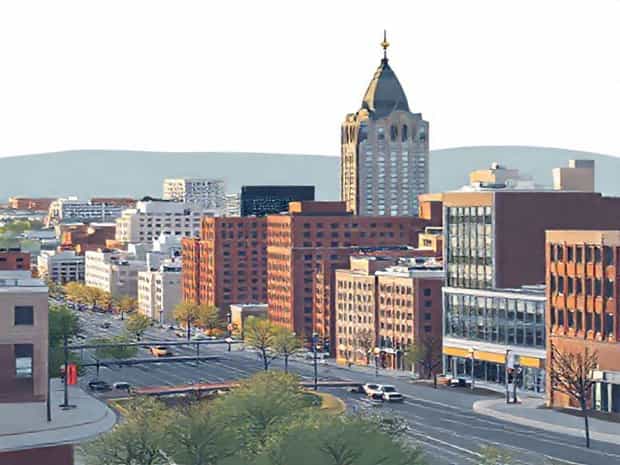
Is Allentown A City
Allentown is a name that often comes up in conversations about Pennsylvania, but many people wonder if it is officially classified as a city. Located in the eastern part of the state, Allentown has a rich history, a diverse population, and a significant role in the economic and cultural landscape of the region. Understanding whether Allentown is a city involves looking at its legal status, historical development, population size, and the services it provides to residents. Clarifying this can help people who are researching geography, planning travel, or simply curious about American cities.
Allentown’s Official Status
Allentown is indeed officially recognized as a city. It is the third-largest city in Pennsylvania, following Philadelphia and Pittsburgh, and serves as the county seat of Lehigh County. The designation of Allentown as a city reflects its population, governance structure, and municipal services. As a city, Allentown operates under a mayor-council government system, providing various services to its residents, including public safety, education, and infrastructure maintenance.
Legal and Administrative Recognition
- Incorporation Allentown was incorporated as a borough in 1811 and later became a city in 1867.
- Government The city has a mayor and city council responsible for local legislation and administration.
- Services Being a city, Allentown provides municipal services such as police, fire departments, public works, and city planning.
These features clearly establish Allentown as an official city rather than a town, village, or unincorporated area.
Population and Demographics
Population size is one of the criteria that often distinguishes a city from smaller municipalities. Allentown has a population of over 120,000 residents, making it a significant urban center in Pennsylvania. The city is known for its diversity, including a mix of ethnic and cultural communities. This population size and diversity support its classification as a city and contribute to its economic and cultural vitality.
Key Demographic Information
- Population Approximately 120,000 to 125,000 residents.
- Diversity Includes Hispanic, African American, Asian, and European communities.
- Density High population density compared to surrounding towns and rural areas.
- Economic Activity Presence of businesses, healthcare, education, and manufacturing sectors.
These demographics underscore the urban nature of Allentown, supporting its city status and highlighting its importance in the Lehigh Valley region.
Historical Background
Understanding Allentown’s history helps explain how it became a city. The area was initially settled in the 18th century and named after William Allen, a prominent colonial-era figure. Over the years, the borough grew rapidly due to industrial development, transportation access, and its strategic location near major rivers and railroads. By 1867, the growing population and economic significance led to its official recognition as a city, a status it has maintained ever since.
Historical Highlights
- 18th Century Settlement and early development in the Lehigh Valley.
- 19th Century Industrial growth, including textile mills and manufacturing.
- 1867 Official incorporation as a city, reflecting its urban development and governance needs.
- 20th Century Expansion of infrastructure, education, and cultural institutions.
This historical progression shows that Allentown’s evolution from a small settlement to a major urban center was a natural process leading to its city status.
Government and Civic Structure
As a city, Allentown operates under a structured municipal government that manages local policies, public services, and urban planning. The city’s governance system includes an elected mayor, city council, and various departments responsible for daily operations and long-term development. This administrative structure is typical of cities in the United States and distinguishes Allentown from smaller municipalities or unincorporated communities.
Municipal Services
- Public Safety Police and fire departments ensuring community protection.
- Infrastructure Maintenance of roads, bridges, and public facilities.
- Education Oversight of public schools and support for educational initiatives.
- Community Services Parks, recreation programs, and cultural events.
The availability and scope of these services further reinforce Allentown’s status as a city, capable of supporting a large and diverse population.
Economic and Cultural Significance
Allentown is not only a city by legal and administrative definition but also by its economic and cultural importance. The city serves as a hub for commerce, healthcare, education, and the arts in the Lehigh Valley region. Its central location, combined with a strong infrastructure network, makes it a key player in regional development. Cultural institutions, museums, festivals, and theaters contribute to the city’s vibrant community life, characteristic of urban centers.
Economic Highlights
- Manufacturing and industry Historically significant and still present in modern Allentown.
- Healthcare Major hospitals and medical centers serving residents and surrounding communities.
- Education Colleges, universities, and public school systems provide learning opportunities.
- Commerce Retail, service industries, and business districts supporting local economy.
Cultural Highlights
- Art and music festivals attracting regional visitors.
- Museums and historical sites preserving local heritage.
- Diverse culinary scene reflecting multicultural influences.
- Theaters and performance venues contributing to urban life.
These economic and cultural features emphasize that Allentown functions as a city in both practical and symbolic ways, beyond just its legal recognition.
Common Misconceptions
Some people may assume Allentown is a town or suburb because it is not as widely known as Philadelphia or Pittsburgh. Others confuse it with smaller municipalities nearby. However, these misconceptions overlook its population size, municipal structure, and urban characteristics. Recognizing Allentown as a city provides a clearer understanding of its role in Pennsylvania and the Lehigh Valley region.
Reasons for Misunderstanding
- Relative size Smaller than major cities like Philadelphia, leading to the perception of it being a town.
- Media coverage Less national media attention compared to larger cities.
- Suburban associations Proximity to other communities may create confusion about city boundaries.
Clarifying these points helps reinforce Allentown’s city status and its importance as an urban center.
Allentown is unquestionably a city. Its legal status, population, government structure, historical development, and cultural and economic significance all confirm that it is more than a town or suburb. Recognizing Allentown as a city helps in understanding the region’s geography, urban planning, and social dynamics. From its incorporation in 1867 to its role today as the third-largest city in Pennsylvania, Allentown exemplifies the characteristics and responsibilities of a city, including providing essential services, supporting economic activity, and fostering a vibrant community life.
Understanding that Allentown is a city allows residents, travelers, and researchers to appreciate its history, governance, and cultural significance. Its urban infrastructure, diverse population, and central role in the Lehigh Valley region highlight why it is classified as a city and why it continues to thrive as an important urban hub in Pennsylvania.