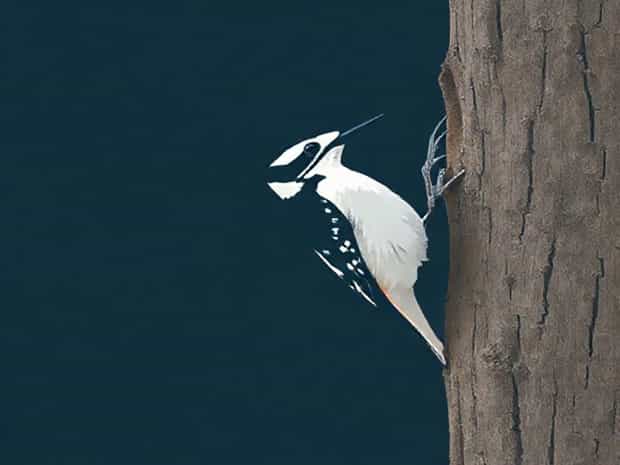
Is A White Breasted Nuthatch A Woodpecker
The white-breasted nuthatch is a familiar bird to many birdwatchers and nature enthusiasts across North America. With its distinct white face and underparts, along with a bluish-gray back, this small bird is often seen climbing up and down tree trunks in search of insects and seeds. Many people who observe its behavior may wonder if the white-breasted nuthatch is a woodpecker, given that it spends much of its time on tree bark and has a habit of foraging on vertical surfaces. Despite these similarities, the white-breasted nuthatch belongs to a completely different bird family, and understanding the differences between nuthatches and woodpeckers provides insight into avian ecology and behavior.
Classification and Family
The white-breasted nuthatch (Sitta carolinensis) belongs to the family Sittidae, which is distinct from the woodpecker family, Picidae. While both families are part of the order Passeriformes, nuthatches and woodpeckers have evolved different adaptations and behaviors suited to their ecological niches. Woodpeckers are known for their chisel-like beaks and specialized skulls that allow them to drill into wood to find insects and create nesting cavities. In contrast, nuthatches have straight, pointed bills suited for probing bark and crevices without the need for heavy pecking. Understanding these taxonomic distinctions helps clarify why the white-breasted nuthatch is not a woodpecker, despite superficial similarities in foraging habits.
Physical Differences Between Nuthatches and Woodpeckers
- Beak structure Nuthatches have slender, pointed bills, while woodpeckers have strong, chisel-like beaks.
- Feet and climbing Nuthatches have strong toes with sharp claws that allow them to climb headfirst down trees, a behavior less common in woodpeckers.
- Tail support Woodpeckers use stiff tail feathers as a prop against tree trunks, whereas nuthatches do not rely heavily on their tails for support.
Behavioral Characteristics
One of the reasons people confuse white-breasted nuthatches with woodpeckers is their similar foraging behavior. Both species search for insects on tree bark and often move along vertical surfaces. However, nuthatches exhibit unique behaviors that distinguish them from woodpeckers. Nuthatches are capable of climbing down trees headfirst, a maneuver rarely seen in woodpeckers. They also wedge seeds and nuts into bark crevices and hammer them open, a method of food storage that is characteristic of the nuthatch family.
Foraging Techniques
- Headfirst descent White-breasted nuthatches can move downward along tree trunks, allowing them to access insects hidden under bark in a way woodpeckers cannot.
- Seed storage Nuthatches often cache seeds in bark crevices to eat later, a behavior uncommon in woodpeckers.
- Probing bark They use their slender bills to probe cracks and crevices, in contrast to woodpeckers’ pecking and drilling techniques.
Habitat and Range
White-breasted nuthatches are commonly found in mature deciduous and mixed forests across North America, from southern Canada to the United States. They prefer wooded areas with large trees, which provide ample opportunities for foraging and nesting. Woodpeckers share some of these habitats but often have different nesting preferences, including cavities in dead or decaying wood. Understanding the ecological niches of both birds helps explain why they occupy similar areas yet have evolved different strategies to exploit resources.
Nesting Habits
- Nuthatches typically nest in natural cavities or abandoned woodpecker holes, lining the nest with soft materials.
- Woodpeckers excavate their own nesting cavities using their strong beaks and reinforced skulls.
- Nuthatches do not require the heavy pecking adaptations that woodpeckers possess.
Vocalizations and Communication
Another way to differentiate nuthatches from woodpeckers is by their vocalizations. The white-breasted nuthatch has a distinctive, nasal yank-yank call that is repeated frequently and can be heard throughout the forest. Woodpeckers, on the other hand, often use drumming on trees as a form of communication and territorial display, supplemented by calls that vary by species. These differences in sound production reflect the anatomical and behavioral distinctions between the two bird families.
Communication Styles
- Nuthatches rely primarily on vocal calls to communicate with mates and warn of predators.
- Woodpeckers use both vocalizations and drumming on wood surfaces to establish territory and attract mates.
- The difference in communication methods underscores the unique evolutionary adaptations of each bird.
Misconceptions About Nuthatches and Woodpeckers
The confusion between white-breasted nuthatches and woodpeckers is understandable given their overlapping habitats and similar behaviors. However, a closer look at anatomy, foraging techniques, and nesting habits reveals clear distinctions. Unlike woodpeckers, nuthatches lack specialized skulls for absorbing the shock of pecking and do not engage in extensive drilling of trees. Their feeding and climbing strategies demonstrate a unique set of adaptations that enable them to thrive in forest environments without needing the heavy-duty tools of a woodpecker.
Key Distinctions to Remember
- Nuthatches Sitta carolinensis, slender bill, headfirst descent, seed caching, uses existing cavities for nesting.
- Woodpeckers Picidae family, chisel-like bill, drills into wood, drumming communication, excavates nesting cavities.
- Observation of behavior and physical traits can help birdwatchers correctly identify the species.
Ecological Importance
Both nuthatches and woodpeckers play important roles in forest ecosystems. White-breasted nuthatches help control insect populations and disperse seeds, contributing to forest regeneration. Woodpeckers, through their excavation activities, create nesting sites for other birds and small mammals, influencing biodiversity. Recognizing the distinct roles of these birds highlights why it is important to understand their taxonomy and behavior, rather than assuming they are the same due to superficial similarities.
Conservation Considerations
- Preserving mature forests benefits both nuthatches and woodpeckers.
- Protecting nesting cavities ensures reproductive success for multiple species.
- Understanding species differences aids in targeted conservation strategies.
In summary, the white-breasted nuthatch is not a woodpecker, although it shares some similarities in behavior and habitat. It belongs to the family Sittidae and has unique adaptations, including a slender bill, headfirst climbing ability, and seed caching behavior, which distinguish it from woodpeckers of the Picidae family. Recognizing these differences is crucial for birdwatchers, ecologists, and anyone interested in avian biology. By observing physical traits, foraging behavior, vocalizations, and nesting habits, one can clearly distinguish the white-breasted nuthatch from woodpeckers, appreciating the diversity and specialization of birds within forest ecosystems.