Is A Millimeter On A Ruler
When you look at a standard ruler, you might notice a series of tiny lines along its edge. These lines represent different units of measurement, and one of the smallest commonly used units is the millimeter. Understanding what a millimeter is on a ruler is essential not only for students, engineers, and designers but also for anyone who deals with precision measurement in everyday life. Millimeters allow for fine measurement, helping to ensure accuracy in tasks ranging from cutting fabric to constructing furniture or measuring small objects in science and technology. By learning how to identify and use millimeters on a ruler, people can achieve a higher level of precision in their work.
Definition of a Millimeter
A millimeter, abbreviated as mm, is a unit of length in the metric system. It is equal to one-thousandth of a meter, making it a very small unit suitable for precise measurements. The metric system is widely used worldwide, particularly in scientific, engineering, and technical fields, because of its simplicity and decimal-based structure. One centimeter, which is another common unit on rulers, contains ten millimeters. Understanding this relationship between centimeters and millimeters helps in reading rulers accurately and converting measurements when necessary.
Millimeter vs. Other Units
Millimeters are often compared to other units of length such as centimeters, meters, and inches. While an inch is commonly used in the United States, it is equivalent to 25.4 millimeters. This comparison is crucial for international measurements or when converting between metric and imperial systems. Using millimeters provides a level of precision that is often necessary in technical applications, such as engineering drawings, machining, or detailed craft projects.
Millimeters on a Ruler
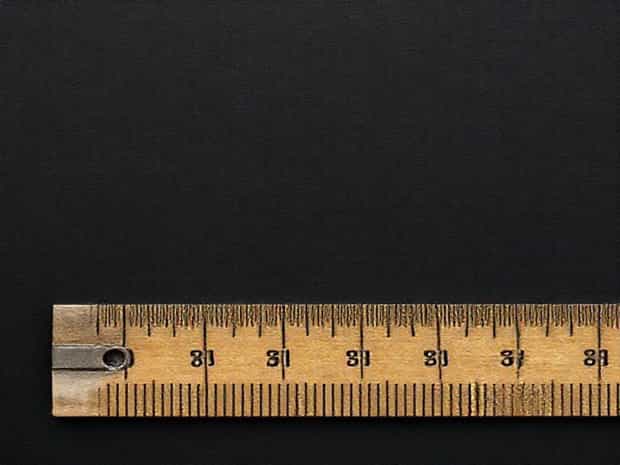
Most metric rulers feature millimeter markings alongside centimeter markings. Each small line typically represents one millimeter, while slightly longer lines indicate half-centimeters or full centimeters. A 30-centimeter ruler, for example, will have 300 small lines, each representing one millimeter. Identifying millimeters accurately on a ruler requires attention to the pattern of lines and an understanding of their relative lengths.
Reading Millimeters
- Start by locating the zero mark on the ruler, which is usually at one end.
- Count the small lines from zero, where each line equals one millimeter.
- Every tenth line is often longer and represents a full centimeter, helping with faster counting.
- For precise measurements, note where the object aligns with the millimeter marks to avoid rounding errors.
Importance of Millimeters in Measurement
Millimeters are critical in fields where precision is required. In construction, woodworking, and engineering, small differences can significantly impact the outcome of a project. Even in medical fields, measuring small distances or sizes accurately using millimeters can be vital. By providing a clear and consistent unit, millimeters help standardize measurements and reduce errors across various applications.
Applications of Millimeters
- EngineeringMachines and parts often require measurements in millimeters to ensure proper fit and function.
- ScienceExperiments and observations frequently demand millimeter accuracy, especially in chemistry and biology.
- ConstructionSmall discrepancies in measurements can affect the integrity of a structure.
- Crafting and designArtists, jewelers, and designers often rely on millimeter-level measurements for detail and precision.
Millimeters and Accuracy
Using millimeters on a ruler allows for precise measurement, reducing the margin of error. While centimeters provide a quick estimation, millimeters offer the granularity needed for tasks requiring high accuracy. Understanding how to read millimeters correctly ensures that measurements are consistent, whether for technical work or everyday use.
Tips for Measuring in Millimeters
- Ensure the ruler is properly aligned with the object’s edge to avoid parallax errors.
- Use a magnifying glass for extremely small measurements if the markings are hard to see.
- Double-check measurements to account for any slight misalignments or errors in positioning.
- Combine millimeter readings with other units if conversions are necessary for international standards.
Millimeters in Everyday Life
Beyond professional applications, millimeters play a role in daily life. Many common items, such as screws, bolts, and electronic components, are sized in millimeters. Even in clothing and home projects, using millimeters helps ensure proper fit and alignment. Recognizing millimeter markings on a ruler enables more accurate measurement, reducing mistakes and improving results in a wide range of tasks.
Educational Importance
Learning to measure in millimeters is often part of early math and science education. Students are taught to read rulers accurately, understanding the relationship between millimeters, centimeters, and meters. This foundational knowledge prepares them for more advanced applications in technical fields, fostering skills in precision, estimation, and conversion.
A millimeter on a ruler is a small but essential unit of measurement in the metric system, representing one-thousandth of a meter. It allows for precise and accurate measurement, making it indispensable in engineering, science, construction, and everyday tasks. Understanding how to read millimeters, distinguishing them from centimeters and other units, and applying them correctly can greatly improve the accuracy of measurements. Whether for professional applications, educational purposes, or daily use, mastering the millimeter is a key aspect of precise measurement and effective problem-solving in a variety of contexts.