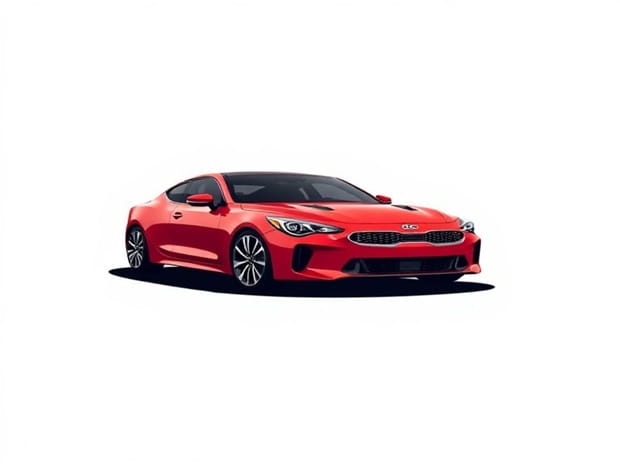
Is A Kia Stinger A V8
The Kia Stinger has generated significant attention since its debut, thanks to its combination of sporty performance, striking design, and luxury features. Among car enthusiasts, a common question arises is the Kia Stinger a V8? Understanding the engine options, performance specifications, and variations across model years clarifies the answer and helps potential buyers make informed decisions about this high-performance sedan. Despite its powerful presence, the Kia Stinger’s engine lineup differs from traditional V8 muscle cars, making its powertrain choices an interesting topic for discussion.
Kia Stinger Overview
The Kia Stinger is a four-door sports sedan designed to compete with European luxury and performance vehicles. Its sleek styling, aggressive stance, and refined interior create a unique blend of sportiness and sophistication. Since its introduction in 2017, the Stinger has offered a range of engine options to cater to different driving preferences. From balanced performance to high-output variants, the Stinger demonstrates Kia’s commitment to delivering a sporty and enjoyable driving experience.
Engine Options for the Kia Stinger
While many luxury and sports sedans offer V8 engines for maximum performance, the Kia Stinger does not feature a V8 in any of its standard configurations. Instead, it comes with turbocharged V6 and four-cylinder engines, depending on the model and market. The two main engines available for the Stinger are
- 2.0-liter turbocharged inline-4This engine delivers a balance of efficiency and performance, suitable for everyday driving and moderate sporty handling.
- 3.3-liter twin-turbo V6This more powerful option produces significantly higher horsepower and torque, providing an exhilarating driving experience comparable to some entry-level V8 sedans.
Although the 3.3-liter V6 offers impressive acceleration and performance, it is not a V8. The Stinger’s focus has been on combining efficiency, agility, and high performance without the fuel consumption typically associated with larger V8 engines.
Why the Kia Stinger Does Not Have a V8
There are several reasons Kia chose to equip the Stinger with V6 and four-cylinder engines rather than a V8. One key factor is fuel efficiency. A V8 engine consumes more fuel and generates higher emissions, which may conflict with increasingly strict environmental regulations in many markets. Additionally, Kia aimed to keep the Stinger competitively priced while offering strong performance, and a V6 allows for a more cost-effective and lightweight design without sacrificing power.
Weight and Handling Considerations
A V8 engine typically adds significant weight to a vehicle, which can impact handling and balance. By using a 3.3-liter twin-turbo V6, Kia optimized the Stinger’s weight distribution, resulting in responsive handling and a more dynamic driving experience. The car’s rear-wheel-drive layout, combined with the lighter engine, ensures that the Stinger maintains agile cornering and stable high-speed performance.
Performance Comparisons
Despite lacking a V8, the Stinger’s twin-turbo V6 produces impressive output. For example, the 3.3-liter V6 can generate over 365 horsepower and around 376 lb-ft of torque, enabling the sedan to accelerate from 0 to 60 mph in under five seconds. These figures place the Stinger in a competitive position against some V8-powered vehicles, demonstrating that engine displacement is not the only factor in achieving thrilling performance.
Trim Levels and Engine Variations
The Kia Stinger offers multiple trims, each with slightly different performance features. Generally, the trims with the 2.0-liter turbocharged engine prioritize efficiency and smooth daily driving, while the trims with the 3.3-liter V6 target enthusiasts seeking maximum performance. Key trims include
- Base and GT-Line trimsEquipped with the 2.0-liter turbo inline-4, providing adequate power and efficiency for most drivers.
- GT trimsEquipped with the 3.3-liter twin-turbo V6, offering high horsepower, sport-tuned suspension, and additional performance enhancements.
Regardless of trim, none of the Kia Stinger models feature a V8 engine. Kia chose to focus on turbocharging technology to extract maximum power from smaller, more efficient engines.
Turbocharging vs. Naturally Aspirated V8s
Turbocharging allows smaller engines to produce power comparable to larger V8 engines. The 3.3-liter twin-turbo V6 in the Stinger exemplifies this approach, delivering high output while maintaining lower weight and improved fuel economy. In contrast, naturally aspirated V8 engines rely on larger displacement to generate power, often resulting in higher fuel consumption and added vehicle weight. Kia’s decision reflects a modern approach to performance, combining efficiency with thrilling acceleration.
Advantages of the V6 Turbo
- Reduced engine weight, improving handling and balance.
- Lower fuel consumption and emissions compared to a V8.
- Turbocharging provides high torque at lower RPMs for better acceleration.
- Maintains competitive performance without increasing costs dramatically.
Market Reception and Performance Reviews
The Kia Stinger has been praised for delivering V8-level performance with a V6 engine, earning accolades from automotive reviewers and enthusiasts. Critics often highlight the car’s acceleration, cornering ability, and overall driving experience, emphasizing that the Stinger achieves sports car excitement without requiring a V8. This reception reinforces the idea that a powerful engine does not always have to be a V8 to satisfy performance-oriented drivers.
Consumer Perception
Some consumers initially question the absence of a V8 due to expectations in the sports sedan segment. However, the Stinger’s performance metrics, sound, and driving dynamics often exceed expectations, proving that engine configuration alone does not define the vehicle’s capability. The turbocharged V6 has been widely accepted as a suitable alternative, offering comparable thrills to many traditional V8 sedans.
Future Engine Options
Kia continues to innovate with powertrain technology, exploring hybrid and electric options alongside its traditional gasoline engines. While no V8 has been announced for the Stinger, the focus on turbocharged engines and electrification reflects a broader industry trend toward efficiency and performance optimization. The Stinger may continue to evolve while maintaining its identity as a high-performance sports sedan without a V8.
The Kia Stinger is not a V8 vehicle. Instead, it utilizes a 2.0-liter turbocharged inline-4 and a 3.3-liter twin-turbo V6 to deliver a combination of efficiency, agility, and high performance. While some may equate power with a V8 engine, the Stinger demonstrates that smaller turbocharged engines can produce exhilarating acceleration and competitive performance. Its design, handling, and turbocharged technology make it a formidable sports sedan, offering drivers V8-like excitement without the extra weight and fuel consumption associated with traditional V8 engines. Understanding this distinction helps buyers appreciate the engineering choices behind the Stinger and the modern approach Kia has taken to balance performance, efficiency, and driving enjoyment.