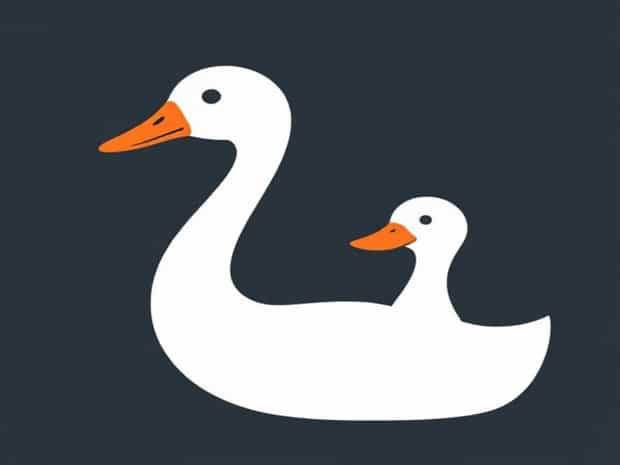
Is A Goose A Duck
Many people who observe waterfowl in ponds, lakes, and rivers often wonder about the differences between various birds that look somewhat similar. Two of the most commonly confused species are geese and ducks. At first glance, both belong to the Anatidae family and share certain aquatic habits, webbed feet, and beak structures. However, a closer examination reveals significant distinctions that separate geese from ducks in terms of physical characteristics, behavior, vocalizations, and ecological roles. Understanding whether a goose is a duck requires exploring biology, taxonomy, and even cultural perceptions of these birds.
Taxonomic Classification
To determine if a goose is a duck, it is important to understand their scientific classification. Both geese and ducks are members of the Anatidae family, which also includes swans. This family shares common traits such as webbed feet for swimming and flattened bills for feeding. Despite belonging to the same family, geese and ducks are classified under different genera. Most geese belong to the genera Anser or Branta, while ducks are often categorized under genera like Anas, Aix, and Spatula. This distinction means that while they are relatives, geese are not ducks.
Taxonomy Summary
- Family Anatidae (shared by ducks, geese, and swans)
- Goose genera Anser, Branta
- Duck genera Anas, Aix, Spatula, among others
- Swans are also in Anatidae but in genera like Cygnus
- Geese and ducks are related but not the same species
Physical Differences Between Geese and Ducks
Physically, geese and ducks exhibit notable differences in size, body shape, and coloration. Geese are generally larger, with longer necks, heavier bodies, and more upright postures. Their bills are shorter relative to neck length and are adapted for grazing on grass, as geese are primarily herbivorous. Ducks, in contrast, are smaller, with shorter necks and more compact bodies. Their bills are designed for filtering water and mud to extract food like insects and small plants.
Key Physical Traits
- Geese long necks, large bodies, upright stance
- Ducks short necks, smaller bodies, rounded shape
- Goose bills adapted for grazing, usually orange or black
- Duck bills broader and flatter for filtering water
- Wing shape geese have longer, narrower wings for long-distance flight; ducks have shorter, rounded wings
Behavioral Differences
Behavioral traits also distinguish geese from ducks. Geese are social birds that often form long-term pair bonds and live in family groups. They are known for their migratory patterns and strong flying formations, typically flying in V-shaped flocks to conserve energy. Ducks display more varied social behaviors depending on the species. Many ducks are solitary or form temporary groups, and while some migrate long distances, others are more sedentary. Geese are primarily grazers, feeding on grasses and grains, whereas ducks forage in water, dabbling or diving to find food.
Behavioral Traits Comparison
- Geese migratory, family-oriented, graze on land
- Ducks varied social structure, forage in water, dabbling or diving
- Geese communicate with honks and calls for flock coordination
- Ducks quack or whistle, depending on species
- Geese more aggressive in defending territory or offspring
Vocalizations
Another way to distinguish geese from ducks is through their vocalizations. Geese produce honking sounds that are loud and carry over long distances, helping maintain flock cohesion during flight. Ducks, on the other hand, are known for quacking, though some species produce whistling or cooing sounds. These vocal differences are not only distinct in tone but also serve different social and ecological functions. The honking of geese helps coordinate complex migratory patterns, while the quacking of ducks often relates to mating calls, territory, and communication in feeding areas.
Vocalization Highlights
- Geese honks, loud and long-distance
- Ducks quacks, whistles, or coos
- Purpose geese for flock coordination, ducks for mating and local communication
- Geese calls are repeated and structured for social interaction
- Duck calls vary significantly across species and context
Cultural Perceptions and Misconceptions
Despite the scientific distinctions, geese and ducks are often confused in casual conversation or cultural references. Many people refer to any waterfowl with webbed feet as a duck,” even when it is a goose. Folklore, cartoons, and literature sometimes blur the lines for storytelling purposes, contributing to misconceptions. For example, animated films often depict both geese and ducks as interchangeable characters, emphasizing visual similarity rather than biological accuracy. Awareness of the differences can enhance birdwatching, farming, and ecological understanding.
Examples of Misconceptions
- Referring to geese as ducks in everyday speech
- Cartoons and media depicting all waterfowl as ducks
- Confusion in farm management between ducks and geese
- Mislabeling in ecological surveys or birdwatching guides
- Educational opportunities to clarify these distinctions
a goose is not a duck, though both belong to the Anatidae family and share some aquatic and physical traits. Geese are generally larger, herbivorous, and exhibit long-term social bonds, while ducks are smaller, more varied in feeding behavior, and often display temporary or seasonal social groupings. Vocalizations, physical traits, and ecological roles further distinguish these birds. While casual observers may confuse the two due to superficial similarities, understanding their taxonomy, behavior, and biology confirms that geese and ducks are distinct species. Appreciating these differences enhances knowledge of waterfowl and deepens the understanding of the natural world.