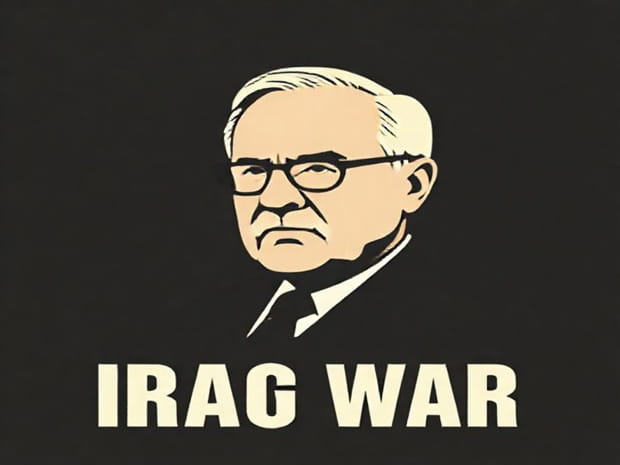
Iraq War Donald Rumsfeld
The Iraq War, which began in 2003, remains one of the most controversial military conflicts in recent history, with former U.S. Secretary of Defense Donald Rumsfeld playing a central role in its planning and execution. Rumsfeld, who served under President George W. Bush, was a driving force behind the U.S.-led invasion, advocating for military action based on the belief that Iraq possessed weapons of mass destruction and posed a threat to international security. His decisions, strategies, and management of the war have been widely scrutinized, sparking debates about military preparedness, intelligence accuracy, and political accountability. Understanding Donald Rumsfeld’s involvement provides critical insight into the planning, execution, and consequences of the Iraq War, as well as the broader implications for U.S. foreign policy.
Donald Rumsfeld’s Background
Before serving as Secretary of Defense during the Iraq War, Donald Rumsfeld had a long career in public service and politics. He held numerous positions, including U.S. Congressman, White House Chief of Staff under President Gerald Ford, and Secretary of Defense during the Gerald Ford administration. Rumsfeld was known for his strong advocacy of military reform, strategic innovation, and a belief in the use of precision technology and rapid deployment forces. His prior experience influenced his approach to the Iraq War, emphasizing speed, technological superiority, and a lean military presence.
Role in the Bush Administration
Rumsfeld returned as Secretary of Defense in 2001 under President George W. Bush, shortly after the September 11 attacks. He quickly became a key figure in shaping U.S. military policy and strategy. The Bush administration viewed Iraq as a central part of the War on Terror, citing concerns over Saddam Hussein’s alleged possession of weapons of mass destruction and alleged links to terrorist organizations. Rumsfeld’s leadership was pivotal in advocating for the 2003 invasion, emphasizing the use of advanced military technology, speed of action, and minimal troop deployment to achieve strategic objectives.
Planning and Execution of the Iraq War
The planning for the Iraq War involved extensive coordination between the Department of Defense, the Central Intelligence Agency, and other U.S. government agencies. Rumsfeld played a crucial role in shaping military strategy, focusing on a rapid invasion and shock and awe tactics designed to quickly destabilize Saddam Hussein’s regime. The approach relied heavily on airpower, precision-guided munitions, and the swift advance of armored units to Baghdad, aiming to minimize casualties among U.S. troops while rapidly dismantling Iraqi military capabilities.
Strategic Decisions
- Advocated for a smaller, technologically advanced military force rather than a large conventional deployment.
- Emphasized speed and surprise to overwhelm Iraqi defenses in the initial phase of the war.
- Supported the use of extensive aerial bombardment to weaken enemy infrastructure and morale.
- Focused on minimizing U.S. casualties while aiming for rapid regime change.
Controversies and Criticism
Donald Rumsfeld’s leadership during the Iraq War faced substantial criticism from both domestic and international observers. Critics argued that the U.S. military was ill-prepared for the prolonged occupation and insurgency that followed the initial invasion. The lack of planning for post-war reconstruction, governance, and security contributed to widespread instability and violence. Additionally, the intelligence regarding weapons of mass destruction, which formed a key justification for the invasion, was later found to be inaccurate, raising questions about the decision-making process and reliance on flawed intelligence.
Key Criticisms
- Underestimation of insurgency and sectarian violence following the initial invasion.
- Insufficient planning for rebuilding Iraq’s political and social infrastructure.
- Reliance on flawed intelligence regarding weapons of mass destruction.
- Management style criticized as rigid and dismissive of dissenting military advice.
Legacy and Impact
Donald Rumsfeld’s role in the Iraq War has left a lasting impact on U.S. military policy, international relations, and public perception of government accountability. While the initial invasion achieved its immediate goal of toppling Saddam Hussein’s regime, the subsequent years saw protracted conflict, insurgency, and humanitarian challenges. Rumsfeld’s advocacy for a lean military force and rapid invasion has been debated extensively, influencing discussions about military strategy and defense planning for future conflicts. His tenure also highlighted the challenges of aligning intelligence, policy, and military execution in complex geopolitical situations.
Lessons Learned
- The importance of accurate intelligence and thorough verification before initiating military action.
- The need for comprehensive post-war planning to stabilize occupied regions and prevent insurgency.
- Challenges of implementing modern military strategies in complex sociopolitical environments.
- The significance of accountability and transparent decision-making in matters of national security.
Public Perception and Political Repercussions
Rumsfeld’s tenure as Secretary of Defense during the Iraq War significantly influenced public perception of the Bush administration and U.S. foreign policy. Media coverage, political debates, and retrospective analyses often highlighted both the successes and failures of the strategy implemented under his leadership. Public opinion was polarized, with some praising his focus on technological innovation and decisive action, while others criticized the lack of preparation for the long-term consequences of the invasion. His reputation became closely tied to the controversies surrounding the Iraq War, shaping his legacy in American politics.
Retrospective Evaluations
- Historians and military analysts continue to debate Rumsfeld’s strategic choices and their outcomes.
- Some argue that his emphasis on technological superiority and rapid deployment influenced modern military doctrines.
- Others contend that mismanagement and lack of foresight exacerbated the humanitarian and security crisis in Iraq.
- The debate over his role remains a key aspect of discussions about U.S. military interventions in the 21st century.
Donald Rumsfeld’s involvement in the Iraq War represents a defining chapter in both his career and U.S. military history. As Secretary of Defense, he was a central figure in advocating for and executing the invasion, emphasizing rapid military action and technological superiority. While the initial military campaign achieved its objective of toppling Saddam Hussein, the ensuing challenges revealed the complexities of post-war reconstruction and the limitations of strategic planning. Rumsfeld’s leadership continues to be scrutinized for its impact on military strategy, policy decisions, and international relations. Understanding his role in the Iraq War provides insight into the broader implications of U.S. military interventions and highlights critical lessons about intelligence, strategy, and governance in times of conflict.