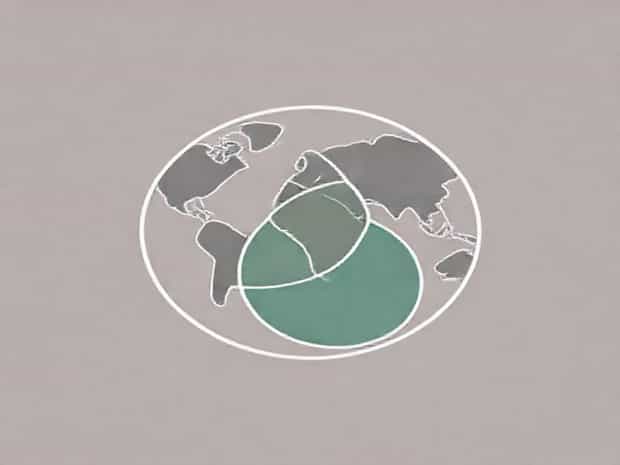
Internationalism And Globalism Venn Diagram
Understanding the concepts of internationalism and globalism is essential for navigating the complexities of today’s interconnected world. While both terms relate to cooperation and relationships beyond national borders, they have distinct theoretical, economic, and political implications. Using a Venn diagram to compare and contrast internationalism and globalism helps clarify their similarities and differences. By examining overlapping and unique characteristics, we can better understand how these concepts influence global governance, trade, culture, and social development. This approach allows students, policymakers, and general readers to visualize the interplay between national interests and worldwide collaboration.
Defining Internationalism
Internationalism is a political and social philosophy that emphasizes cooperation and mutual understanding between nations. It seeks to promote peace, diplomacy, and collaboration in addressing global challenges such as conflicts, climate change, and humanitarian crises. Internationalism often operates within the framework of national sovereignty, respecting each country’s independence while encouraging collaborative engagement on shared issues. Organizations like the United Nations, the League of Nations historically, and various international treaties exemplify the principles of internationalism in practice.
Key Features of Internationalism
- Focuses on cooperation between nation-states rather than erasing borders.
- Promotes diplomacy, treaties, and collective security agreements.
- Emphasizes peacebuilding and conflict resolution.
- Supports cultural exchange programs and educational initiatives.
- Recognizes the sovereignty of individual nations while encouraging collaboration.
Defining Globalism
Globalism, on the other hand, refers to the process or ideology of increasing interconnectedness and interdependence among countries, economies, and societies. It often emphasizes the global flow of capital, goods, services, information, and culture. Unlike internationalism, which operates through state cooperation, globalism focuses on broader networks that may include multinational corporations, international organizations, and transnational social movements. Globalism advocates for a more integrated world system where economic and social interactions transcend national boundaries.
Key Features of Globalism
- Encourages worldwide economic integration and free trade.
- Facilitates the global movement of people, ideas, and culture.
- Supports multinational cooperation beyond formal treaties.
- Promotes interconnected markets and technological networks.
- Emphasizes global citizenship and shared responsibility for global issues.
Comparing Internationalism and Globalism
While internationalism and globalism are related, they differ in scope, focus, and mechanisms of operation. Internationalism is often state-centered, prioritizing diplomatic cooperation and formal agreements. Globalism, in contrast, emphasizes networks and flows that may bypass or supplement traditional state structures. Despite these differences, both concepts aim to address challenges that surpass individual national capacities, such as climate change, terrorism, and global poverty.
Similarities Between Internationalism and Globalism
- Both promote collaboration beyond national borders.
- Encourage addressing global challenges collectively.
- Value cultural exchange and the dissemination of ideas.
- Support frameworks for international cooperation, though through different channels.
- Contribute to the creation of global institutions and norms.
Differences Between Internationalism and Globalism
- Internationalism operates primarily through nation-states and formal agreements; globalism operates through transnational networks.
- Internationalism emphasizes diplomacy and collective security; globalism emphasizes economic integration and interconnected markets.
- Internationalism maintains national sovereignty; globalism often encourages global governance and standardization.
- Internationalism may focus more on political collaboration; globalism encompasses social, cultural, and economic dimensions.
- Internationalism is reactive, addressing conflicts and crises; globalism is proactive, shaping global systems and policies.
Using a Venn Diagram to Visualize the Concepts
A Venn diagram is an effective tool for visualizing the relationship between internationalism and globalism. By representing each concept as a circle with overlapping and distinct areas, readers can clearly see where the two ideologies intersect and where they differ. The overlapping area represents shared goals, such as cooperation, cultural exchange, and addressing global challenges. The non-overlapping areas highlight their unique aspects nation-state focus for internationalism and transnational networks for globalism.
Components of the Venn Diagram
- Internationalism CircleEmphasizes diplomacy, treaties, and national sovereignty.
- Globalism CircleEmphasizes economic integration, technology, and transnational networks.
- OverlapShared objectives like peace, cultural exchange, and collaborative problem-solving.
Practical Applications of Understanding the Venn Diagram
Understanding the Venn diagram of internationalism and globalism has practical applications in education, policymaking, and business. Students can better grasp theoretical frameworks in political science and international relations. Policymakers can design strategies that balance state interests with global integration. Businesses can navigate multinational operations and global markets effectively by understanding the dynamics of both concepts. Additionally, NGOs and social movements can leverage insights from the diagram to plan cross-border initiatives that align with either internationalist or globalist principles.
Applications in Different Sectors
- EducationHelps students visualize and compare political and economic ideologies.
- Policy and GovernanceGuides decisions on treaties, trade, and global collaboration.
- BusinessSupports strategies for multinational operations and market expansion.
- Nonprofits and NGOsAssists in planning cross-border humanitarian and environmental projects.
- Media and CommunicationProvides frameworks for analyzing global news and trends.
Challenges and Criticisms
Both internationalism and globalism face criticisms and challenges. Internationalism can be limited by national interests, bureaucratic processes, and geopolitical conflicts. Globalism may be criticized for favoring powerful multinational corporations, creating inequality, and undermining local cultures. Understanding these limitations is essential when using the Venn diagram, as it provides a balanced perspective on how both concepts operate in the real world.
Key Challenges
- Conflict between national sovereignty and global obligations.
- Economic inequality created by global integration.
- Political resistance to multinational treaties or agreements.
- Cultural homogenization and loss of local identity.
- Difficulties in enforcing international or global norms.
Using a Venn diagram to explore internationalism and globalism provides a clear and concise way to understand these complex concepts. By identifying overlapping goals and unique features, it becomes easier to analyze their roles in contemporary society. Internationalism focuses on diplomacy, state cooperation, and national sovereignty, while globalism emphasizes economic integration, transnational networks, and interconnectedness. Both ideologies contribute to addressing global challenges, fostering collaboration, and promoting cultural exchange. Understanding their similarities and differences is crucial for students, policymakers, businesses, and social organizations as they navigate an increasingly interdependent world, where the balance between national interests and global cooperation continues to evolve.