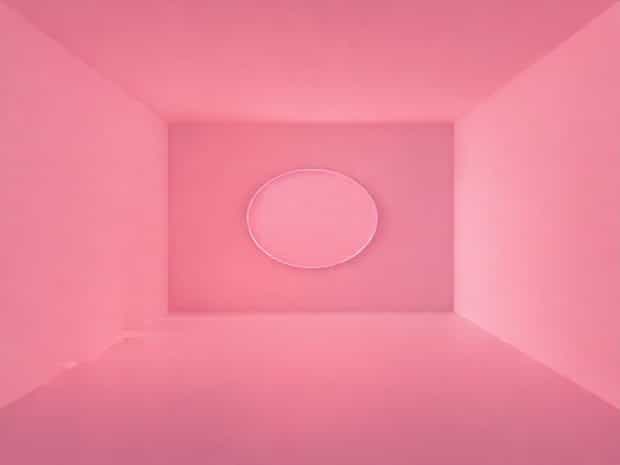
In Art What Is Perspective
In art, perspective is one of the most important techniques for creating depth and realism. It helps artists represent three-dimensional space on a two-dimensional surface such as paper, canvas, or digital screens. By applying perspective, objects can appear closer or farther away, larger or smaller, and positioned accurately within a scene. This concept has been used for centuries, and understanding it is essential for both beginners and professional artists. Perspective in art allows viewers to feel immersed in an image, as though they are looking into a real world rather than a flat picture. Mastering perspective can transform the way you draw, paint, or design, making your artwork more dynamic and believable.
The Meaning of Perspective in Art
Perspective in art refers to the method of creating an illusion of depth and space. It is a way of organizing objects in a drawing or painting so that they look realistic in relation to the viewer. This system is based on observation of how things appear smaller as they move farther away and larger as they come closer. By applying mathematical principles and visual rules, artists create the impression of three-dimensionality on a flat surface. Without perspective, art often looks flat and less engaging.
Why Perspective Matters
- It gives a sense of realism and natural appearance.
- It guides the viewer’s eye toward the focal point of the artwork.
- It helps create balanced and proportional compositions.
- It allows artists to represent architecture, landscapes, and figures more accurately.
The Origins of Perspective
Although artists in ancient Egypt, Greece, and Rome used simple methods to suggest depth, true linear perspective was developed during the Renaissance. Artists like Filippo Brunelleschi and Leon Battista Alberti formalized the rules of perspective, making it possible to draw buildings and spaces with mathematical accuracy. This discovery changed the course of Western art, allowing for more naturalistic and immersive paintings. Works by Leonardo da Vinci and Raphael showcased how perspective could be used to create lifelike compositions filled with architectural depth.
Types of Perspective in Art
There are several types of perspective techniques that artists use, each suited for different purposes. The most common are linear perspective, atmospheric perspective, and isometric perspective. Each type has unique characteristics that influence how objects and spaces are represented in an artwork.
Linear Perspective
Linear perspective uses lines that converge toward vanishing points to create depth. It is the most widely used method in art for architectural scenes, cityscapes, and interiors. There are three main categories of linear perspective
- One-point perspectiveAll lines converge toward a single vanishing point, often used for roads, hallways, or railways.
- Two-point perspectiveLines converge toward two vanishing points, commonly used for drawing buildings or streets.
- Three-point perspectiveIncludes a third vanishing point, typically above or below the horizon, used to create dramatic views looking up or down.
Atmospheric Perspective
Atmospheric perspective is based on the observation that distant objects appear lighter, less detailed, and bluer due to the scattering of light in the atmosphere. This technique is often used in landscape painting to suggest vast distances and create a sense of openness.
Isometric Perspective
Isometric perspective does not rely on vanishing points. Instead, objects are drawn at consistent angles and sizes, often used in technical drawings, architectural plans, and some styles of illustration. It lacks the realism of linear perspective but provides clarity and accuracy for design purposes.
How to Apply Perspective in Your Art
Learning how to use perspective requires practice and careful observation. Begin by identifying the horizon line, which represents the viewer’s eye level. Then establish vanishing points depending on the perspective system you are using. Sketch guidelines lightly so they can be erased later. Arrange objects within the framework, ensuring they decrease in size and change in proportion as they move farther into the background.
Practical Steps for Beginners
- Start with simple shapes like cubes or boxes to understand how perspective works.
- Use a ruler to keep perspective lines straight and accurate.
- Experiment with different angles to see how objects appear from various viewpoints.
- Practice drawing everyday scenes like a street corner or a room to apply perspective naturally.
Common Mistakes in Perspective Drawing
Even with guidelines, many beginners struggle with perspective. Recognizing common errors can help improve your work. One mistake is placing vanishing points too close together, which creates distorted angles. Another is forgetting that objects should decrease consistently in size with distance. Overusing perspective lines without considering composition can also make artwork look mechanical instead of natural.
How to Avoid Mistakes
- Check proportions regularly to maintain realism.
- Use reference photos to study how perspective works in real life.
- Keep perspective lines subtle and light rather than overpowering the drawing.
- Practice with both simple and complex scenes to build confidence.
Perspective in Different Art Styles
While perspective is commonly associated with realism, it plays a role in many art styles. In abstract art, artists may intentionally distort perspective to create unusual effects. In surrealism, perspective is often exaggerated or twisted to evoke dreamlike imagery. Even in modern digital design, perspective is used to create immersive 3D environments in video games and animation. Understanding the rules allows artists to break them creatively.
Examples of Style Applications
- RealismAccurate perspective for lifelike representation.
- SurrealismDistorted perspective to challenge perception.
- CubismMultiple perspectives combined in a single artwork.
- Digital artPerspective grids used to design complex scenes and environments.
Teaching and Learning Perspective
For art students, perspective is often one of the first technical skills taught. Teachers may introduce simple exercises like drawing a road disappearing into the distance or a cube placed on a table. More advanced lessons involve architectural drawing, complex vanishing points, and dynamic viewpoints. Learning perspective not only improves drawing skills but also enhances spatial awareness and visual memory.
Tips for Learning Effectively
- Break lessons into small steps to avoid overwhelming complexity.
- Repeat exercises frequently to reinforce understanding.
- Study works by Renaissance masters to see perspective applied expertly.
- Incorporate perspective into personal sketches and projects to make it second nature.
Perspective in art is more than just a technique; it is a way of seeing and interpreting the world. By mastering perspective, artists gain the ability to create depth, realism, and engaging compositions. From linear systems with vanishing points to atmospheric techniques that suggest distance, perspective provides the foundation for countless artistic styles. Whether you aim for realism, abstraction, or digital design, understanding perspective gives you the tools to express your ideas more effectively. With practice and creativity, perspective can transform flat images into immersive worlds, making it one of the most valuable skills in the artistic toolkit.