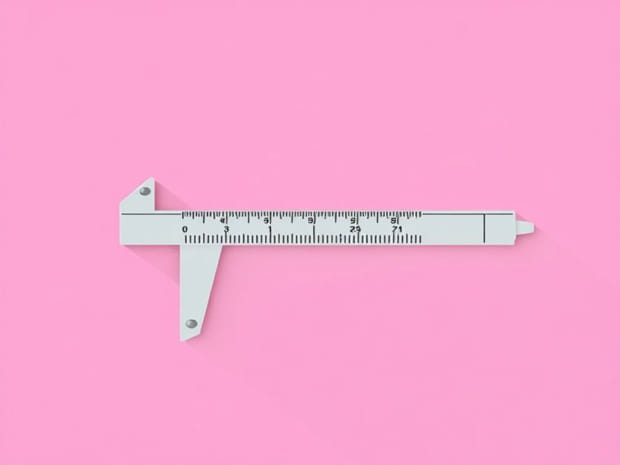
How To Read Vernier Caliper
Learning how to read a vernier caliper is an essential skill for anyone working in engineering, manufacturing, or precision measurement tasks. This versatile measuring instrument allows for highly accurate readings of length, depth, and internal and external diameters, making it indispensable in workshops and laboratories. Understanding the vernier caliper involves not only familiarizing yourself with its parts but also mastering the technique of reading its scale accurately. With proper guidance and practice, anyone can measure objects precisely, improving quality control, reducing errors, and enhancing overall efficiency in technical tasks.
Understanding the Vernier Caliper
A vernier caliper is a precision instrument that consists of a main scale and a sliding vernier scale. The main scale provides readings in millimeters or inches, while the vernier scale allows for fractional readings beyond the main scale’s smallest division. This combination enables measurements with a higher degree of accuracy than standard rulers or tape measures. Vernier calipers are widely used in mechanical engineering, metalworking, and scientific laboratories due to their versatility and precision.
Parts of a Vernier Caliper
- Main Scale The fixed scale marked in millimeters or inches.
- Vernier Scale The sliding scale that helps determine fractions of the main scale divisions.
- Fixed Jaw The stationary part of the caliper used to hold one side of the object.
- Sliding Jaw Moves along the main scale to measure the object’s dimension.
- Depth Rod A thin rod extending from the end of the caliper used to measure depth.
- Lock Screw Used to secure the sliding jaw in position during measurement.
Types of Measurements with a Vernier Caliper
Vernier calipers are highly versatile and can measure internal dimensions, external dimensions, and depths accurately. Each measurement type requires a slightly different approach and understanding of the scale readings. Mastering all three types is essential for comprehensive measurement capabilities.
Measuring External Dimensions
To measure the external dimensions of an object, place it between the fixed and sliding jaws. Close the jaws gently until they touch the object without applying excessive force, which could distort the reading. Read the main scale value just before the zero of the vernier scale, then identify which line on the vernier scale aligns exactly with a line on the main scale. Add this vernier reading to the main scale reading to obtain the precise measurement.
Measuring Internal Dimensions
For internal measurements, such as the diameter of a hole, use the smaller jaws at the top of the caliper. Insert the jaws into the space to be measured and expand them until they touch the interior walls. Again, read the main scale at the vernier zero point and add the vernier scale reading for the total measurement. Consistent technique ensures accurate internal measurements without damaging the object.
Measuring Depth
To measure depth, use the thin depth rod that extends from the end of the caliper. Place the end of the caliper on the top surface and extend the depth rod until it reaches the bottom of the space. Read the main scale and vernier scale similarly to other measurements. Accurate alignment and steady positioning are critical when taking depth measurements.
Step-by-Step Guide to Reading a Vernier Caliper
Reading a vernier caliper accurately requires understanding both scales and their interaction. The following steps provide a structured approach to obtaining precise measurements.
Step 1 Prepare the Caliper
- Ensure the caliper is clean and free of debris.
- Close the jaws completely and verify that the zero on the vernier scale aligns with the zero on the main scale. If not, note the zero error.
- Loosen the lock screw to allow smooth sliding of the jaws.
Step 2 Take the Measurement
- Position the object appropriately based on the measurement type (external, internal, or depth).
- Adjust the sliding jaw gently until the object is securely held.
- Ensure the caliper is perpendicular to the surface to avoid angular errors.
Step 3 Read the Main Scale
Look at the main scale just before the zero of the vernier scale. This gives the main scale reading in millimeters or inches. For example, if the zero point lies between 23 mm and 24 mm on the main scale, the main scale reading is 23 mm.
Step 4 Read the Vernier Scale
Observe the vernier scale and identify the line that aligns exactly with any line on the main scale. This alignment determines the fractional measurement. For example, if the 0.2 mm mark on the vernier aligns with a line on the main scale, add 0.2 mm to the main scale reading.
Step 5 Calculate Total Measurement
Add the vernier scale reading to the main scale reading to obtain the final measurement. Using the example above, 23 mm (main scale) + 0.2 mm (vernier scale) = 23.2 mm. This method ensures precise measurements up to one-hundredth of a millimeter or the smallest division of the caliper.
Common Mistakes to Avoid
To ensure accurate readings, it is important to be aware of common mistakes when using a vernier caliper. Misalignment, improper jaw pressure, and incorrect scale interpretation can lead to errors in measurement. Practicing proper technique and double-checking readings help maintain precision.
Key Mistakes
- Reading the wrong scale or ignoring zero error corrections.
- Applying too much force on the jaws, which may compress the object.
- Failing to keep the caliper perpendicular to the measuring surface.
- Misidentifying the vernier line that aligns with the main scale.
Practical Applications of Vernier Calipers
Vernier calipers are widely used in engineering, metalworking, woodworking, and laboratory settings. They are essential for tasks requiring precise measurements, such as machining components, quality control inspections, and scientific experiments. Understanding how to read vernier calipers accurately ensures that components fit correctly and specifications are met, reducing errors and improving product quality.
Examples of Use
- Measuring the diameter of bolts, pipes, or rods.
- Checking the internal dimensions of mechanical parts.
- Determining the depth of holes or recesses in machinery.
- Laboratory experiments requiring precise linear measurements.
Tips for Mastering Vernier Calipers
Mastering the vernier caliper involves practice, attention to detail, and understanding the nuances of scale reading. Consistent use and careful observation improve accuracy and speed. Keeping the instrument clean and calibrated is essential for maintaining its precision over time.
Recommended Practices
- Practice reading different objects to develop confidence.
- Check zero alignment before each measurement.
- Use steady hand pressure to avoid shifting the caliper during measurement.
- Keep the caliper clean and periodically verify calibration against a standard object.
Reading a vernier caliper accurately is a vital skill for anyone involved in precise measurement tasks. By understanding the instrument’s parts, types of measurements, and proper reading techniques, users can achieve highly accurate results. The combination of main scale and vernier scale allows measurements to fractions of a millimeter, providing superior precision compared to other measuring tools. Avoiding common mistakes and practicing consistently ensures reliability and confidence in every measurement.
Vernier calipers are indispensable tools in engineering, manufacturing, and laboratory environments. Mastering the ability to read them accurately not only improves technical skills but also enhances quality control and efficiency. With proper understanding, practice, and attention to detail, anyone can confidently use a vernier caliper to measure external, internal, and depth dimensions with high precision, making it a valuable asset for professionals and students alike.