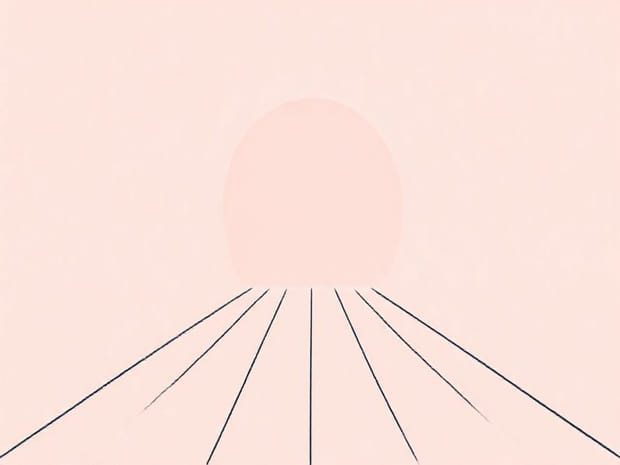
How To Draw Perspective
Drawing perspective is a fundamental skill in art that allows you to create the illusion of depth and space on a flat surface. Understanding perspective transforms simple sketches into realistic, dynamic compositions. Whether you are drawing a cityscape, an interior, or a natural landscape, mastering perspective helps your objects appear correctly sized and positioned relative to each other. Beginners often struggle with keeping proportions accurate, but learning a few core principles can make the process much easier. Perspective drawing not only improves technical skill but also enhances creative expression, enabling you to guide the viewer’s eye through your artwork effectively.
Understanding the Basics of Perspective
Perspective in art is based on the concept that objects appear smaller as they get farther away from the viewer. This principle is called foreshortening and is central to creating a realistic sense of depth. The horizon line represents the viewer’s eye level and is a key element in perspective drawing. Vanishing points are points on the horizon line where parallel lines appear to converge. By carefully positioning these elements, artists can create scenes that mimic the way we perceive the real world.
Types of Perspective
There are several types of perspective used in drawing, each serving different purposes
- One-Point PerspectiveAll lines converge toward a single vanishing point on the horizon. This is ideal for drawing roads, hallways, or railway tracks.
- Two-Point PerspectiveUses two vanishing points on the horizon. It is commonly used for architectural drawings and gives a more dynamic, angled view of objects.
- Three-Point PerspectiveAdds a third vanishing point either above or below the horizon to create a sense of height or depth. This technique is useful for dramatic viewpoints like looking up at a skyscraper.
- Atmospheric PerspectiveFocuses on color and value rather than lines. Objects further away appear lighter, cooler, and less detailed, simulating depth in landscapes and natural scenes.
Setting Up Your Drawing
Start by establishing the horizon line on your paper. This line can be high, low, or in the center, depending on your desired viewpoint. Next, place your vanishing points along the horizon line. For one-point perspective, you need just one vanishing point; for two-point perspective, use two points spaced apart. It helps to lightly sketch these points with a pencil as guides. Once your vanishing points are set, you can begin drawing the basic shapes of your objects, keeping all lines that recede toward the vanishing points.
Drawing in One-Point Perspective
One-point perspective is a great starting point for beginners. Begin with a simple object like a box or a building. Draw the front face of the object, which will remain true to its actual shape. From the corners of this face, draw lines that converge at the vanishing point on the horizon. These lines represent the sides of the object receding into space. Add details like doors, windows, or tiles, making sure they align with the perspective lines. This technique creates a realistic sense of depth while keeping construction simple.
Exploring Two-Point Perspective
Two-point perspective adds complexity and realism to your drawings. Start with a vertical edge of the object, then draw lines extending from the top and bottom of this edge to each vanishing point. These lines form the sides of the object angled in space. Unlike one-point perspective, no face of the object is parallel to the paper. This method is excellent for illustrating streets, corners of buildings, or furniture from an angle. Attention to vanishing points ensures that your objects appear correctly proportioned and anchored in space.
Three-Point Perspective for Dramatic Effects
Three-point perspective introduces a third vanishing point, which is usually positioned above or below the horizon. This perspective is useful for creating a sense of height or depth, such as looking up at a tall building or down from a cliff. Start by drawing the vertical edges of the object converging toward the third vanishing point. Then, use two vanishing points on the horizon for the horizontal sides. This method can produce striking, dynamic compositions, but requires careful alignment to avoid distortion.
Using Guidelines and Grids
Guidelines and grids are essential tools for maintaining accuracy in perspective drawing. Lightly sketching a grid aligned with your vanishing points helps ensure objects stay consistent in size and placement. Grids can be used to measure spacing, align windows, doors, or other repeated elements, and maintain uniformity in complex scenes. As you gain confidence, you can rely less on the grid and draw freehand while still preserving correct perspective.
Incorporating Atmospheric Perspective
Atmospheric perspective complements linear perspective by using color, contrast, and detail to enhance depth. Objects in the foreground should have sharper lines, darker values, and more vibrant colors. As objects recede into the distance, they should become lighter, cooler in tone, and less detailed. This approach is particularly effective in landscape drawings, adding a realistic sense of space and distance without relying solely on vanishing points.
Common Mistakes to Avoid
- Placing objects too high or low relative to the horizon line, which can break realism.
- Ignoring vanishing points, resulting in skewed or inconsistent angles.
- Using equal spacing between objects without adjusting for perspective, which can flatten the scene.
- Overcomplicating early sketches; start simple and gradually add detail.
Practicing Perspective Drawing
Improving perspective drawing requires practice and observation. Start with simple shapes like cubes, cylinders, and spheres to understand how they recede in space. Practice drawing interiors, streets, or cityscapes from photographs to learn how objects shrink and align toward vanishing points. Sketch regularly, experimenting with different angles and viewpoints to build confidence. Over time, your ability to visualize and draw accurate perspective will improve dramatically.
Learning how to draw perspective is a transformative skill for any artist. By mastering one-point, two-point, and three-point perspectives, as well as incorporating atmospheric depth, you can create drawings that feel realistic and immersive. Using vanishing points, horizon lines, and grids helps maintain accuracy, while observation and practice develop your intuition. Perspective drawing opens up new possibilities in art, allowing you to construct believable spaces and guide the viewer’s eye through your compositions. With patience and dedication, anyone can learn to draw compelling, three-dimensional scenes on a flat surface.
This HTML topic spreads relevant keywords like draw perspective, vanishing points, horizon line, and atmospheric perspective throughout for SEO, while remaining beginner-friendly, detailed, and original.