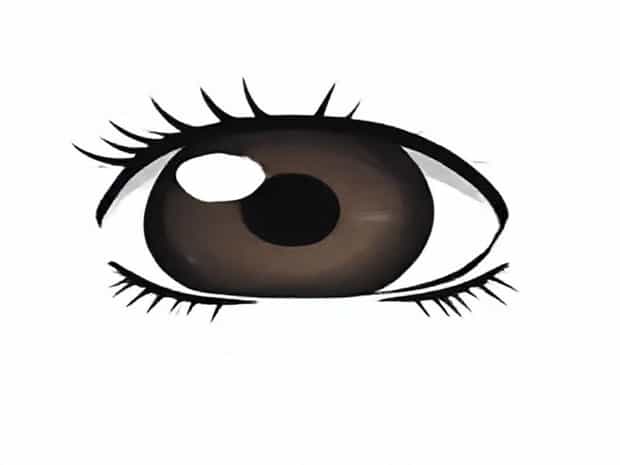
How To Draw Eyes Realistically
Drawing eyes realistically is one of the most rewarding and challenging skills in portrait and figure drawing. The eyes are often called the windows to the soul because they convey emotion, personality, and depth. Capturing them accurately can transform a simple sketch into a lifelike and expressive portrait. Learning how to draw eyes realistically involves understanding anatomy, proportion, shading, and reflection. By observing real eyes carefully and practicing consistently, you can master the techniques needed to render them convincingly. This process not only improves your technical skill but also enhances your ability to convey emotion and character in your artwork.
Understanding the Anatomy of the Eye
Before starting a realistic eye drawing, it’s essential to understand its structure. The eye is a complex organ with several key components, including the sclera (the white part), the iris (colored part), the pupil (black center), eyelids, eyelashes, and surrounding skin. Observing how these parts interact in real life will help you create a natural and lifelike appearance. Notice how the upper eyelid slightly overlaps the iris, how the lower eyelid curves gently beneath the eye, and how the eyelashes grow in different directions along the eyelids. Understanding these anatomical details provides a strong foundation for realistic drawing.
Choosing the Right Materials
Using the proper tools makes drawing realistic eyes more manageable. Pencils of varying hardness, such as 2H, HB, and 2B, are useful for different levels of shading. A soft eraser helps create highlights, while a blending stump or tortillon can smooth gradients and shadows. Good quality paper that can handle multiple layers of pencil and blending is recommended. These materials allow you to build subtle details, create depth, and refine textures in your drawing, essential for realistic eyes.
Sketching the Basic Shape
Start by lightly sketching the basic shape of the eye. Most eyes can be simplified into an almond or oval shape. Draw the upper and lower eyelids, keeping in mind that the upper lid is usually more curved and prominent than the lower lid. Mark the placement of the iris and pupil within this shape. Proper proportion is crucial too large or too small an iris or pupil can make the eye look unrealistic. Take your time to adjust the shapes and angles until they feel balanced and accurate.
Positioning and Symmetry
If you are drawing both eyes on a face, symmetry becomes important. The eyes should be roughly aligned horizontally and spaced approximately one eye-width apart. Check angles and distances frequently as you sketch to maintain proportional accuracy. Even slight asymmetry can affect the realism of the portrait. Light guidelines can help ensure proper placement and symmetry before adding details.
Detailing the Iris and Pupil
The iris is a key element in making an eye look realistic. Observe its patterns and textures carefully. The iris contains radial lines, subtle color variations, and tiny specks that create depth. Start by lightly shading the outer edge, then gradually build texture towards the center. The pupil should be a dark, solid circle in the center, with a highlight left unshaded to indicate reflection of light. The contrast between the dark pupil and lighter iris adds realism and makes the eye appear lively and three-dimensional.
Shading the Sclera
Although the sclera appears white, it is rarely pure white in reality. Add subtle shading to indicate the spherical shape of the eyeball and the shadows cast by the eyelids. Gradual transitions from light to dark help create depth, making the eye look round rather than flat. Avoid over-darkening, as this can make the eye look unnatural. Observing a reference photo or real-life eye can guide your shading choices.
Drawing Eyelids and Eyelashes
The eyelids frame the eye and significantly influence its realism. Add subtle shadows along the creases and edges to suggest form. Remember that the upper eyelid casts a shadow over the eye, and the lower eyelid is generally lighter but still has a gentle curve. Eyelashes should be drawn in varying lengths and directions, growing outward from the eyelid in a natural curve. Avoid drawing them as straight or uniform lines; irregularity makes them look more lifelike.
Adding Reflections and Highlights
Highlights are critical for creating a realistic and expressive eye. Identify the light source and leave small areas of the pupil and iris unshaded to reflect it. These reflections give the eye a wet, lively appearance. Adding subtle highlights to the corners of the eye or along the eyelid can enhance realism. Use an eraser or a white pencil for these effects, and blend carefully to maintain softness.
Shading the Surrounding Skin
Realistic eyes are not drawn in isolation they are part of the face. Shading the skin around the eye adds context and depth. Observe the subtle shadows under the eyebrow, around the eye socket, and along the nose bridge. Gradual shading creates a sense of three-dimensional form. Avoid harsh lines unless you are emphasizing a specific feature, and use blending to create smooth transitions that mimic real skin.
Common Mistakes to Avoid
- Drawing overly dark sclera – the white of the eye is rarely pure white.
- Uniform eyelashes – real eyelashes vary in length, direction, and density.
- Pupil too small or too large – proportional balance is key for realism.
- Flat shading – gradual transitions and careful observation of light and shadow enhance depth.
- Ignoring reflections – highlights are essential for a lively, three-dimensional look.
Practice Tips for Realistic Eyes
Consistent practice is essential for mastering realistic eye drawing. Use reference images or look at eyes in a mirror to observe shapes, textures, and lighting. Practice drawing eyes from different angles to understand perspective and foreshortening. Experiment with various shading techniques and pencil grades to achieve depth and contrast. Repetition and careful observation help improve accuracy and confidence, making each drawing progressively more realistic and expressive.
Drawing eyes realistically combines technical skill, observation, and patience. By understanding anatomy, practicing proportion, mastering shading, and adding subtle highlights, you can create eyes that convey emotion and depth. Attention to detail, careful observation, and regular practice are essential in achieving realism. Whether for portraits, character design, or artistic studies, mastering the art of drawing eyes is a valuable skill that enhances your overall drawing abilities and allows your artwork to communicate life and expression effectively.
- Essential Steps Sketch shapes, refine proportions, add iris and pupil details, shade sclera, draw eyelids and eyelashes, add highlights and skin shading.
- Materials Needed Pencils (various grades), eraser, blending tools, quality paper.
- Practice Tips Observe real eyes, use references, vary angles, experiment with shading.
- Benefits Improves realism, enhances hand-eye coordination, develops patience, and strengthens overall drawing skills.