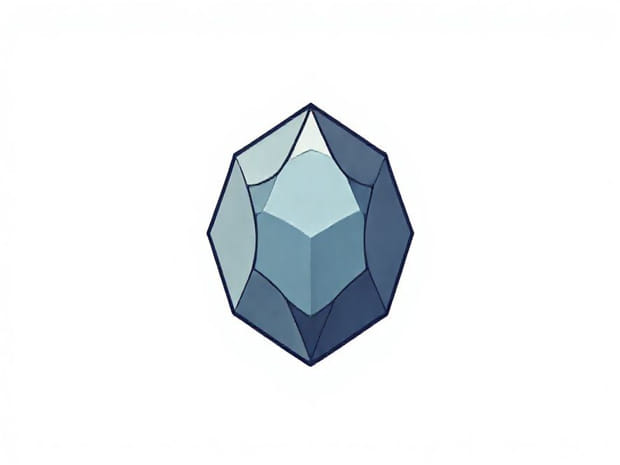
How To Draw A Hexagonal Prism
Learning how to draw a hexagonal prism is a useful skill for students, artists, designers, and anyone interested in geometry. A hexagonal prism is a three-dimensional solid with two parallel hexagonal bases connected by rectangular faces. Drawing it step by step helps improve spatial understanding and makes it easier to represent 3D objects on a flat surface. With patience and the right approach, you can create an accurate and realistic sketch of this geometric shape using only simple drawing tools such as a pencil, ruler, and paper.
Understanding the Hexagonal Prism
Before beginning the drawing process, it’s important to understand what a hexagonal prism looks like and how it is constructed. The shape consists of
- Two identical hexagons placed parallel to each other
- Six rectangular faces connecting the corresponding sides of the hexagons
- Twelve vertices (corners) and eighteen edges
When drawn correctly, the prism looks like a stretched hexagon in 3D, often resembling a crystal, a nut, or certain architectural structures. This understanding will help guide the steps of the drawing.
Materials You Will Need
To draw a hexagonal prism neatly, prepare the following tools
- Pencil (preferably HB for light sketching)
- Eraser for adjustments
- Ruler for straight edges
- Paper or a sketchbook
- Optional colored pencils or markers for shading
Using these tools ensures accuracy and makes the drawing process smoother.
Step-by-Step Guide to Drawing a Hexagonal Prism
Now that the basics are clear, follow these steps to draw the prism. Each stage builds upon the previous one, so take your time to keep lines clean and proportional.
Step 1 Draw the First Hexagon
Start by drawing a regular hexagon. This will be the front face of your prism. Use a ruler to measure equal sides, ensuring that all six edges are of the same length. A hexagon can be built by first drawing two parallel horizontal lines and then connecting them with slanted edges to form the six-sided shape.
Step 2 Draw the Second Hexagon
Next, draw another hexagon of the same size directly behind the first one. Position it slightly shifted upward and to the right, as if it is floating in 3D space. This will serve as the back face of the prism. Make sure it aligns properly so that corresponding vertices can be connected later.
Step 3 Connect the Vertices
Using straight lines, connect each vertex of the front hexagon to the corresponding vertex of the back hexagon. You should now see the outline of a three-dimensional hexagonal prism, with six rectangular sides linking the two hexagons.
Step 4 Define the Faces
At this stage, the shape might look complicated. To make it clearer, lightly shade or outline the visible faces. Identify the two hexagonal bases and the six rectangles. This helps distinguish the surfaces and makes the prism appear more realistic.
Step 5 Add Depth and Perspective
To create the illusion of depth, apply perspective by slightly angling the back hexagon. If you want the drawing to look more dynamic, make the back hexagon slightly smaller than the front one, which suggests distance.
Step 6 Add Shading
Shading gives your hexagonal prism a three-dimensional effect. Choose a light source direction such as from the top left and shade the opposite faces more darkly. Leave the top face lighter and gradually darken the side faces. This step adds realism and emphasizes the prism’s volume.
Tips for Drawing a Hexagonal Prism Accurately
To make your drawing stand out, consider these helpful tips
- Keep your pencil strokes light at first so you can erase mistakes easily.
- Use a ruler for precise, clean edges.
- Practice drawing regular hexagons separately before attempting the prism.
- Apply consistent shading based on the chosen light source.
- Experiment with different perspectives by tilting the hexagon at different angles.
Applications of Drawing a Hexagonal Prism
Learning how to draw a hexagonal prism has practical applications in several fields. It is not just a classroom exercise but also a useful skill in design and visualization.
In Geometry and Mathematics
Hexagonal prisms are often used to explain volume, surface area, and three-dimensional properties in mathematics. Drawing them accurately helps in solving geometry problems and understanding spatial relationships.
In Architecture and Design
Architects and designers use prism-like shapes when conceptualizing modern buildings or decorative structures. Practicing hexagonal prisms can improve the ability to draft technical sketches and creative ideas.
In Art and Creativity
Artists incorporate prism-like objects into still life or abstract drawings. Knowing how to construct these shapes helps in experimenting with perspective, light, and composition.
Common Mistakes to Avoid
While learning, many beginners face challenges. Being aware of common mistakes can save time and improve results.
- Uneven HexagonsIf the two hexagons are not equal, the prism will look distorted.
- Poor AlignmentMisaligned vertices create uneven rectangular faces.
- Lack of ShadingWithout shading, the prism looks flat and unrealistic.
- Overuse of Dark LinesHeavy outlines can make the drawing look harsh instead of clean.
Practicing Variations of Hexagonal Prisms
Once you master the basic form, try experimenting with different variations. For example
- Drawing the prism from different viewing angles
- Creating elongated prisms by spacing the hexagons farther apart
- Shortening the prism to make it appear compressed
- Adding textures to the surfaces to represent materials such as glass or wood
These variations will strengthen your drawing skills and make your sketches more versatile.
Advanced Techniques for Realistic Drawings
For those who want to take the drawing to the next level, here are some advanced techniques
- Two-Point PerspectivePlace the hexagonal prism in a perspective grid to create a more natural view.
- Cast ShadowsAdd shadows that the prism would cast on the ground based on the light source.
- TransparencyExperiment with transparent effects, showing edges from the back hexagon faintly.
- Color GradientsUse colored pencils or markers to give the prism a glass-like or crystalline appearance.
Drawing a hexagonal prism is a rewarding exercise that combines geometry, perspective, and creativity. By starting with two hexagons, connecting their vertices, and refining the structure with shading and perspective, you can create an accurate representation of this fascinating three-dimensional shape. Whether you are practicing for school, improving your artistic skills, or exploring design concepts, mastering how to draw a hexagonal prism will expand your ability to visualize and represent complex objects. With consistent practice, the process becomes second nature, opening up new possibilities for both technical and artistic expression.