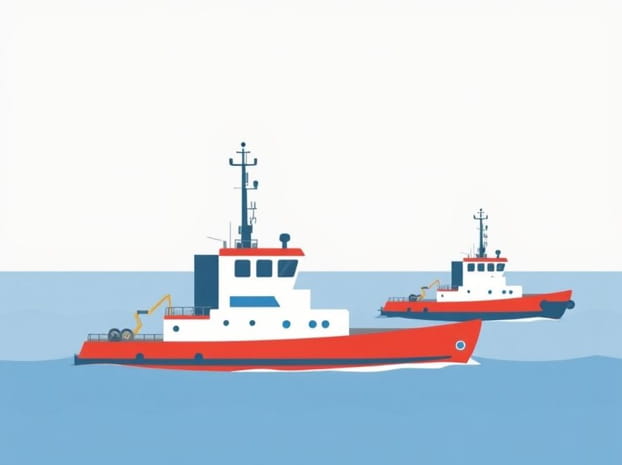
How Seaworthy Are Tugboats
Tugboats are essential vessels in maritime operations, renowned for their strength, maneuverability, and ability to assist larger ships in navigation, docking, and emergency situations. When evaluating how seaworthy tugboats are, several factors come into play, including their design, construction, engine power, stability, and the skill of their crew. Seaworthiness is critical not only for the tugboats themselves but also for the safety of the vessels they assist, as tugboats are often called upon in challenging conditions such as rough seas, narrow harbors, or adverse weather. Understanding the features and operational capabilities of tugboats provides insight into their reliability and effectiveness in maritime environments.
Design and Construction
The seaworthiness of a tugboat begins with its design and construction. Modern tugboats are specifically engineered to endure harsh maritime conditions while providing maximum power and stability. Their hulls are typically built with reinforced steel to withstand impacts and rough waters, and their low center of gravity helps maintain balance, even when towing large vessels. Additionally, tugboats are designed with compact dimensions, allowing them to maneuver efficiently in confined spaces such as harbors and ports.
Hull Design
The hull of a tugboat is carefully designed for both stability and maneuverability. Many tugboats feature a deep draft and a rounded or semi-rounded hull to minimize rolling in heavy seas. This design allows the vessel to remain stable during towing operations, even under strong currents or high winds. The hull’s shape also enhances the tugboat’s ability to cut through waves and maintain speed, which is essential for emergency response scenarios.
Durable Materials
Seaworthy tugboats rely on high-quality materials for durability and longevity. Reinforced steel, corrosion-resistant coatings, and specialized welding techniques ensure that the hull and superstructure can withstand prolonged exposure to saltwater, collisions, and heavy strain from towing large ships. Regular maintenance and inspections further enhance the vessel’s durability and overall seaworthiness.
Engine Power and Propulsion
Another critical factor in a tugboat’s seaworthiness is its engine power and propulsion system. Tugboats are equipped with powerful engines that allow them to generate high bollard pull the measure of pulling power which is essential for maneuvering large vessels safely. Propulsion systems are often highly specialized, with advanced thrusters providing precise control and exceptional maneuverability in tight or hazardous conditions.
Bollard Pull
Bollard pull is a key metric in evaluating a tugboat’s effectiveness. It represents the maximum force a tugboat can exert while pulling a stationary object, such as a ship or barge. High bollard pull allows tugboats to assist larger vessels in docking, undocking, or navigating through restricted channels, demonstrating their seaworthiness in demanding operational environments.
Propulsion Systems
Modern tugboats often utilize azimuth thrusters or Voith-Schneider propellers, which offer superior maneuverability compared to traditional propellers. These systems allow tugboats to move in any direction without changing orientation, making them highly agile in confined or congested waters. This precise control is essential for safely guiding larger ships and handling emergencies, especially in adverse weather conditions.
Stability and Safety Features
Seaworthy tugboats must maintain stability under a variety of conditions. Their stability is enhanced through hull design, weight distribution, and ballast systems that prevent capsizing even when operating at maximum towing capacity. Additionally, safety features such as watertight compartments, fire suppression systems, and emergency communication equipment contribute to their operational reliability.
Ballast Systems
Ballast systems in tugboats help regulate the vessel’s weight and balance, ensuring stability when towing or navigating rough seas. By adjusting ballast, operators can prevent excessive rolling, pitching, or listing, which enhances both safety and operational efficiency.
Emergency Preparedness
Seaworthy tugboats are equipped with comprehensive safety systems, including life-saving equipment, fire suppression devices, and advanced navigation tools. These features enable crews to respond effectively to emergencies, such as ship collisions, groundings, or onboard fires, further emphasizing the tugboat’s reliability and seaworthiness.
Operational Considerations
The seaworthiness of a tugboat is not solely determined by its design and equipment; it also depends on the skills and experience of its crew. Effective operation requires knowledge of maritime navigation, towing techniques, and emergency response procedures. Well-trained crews can maximize a tugboat’s capabilities, ensuring safe and efficient operations under challenging conditions.
Crew Training
Professional training is essential for tugboat operators. Crew members must understand the physics of towing, weather patterns, and vessel handling techniques. Regular drills and certifications ensure that the crew is prepared for emergencies and can respond quickly and safely in high-stress situations.
Maintenance Practices
Regular maintenance is crucial for maintaining seaworthiness. Engine checks, hull inspections, thruster maintenance, and safety equipment servicing ensure that tugboats operate at peak performance. Neglecting maintenance can compromise safety, reduce towing efficiency, and increase the risk of mechanical failure in critical situations.
Types of Tugboats and Seaworthiness
Different types of tugboats are designed for specific operational environments, which affects their seaworthiness in various conditions. Harbor tugs, ocean-going tugs, and escort tugs each have unique features tailored to their intended roles.
Harbor Tugboats
Harbor tugs are designed for operations within ports and close to shore. They prioritize maneuverability and bollard pull over long-range endurance. Their compact size allows them to navigate congested waters safely, making them highly seaworthy in confined harbor environments.
Ocean-Going Tugboats
Ocean-going tugboats are built for long-distance towing missions across open seas. These tugs have reinforced hulls, powerful engines, and advanced navigation systems to handle rough waters, storms, and extended voyages. Their seaworthiness is demonstrated by their ability to operate effectively under extreme maritime conditions.
Escort Tugboats
Escort tugs provide assistance to large vessels entering or leaving ports, particularly in challenging waters. They are equipped with strong propulsion systems and precise maneuvering capabilities, allowing them to maintain stability and control even in adverse weather, showcasing their high seaworthiness in operational scenarios.
Tugboats are highly seaworthy vessels, designed and constructed to perform demanding maritime tasks under a wide range of conditions. Their reinforced hulls, powerful engines, advanced propulsion systems, stability features, and well-trained crews all contribute to their reliability and operational effectiveness. From guiding massive container ships into port to responding to emergencies at sea, tugboats demonstrate exceptional seaworthiness. While their performance depends on factors such as vessel type, environmental conditions, and crew expertise, modern tugboats are equipped to handle even the most challenging maritime operations safely and efficiently, making them indispensable assets in global shipping and harbor management.