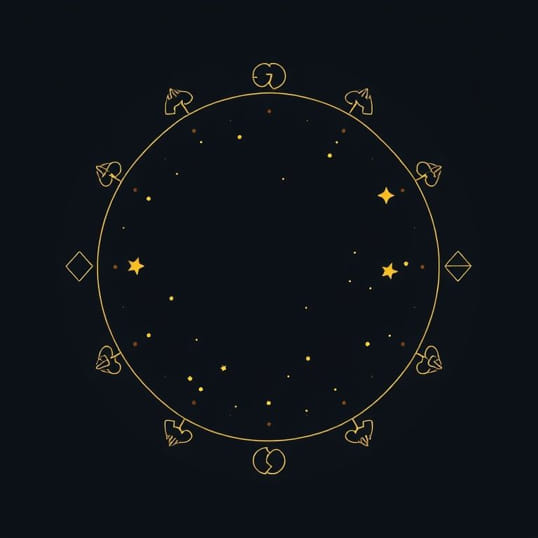
How Many Constellations Are In The Ecliptic
The night sky has fascinated humanity for millennia, guiding explorers, inspiring myths, and shaping scientific understanding. One of the key concepts in astronomy is the ecliptic, the apparent path that the Sun follows across the sky over the course of a year. Along this path, the Sun, Moon, and planets appear to travel through specific regions of the celestial sphere, marked by constellations. A common question among astronomy enthusiasts is how many constellations are in the ecliptic, which leads to a deeper exploration of the zodiac, celestial coordinates, and the historical development of constellations.
Understanding the Ecliptic
The ecliptic is the plane of Earth’s orbit projected onto the celestial sphere. It represents the apparent annual motion of the Sun relative to the background stars. Because the Moon and planets also orbit within roughly the same plane, they tend to stay close to the ecliptic. This makes it a crucial reference for both amateur stargazers and professional astronomers. The ecliptic divides the sky into northern and southern regions, helping to define the boundaries of constellations along its path.
Defining Constellations Along the Ecliptic
Constellations are arbitrary groupings of stars that form recognizable patterns in the sky. Historically, different cultures identified their own constellations, but the modern list of constellations is standardized by the International Astronomical Union (IAU), which recognizes 88 official constellations. Among these, only a subset lies along the ecliptic, forming the basis of the zodiac system.
The Zodiac Constellations
The zodiac is a set of constellations that the Sun appears to move through over the course of a year. Traditionally, there are 12 zodiac constellations, each associated with a 30-degree segment of the ecliptic
- Aries
- Taurus
- Gemini
- Cancer
- Leo
- Virgo
- Libra
- Scorpio
- Sagittarius
- Capricorn
- Aquarius
- Pisces
These constellations are widely recognized in astrology and ancient astronomy. The Sun appears to move through each zodiac constellation roughly once per month.
Accounting for Ophiuchus
Modern astronomy has refined the boundaries of constellations using precise measurements. According to the IAU, the Sun also passes through a 13th constellation along the ecliptic Ophiuchus. This constellation lies between Scorpius and Sagittarius and represents the serpent-bearer. Including Ophiuchus, there are actually 13 constellations along the ecliptic, even though traditional astrology continues to use 12.
Why Constellation Boundaries Matter
The recognition of 13 constellations on the ecliptic arises from clearly defined celestial boundaries. In the past, constellations were seen as vague star patterns, but modern astronomy has established precise edges. This means that the Sun’s apparent path does not align perfectly with the 12 zodiac signs traditionally used in horoscopes. For example, the Sun spends about 18 days in Ophiuchus each year, a fact often overlooked in astrology.
Planets and the Ecliptic Constellations
Not only the Sun, but all major planets in our solar system also appear near the ecliptic. Mercury, Venus, Mars, Jupiter, and Saturn all travel through these 13 constellations. The Moon, with its slightly inclined orbit, also moves close to the ecliptic, often passing through the same constellations. Understanding which constellations lie along the ecliptic helps astronomers track planetary positions and predict celestial events such as eclipses and transits.
The Moon and Ecliptic Constellations
The Moon completes its orbit around Earth in about 27.3 days, and because its orbit is inclined by only 5 degrees to the ecliptic, it regularly passes through the 13 constellations along the Sun’s path. This alignment explains why lunar eclipses occur only when the Moon crosses the ecliptic plane during full or new moon phases.
Historical Significance of Ecliptic Constellations
The constellations of the ecliptic have a rich cultural history. Ancient civilizations, including the Babylonians, Greeks, and Egyptians, observed the Sun, Moon, and planets along these paths and developed myths, calendars, and early astronomical predictions based on them. The division into 12 zodiac signs has persisted for thousands of years, illustrating the enduring influence of these constellations on human culture.
Cultural and Practical Uses
- Timekeeping Ancient calendars were often based on the Sun’s position within ecliptic constellations.
- Agriculture Planting and harvesting cycles were guided by the Sun’s movement through the zodiac.
- Navigation Mariners and travelers used the positions of zodiac constellations for orientation.
The Modern Astronomical Perspective
Today, astronomers focus on accurate celestial mapping. The 13 constellations along the ecliptic are essential for understanding the motion of the Sun, Moon, and planets. Tools like star charts, planetarium software, and telescopes rely on this framework. By observing these constellations, astronomers can predict eclipses, track asteroid paths, and study planetary alignments with high precision.
Summary of Ecliptic Constellations
To summarize, the question how many constellations are in the ecliptic? has a nuanced answer
- Traditional astrology recognizes 12 zodiac constellations.
- Modern astronomy identifies 13 constellations along the ecliptic, including Ophiuchus.
- All major planets and the Moon regularly pass through these constellations, providing a celestial map for observations.
Recognizing 13 constellations highlights the difference between historical conventions and scientific classification.
The ecliptic is a fundamental concept in astronomy, representing the path of the Sun across the sky and forming the basis for tracking celestial objects. Along this path lie the 13 constellations of the ecliptic, including the familiar 12 zodiac signs and the less commonly acknowledged Ophiuchus. These constellations are critical for understanding planetary motions, lunar cycles, and solar events. From ancient timekeeping and cultural myths to modern astrophysics, the ecliptic constellations continue to guide humanity in exploring the cosmos. Knowing how many constellations are in the ecliptic not only satisfies curiosity but also connects us to the deep history of astronomy and the intricate patterns that govern our skies.