How Many Centimeters Are In A Millimeter
Understanding the relationship between different units of measurement is essential in science, engineering, mathematics, and everyday life. One of the most basic and commonly used units for measuring length is the millimeter, while centimeters are another standard unit in the metric system. Knowing how many centimeters are in a millimeter is fundamental for converting measurements accurately and solving practical problems, whether in construction, education, or daily activities. Exploring this conversion also provides insight into the metric system and its logical structure.
Understanding Millimeters
The millimeter, abbreviated as mm, is a unit of length in the metric system. It is a very small measurement, making it ideal for precise measurements in engineering, science, and crafts. For instance, millimeters are often used to measure the thickness of paper, the dimensions of small mechanical parts, or even the width of a human hair. Being familiar with the size of a millimeter helps people understand just how fine or detailed certain objects are.
Definition of a Millimeter
A millimeter is defined as one-thousandth of a meter. Since the meter is the base unit of length in the International System of Units (SI), the millimeter is a derived unit. Mathematically, 1 millimeter equals 0.001 meters
- 1 mm = 0.001 m
This tiny unit allows for highly accurate measurements in both everyday tasks and scientific research.
Understanding Centimeters
The centimeter, abbreviated as cm, is another unit of length in the metric system. It is larger than a millimeter and commonly used in everyday measurements, such as the height of a person, the dimensions of a book, or the size of a room. A centimeter provides a convenient scale for measurements that are too large to use millimeters but too small to use meters efficiently.
Definition of a Centimeter
A centimeter is defined as one-hundredth of a meter. Since the meter is the base unit of length, the centimeter is also a derived metric unit. In mathematical terms
- 1 cm = 0.01 m
This means that a centimeter is ten times larger than a millimeter, which makes conversions between the two straightforward.
Converting Millimeters to Centimeters
To convert millimeters to centimeters, you need to understand the ratio between the two units. Since one centimeter equals ten millimeters, converting millimeters to centimeters involves dividing the number of millimeters by ten. This is a simple and logical process based on the decimal nature of the metric system.
Conversion Formula
The formula to convert millimeters (mm) to centimeters (cm) is
- Centimeters = Millimeters ÷ 10
For example, if you have 50 millimeters and want to know how many centimeters that is, you divide 50 by 10, which equals 5 centimeters. This formula works for any number of millimeters, whether small or large.
Examples of Conversion
Here are several practical examples to illustrate the conversion
- 5 mm ÷ 10 = 0.5 cm
- 20 mm ÷ 10 = 2 cm
- 100 mm ÷ 10 = 10 cm
- 250 mm ÷ 10 = 25 cm
These examples show how easy it is to convert millimeters to centimeters using the simple division method.
Why Understanding This Conversion is Important
Knowing how many centimeters are in a millimeter is more than a basic mathematical skill. It has practical applications in many areas of life. For example
- Engineers and architects use the conversion to design buildings and machinery with precision.
- In science labs, measurements of length often need to be converted for experiments and calculations.
- In everyday tasks, such as sewing, woodworking, or measuring furniture, converting between millimeters and centimeters helps achieve accuracy.
- Teachers and students rely on this knowledge to solve math problems and understand metric system relationships.
Relationship Between Millimeters, Centimeters, and Meters
The metric system is designed for simplicity and consistency. Millimeters, centimeters, and meters are all part of the same system, making conversions straightforward. Understanding these relationships allows anyone to switch between small and large units easily.
Key Relationships
- 1 meter = 100 centimeters
- 1 meter = 1000 millimeters
- 1 centimeter = 10 millimeters
These relationships are essential for measurements in science, construction, and everyday life. Knowing that there are 10 millimeters in 1 centimeter makes it easy to scale up or down measurements.
Visualizing the Conversion
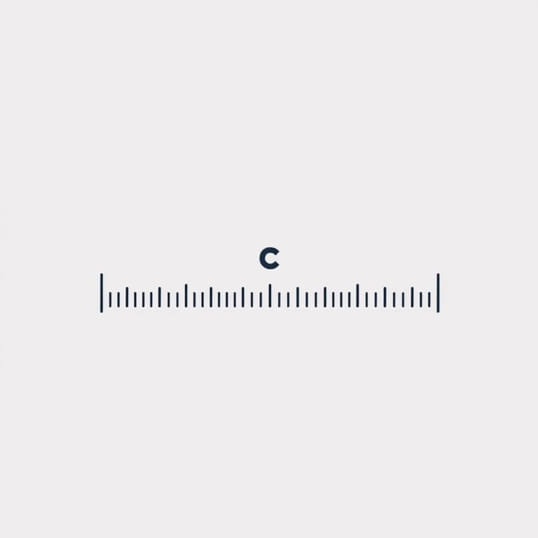
Visualization helps reinforce the understanding of the conversion between millimeters and centimeters. Imagine a standard ruler each centimeter is divided into ten smaller divisions, each representing one millimeter. This clear visual representation demonstrates that ten millimeters together form one centimeter, helping learners grasp the concept intuitively.
Practical Tips for Remembering
Here are some practical tips to remember the conversion
- Think of a centimeter as a bigger unit” made of 10 smaller millimeters.
- Use the phrase “10 millimeters make 1 centimeter” as a quick reference.
- Practice converting real-life measurements, such as the length of a pencil or a notebook, to reinforce the concept.
Applications in Education and Daily Life
Understanding how many centimeters are in a millimeter is a foundational skill taught in class 9 and other early education levels. It helps students
- Solve math and physics problems involving length measurements.
- Perform accurate measurements in science experiments.
- Understand metric units used in international systems.
In everyday life, this knowledge assists in tasks such as measuring small objects, understanding dimensions in packaging, or following instructions in DIY projects. It also helps when reading technical specifications, construction plans, or product dimensions.
Summary
To summarize, a millimeter is a small unit of length, while a centimeter is ten times larger. There are exactly 0.1 centimeters in one millimeter, or conversely, 10 millimeters make up one centimeter. Understanding this conversion is essential for scientific accuracy, educational purposes, and practical applications in daily life. Using the simple division formula or visualizing the units on a ruler can make this conversion straightforward and easy to remember.
Knowing how many centimeters are in a millimeter is a basic but important skill that applies to mathematics, science, and daily measurements. With 10 millimeters equaling 1 centimeter, conversions between these units are simple and logical, thanks to the structure of the metric system. This knowledge enables precise measurements, helps students and professionals alike, and forms the foundation for understanding more complex metric conversions. Mastering this basic concept ensures accurate calculations and measurements in a wide range of contexts, from classroom learning to real-world applications.