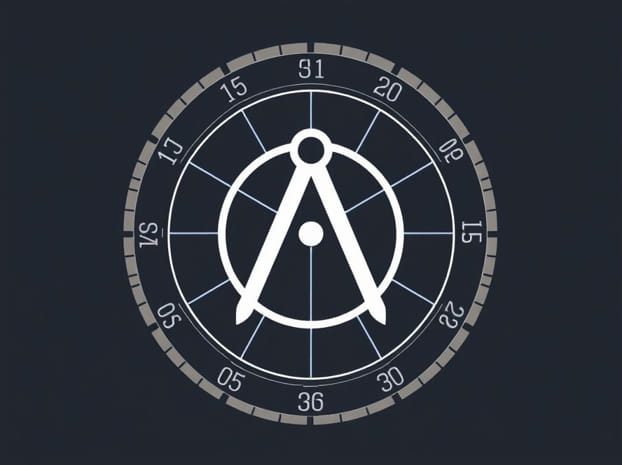
How Does An Astrolabe Work?
For centuries, the astrolabe has been one of the most important tools in astronomy, navigation, and timekeeping. Before the invention of modern telescopes and digital devices, people used the astrolabe to understand the movement of the stars and planets, to calculate time, and even to navigate across seas. To answer the question of how an astrolabe works, it is necessary to explore both its design and the practical methods by which it transforms the complex motion of the heavens into understandable patterns. The device may appear intricate, but at its heart it functions like a two-dimensional model of the sky.
What is an Astrolabe?
An astrolabe is an ancient instrument that maps the celestial sphere onto a flat surface. It was widely used in the Islamic Golden Age, Medieval Europe, and ancient Greece. Often described as the analog computer of the stars,” the astrolabe could solve problems related to the position of the Sun, the Moon, planets, and stars. Its versatility made it a powerful tool for scholars, navigators, and astrologers.
Main Uses of the Astrolabe
- Finding the altitude of stars and the Sun.
- Determining time during the day or night.
- Locating celestial objects relative to the horizon.
- Assisting in navigation at sea and on land.
- Calculating prayer times and direction for religious purposes.
Structure of the Astrolabe
To understand how an astrolabe works, one must first know its basic parts. Each component has a specific role in recreating the sky on a flat disc. The beauty of the instrument lies in how these parts move together to mirror celestial movements.
Key Components
- MaterThe base plate that holds the entire instrument.
- Tympans (climates)Interchangeable plates engraved with coordinate lines representing different latitudes.
- ReteA rotating star map with pointers indicating the brightest stars.
- AlidadeA rule or pointer used to sight stars or the Sun to measure altitude.
- RuleAnother rotating arm placed over the rete, used for aligning positions and making calculations.
When assembled, these parts create a dynamic model that allows the user to simulate the movement of the heavens.
How Does an Astrolabe Work?
The working principle of an astrolabe is projection. It projects the three-dimensional dome of the sky onto a two-dimensional surface using a system known as stereographic projection. This means that circles in the sky, such as the horizon or the path of the Sun, appear as circles or arcs on the flat plate of the astrolabe. By rotating the rete and aligning it with the rule, the user can track celestial movements with remarkable accuracy.
Step-by-Step Process
Here is a simplified explanation of how an astrolabe is typically used
- Step 1 Sight a star or the Sun.Using the alidade, the user points the instrument at a celestial object to measure its altitude above the horizon.
- Step 2 Rotate the rete.The rete is turned so that the pointer of the observed star aligns with the measured altitude on the tympan.
- Step 3 Determine time or position.Once aligned, the astrolabe reveals local time, or the position of other stars, depending on what calculation is being made.
- Step 4 Perform further calculations.The user can rotate the rule and rete to simulate celestial motions across different times of the night or year.
Using the Astrolabe for Timekeeping
One of the most common uses of an astrolabe was telling time. By measuring the altitude of the Sun during the day or a specific star at night, users could align the rete with the correct position and read the time directly. This was especially valuable before mechanical clocks became widespread.
Daytime Timekeeping
During the day, the user sights the Sun with the alidade, measures its altitude, and rotates the rete to align with that altitude. The astrolabe then indicates the current solar time.
Nighttime Timekeeping
At night, the altitude of a bright star such as Vega or Sirius is measured. By aligning the star pointer on the rete, the user could determine the time of night with considerable accuracy, even in total darkness.
Astrolabe in Navigation
Although not as accurate as later instruments like the sextant, the astrolabe was an important tool for early navigators. By measuring the altitude of the Sun at noon or the height of Polaris (the North Star), sailors could estimate their latitude. This ability made long voyages more manageable and safer, especially during the Age of Exploration.
Limitations in Navigation
- The astrolabe was heavy and sometimes difficult to use on rocking ships.
- Its precision was limited compared to instruments developed later.
- Despite these issues, it remained valuable until improved tools replaced it.
Scientific and Cultural Impact
The astrolabe was more than just a tool it was a bridge between science, culture, and religion. In the Islamic Golden Age, scholars refined the astrolabe to calculate prayer times and the qibla direction. In Europe, it became a central educational device for teaching astronomy and geometry. Its influence extended into art and philosophy, symbolizing human curiosity about the cosmos.
Legacy of the Astrolabe
Today, astrolabes are admired for their craftsmanship and historical importance. Museums preserve them as treasures of scientific history, and modern replicas allow enthusiasts to experience how ancient astronomers and travelers interacted with the sky. While digital devices have replaced them in practice, the astrolabe remains a powerful reminder of the ingenuity of past civilizations.
Practical Example Finding the Time with an Astrolabe
To illustrate the working process, imagine someone in the Middle Ages using an astrolabe. They would hold the instrument up, sight the Sun with the alidade, and measure its altitude. Suppose it was 40 degrees above the horizon. They would then rotate the rete until the Sun pointer matched that altitude. Looking at the scales engraved on the tympan, they could read the local solar time perhaps mid-morning. This simple process shows the elegance of the astrolabe’s design, transforming celestial measurements into practical knowledge.
Understanding how an astrolabe works reveals the brilliance of ancient science. By using stereographic projection, rotating plates, and simple measurements, the device transformed the complexities of the heavens into practical tools for navigation, timekeeping, and astronomy. Its components the mater, tympan, rete, alidade, and rule worked together to simulate the sky in a portable form. Though it has been replaced by modern technology, the astrolabe continues to symbolize human curiosity, ingenuity, and the timeless quest to connect with the stars. Exploring its function not only explains an ancient instrument but also offers insight into how people once understood their place in the universe.
Apakah Anda ingin saya tambahkan **bagian khusus tentang peran astrolabe dalam perkembangan pendidikan dan universitas abad pertengahan** supaya artikel ini lebih panjang dan historis?”