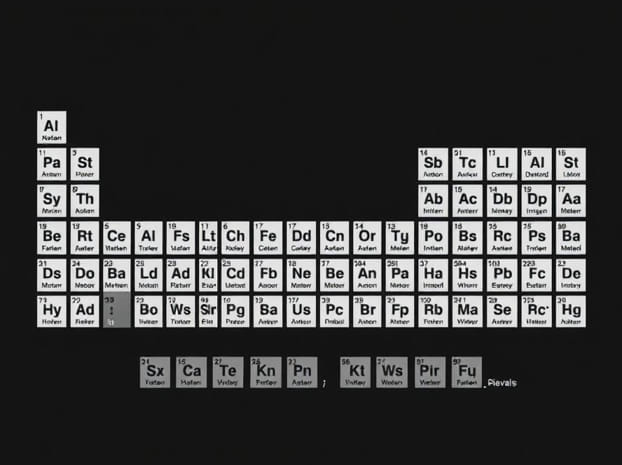
How Did Glenn Seaborg Shape The Periodic Table
Glenn Seaborg was a pioneering chemist whose work fundamentally transformed the periodic table and expanded our understanding of chemical elements. Throughout his career, Seaborg discovered multiple new elements, contributed to the development of nuclear chemistry, and proposed a reorganization of the periodic table that has endured to this day. His insights not only added elements to the scientific catalog but also reshaped how chemists visualize relationships between elements. Seaborg’s contributions helped bridge the gap between theoretical predictions and experimental discoveries, illustrating the dynamic nature of chemistry and the ongoing evolution of scientific knowledge.
Early Life and Education
Glenn T. Seaborg was born in 1912 in Ishpeming, Michigan. From an early age, he showed a strong aptitude for science and mathematics. He pursued higher education at the University of California, Berkeley, where he earned his Ph.D. in chemistry. During his formative years, Seaborg became deeply interested in the structure of the atom and the organization of elements, setting the stage for his future contributions to the periodic table. His early research focused on nuclear chemistry, particularly the study of radioactive elements and isotopes.
Contributions to Nuclear Chemistry
Seaborg’s work in nuclear chemistry was groundbreaking. He played a key role in the discovery of plutonium in 1940, a milestone that would later contribute to the development of nuclear energy and atomic weaponry. Beyond plutonium, Seaborg and his team discovered several other transuranium elements those beyond uranium on the periodic table including americium, curium, berkelium, californium, einsteinium, fermium, mendelevium, nobelium, and lawrencium. Each discovery required meticulous experimentation and verification, demonstrating Seaborg’s exceptional skill in both theoretical and applied chemistry.
Transuranium Elements
Transuranium elements are those with atomic numbers greater than 92. Prior to Seaborg’s discoveries, uranium was considered the heaviest element. The identification of transuranium elements expanded the boundaries of the periodic table and challenged existing models of atomic structure. These discoveries required Seaborg to develop new methods for synthesizing and isolating elements, often using cyclotrons and nuclear reactors. His work confirmed that new elements could be created artificially, which was a revolutionary idea at the time.
Reorganization of the Periodic Table
One of Seaborg’s most significant contributions was his proposal to reorganize the periodic table to accommodate the actinide series. The actinides are a series of 15 elements from actinium to lawrencium, many of which were discovered by Seaborg himself. Before his work, these elements were often incorrectly placed, leading to inconsistencies in the table’s structure and predictive power. Seaborg suggested placing the actinide series below the lanthanide series, forming a separate row that allowed the periodic table to maintain its clear periodicity and logical arrangement.
The Actinide Concept
The actinide concept provided a systematic way to understand the properties of elements with similar electron configurations. By recognizing that actinides belong to a distinct series, Seaborg enabled chemists to predict the chemical behavior of elements based on their position in the table. This reorganization clarified relationships among elements, facilitated the discovery of additional elements, and influenced chemical education by offering a more intuitive framework for students and researchers.
Impact on Chemistry and Science
Seaborg’s influence extended far beyond the laboratory. His reorganization of the periodic table enhanced the predictive power of chemical theory, allowing scientists to anticipate properties of undiscovered elements. Additionally, his discoveries of new elements contributed to practical applications in medicine, industry, and nuclear energy. For example, americium is used in smoke detectors, while plutonium and curium have applications in nuclear reactors and space missions. Seaborg’s work demonstrated that theoretical understanding and practical experimentation could complement each other, driving the field of chemistry forward.
Recognition and Awards
Seaborg received numerous accolades for his work. He was awarded the Nobel Prize in Chemistry in 1951 for his discoveries in the chemistry of the transuranium elements. Beyond this, he served as chairman of the United States Atomic Energy Commission, influencing national policy on nuclear research and safety. His leadership in science extended into education, public outreach, and global scientific collaboration, solidifying his legacy as one of the most influential chemists of the 20th century.
Educational and Public Influence
In addition to his laboratory achievements, Seaborg was dedicated to science education and public understanding of chemistry. He co-authored textbooks and wrote extensively on the periodic table, making complex concepts accessible to students and the general public. Seaborg emphasized the importance of the periodic table as a living document, reflecting ongoing discoveries and scientific progress. His advocacy helped inspire generations of chemists to explore nuclear chemistry, element synthesis, and the broader implications of atomic research.
Legacy of the Periodic Table
Seaborg’s reorganization of the periodic table remains in use today, forming the basis for modern presentations of the actinide series. His work clarified the structure of heavy elements and provided a framework for understanding their chemical and physical properties. The placement of actinides below the lanthanides in most contemporary periodic tables is a direct result of his insights. By combining experimental discovery with theoretical analysis, Seaborg shaped the way chemists visualize and use the periodic table in both research and education.
Glenn Seaborg’s contributions to the periodic table and nuclear chemistry were transformative. Through the discovery of multiple transuranium elements and the proposal of the actinide series, he reshaped the periodic table, enhancing its clarity, predictive power, and educational value. His work bridged theoretical understanding and experimental innovation, influencing not only chemistry but also medicine, industry, and national science policy. Seaborg’s legacy endures in the periodic table we use today, demonstrating the profound impact that a single scientist can have on the understanding and organization of the natural world.