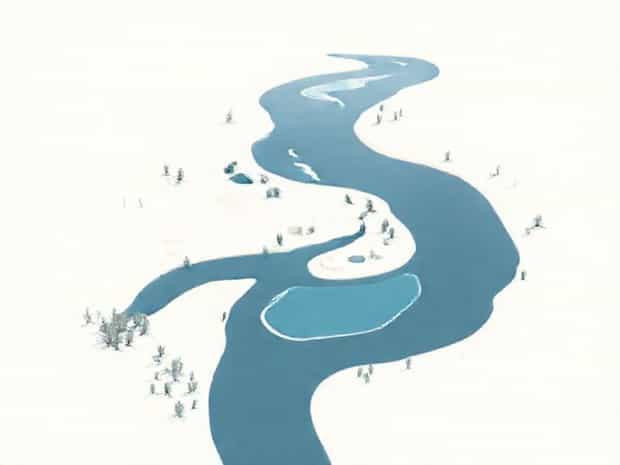
How Are Meanders And Oxbow Lakes Formed
Meanders and oxbow lakes are fascinating features found in river landscapes, often capturing the attention of geographers, environmental enthusiasts, and casual observers alike. These formations are not random; they are the result of dynamic processes that shape the flow of rivers over time. Understanding how meanders and oxbow lakes are formed provides insight into river behavior, sediment transport, erosion, and deposition. The study of these features helps explain how rivers interact with the land around them and how landscapes evolve over thousands of years.
What are Meanders?
Meanders are winding curves or bends in a river that form as a result of water flow dynamics. Rather than flowing in a straight line, rivers naturally develop sinuous paths due to the combination of water velocity, sediment load, and the underlying topography. Meanders are most commonly found in the middle and lower courses of a river where the gradient is gentler, allowing lateral erosion and deposition to shape the river’s path.
Formation of Meanders
The formation of meanders is driven by the interplay between erosion on the outer bank and deposition on the inner bank
- Outer Bank ErosionWater flows faster on the outside of a bend, increasing hydraulic action and causing erosion of the riverbank. This process gradually cuts into the land, enlarging the bend over time.
- Inner Bank DepositionOn the inside of the bend, water moves more slowly, causing sediment to settle and accumulate. This deposition builds up the inner bank, accentuating the curve of the river.
- Lateral MigrationAs erosion and deposition continue, the meander slowly migrates downstream, creating an increasingly exaggerated winding pattern.
Over time, meanders can become highly sinuous, with tight loops and broad curves, creating complex river landscapes that are both beautiful and ecologically important.
Factors Influencing Meander Formation
Several environmental factors contribute to the development and evolution of meanders
River Gradient
Meanders form more readily in rivers with gentle gradients. In steep, fast-flowing rivers, the energy is primarily directed downward, causing vertical erosion rather than lateral movement. In low-gradient areas, the slower flow allows rivers to meander and create broad bends.
Sediment Load
The amount and type of sediment carried by a river influence meander formation. Rivers with moderate to high sediment loads deposit material on the inner banks, while eroding outer banks. The balance of erosion and deposition shapes the curvature of the river over time.
Floodplain Characteristics
Wide, flat floodplains provide the space necessary for meanders to develop. When rivers have room to shift laterally, they can form larger, sweeping bends. Floodplains also serve as zones of deposition during high-water events, reinforcing the meandering process.
What are Oxbow Lakes?
Oxbow lakes are crescent-shaped water bodies that form from abandoned meanders. When a river meander becomes extremely curved, natural processes can cut off the bend from the main channel, creating a separate lake. Oxbow lakes are important ecological features, providing habitats for wildlife and contributing to wetland biodiversity.
Formation of Oxbow Lakes
The formation of oxbow lakes is a multi-step process
- Exaggeration of MeandersContinuous erosion on the outer banks and deposition on the inner banks cause a meander to become increasingly pronounced.
- Neck FormationThe narrow strip of land between the bends of a meander, called the neck, becomes thinner over time due to erosion.
- Cutoff EventDuring high flow events, such as floods, the river may breach the neck, creating a new, straighter channel.
- Formation of Oxbow LakeThe abandoned meander loop remains as a standalone water body, gradually filled with sediment and supporting wetland ecosystems.
Factors Influencing Oxbow Lake Formation
Several environmental conditions affect how and when oxbow lakes form
Flooding and River Discharge
Flood events play a critical role in the cutoff of meanders. High water levels increase the river’s erosive power, making it more likely for the neck of a meander to be breached. Seasonal variations in discharge influence the frequency and scale of oxbow lake formation.
Bank Composition
The type of material composing riverbanks affects erosion rates. Softer soils, such as clay and silt, erode more easily than hard rock, allowing meanders to develop more rapidly and increasing the likelihood of oxbow lake formation.
Vegetation and Human Activity
Vegetation can stabilize riverbanks, slowing erosion and meander migration. Conversely, deforestation or human alteration of river channels can accelerate meander formation and oxbow lake creation. Understanding these factors is important for managing rivers and protecting natural habitats.
Ecological Importance of Meanders and Oxbow Lakes
Meanders and oxbow lakes provide significant ecological benefits. They create diverse habitats for fish, birds, and other wildlife. The slower water in meanders and oxbow lakes supports aquatic plants and invertebrates, while floodplains associated with meandering rivers act as natural buffers, absorbing floodwaters and filtering pollutants.
Flood Control and Water Quality
Meanders and oxbow lakes help mitigate flooding by spreading water across floodplains during high flow events. They also improve water quality by allowing sediments and nutrients to settle, reducing turbidity and supporting healthy ecosystems downstream.
Recreation and Landscape Value
These features are popular for recreational activities such as fishing, boating, and wildlife observation. Meanders and oxbow lakes add aesthetic and ecological value to river landscapes, making them important both for conservation and for human enjoyment.
Meanders and oxbow lakes are dynamic features of river systems, formed through a combination of erosion, deposition, and natural river processes. Meanders develop from the interplay of water velocity, sediment load, and floodplain characteristics, while oxbow lakes result from the cutoff of exaggerated meanders. These formations are not only visually striking but also play crucial roles in flood management, water quality, and ecosystem health. Understanding how meanders and oxbow lakes form provides valuable insight into river dynamics, the shaping of landscapes, and the ecological importance of maintaining healthy, functioning river systems.