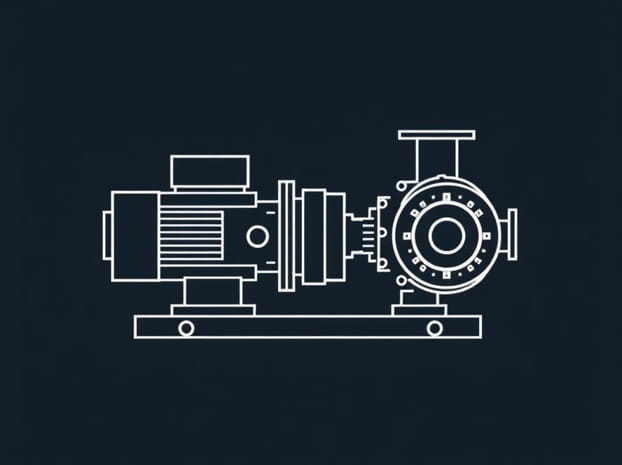
Horizontal Multistage Centrifugal Pump
In many industrial and commercial applications, reliable pumping systems are essential for transporting liquids efficiently over long distances and under high pressure. One of the most widely used solutions for such demanding requirements is the horizontal multistage centrifugal pump. This type of pump combines the principles of centrifugal force with multiple impellers arranged in series, providing higher pressure and greater efficiency compared to single-stage designs. Its robust construction and versatility make it suitable for water supply systems, boiler feed, irrigation, and numerous other applications where stable and continuous fluid transfer is required.
Understanding the Horizontal Multistage Centrifugal Pump
A horizontal multistage centrifugal pump is a centrifugal pump that contains two or more impellers mounted on a horizontal shaft. Each impeller adds energy to the liquid, gradually increasing the pressure as the fluid passes through multiple stages. The horizontal design means that the shaft runs parallel to the ground, which simplifies installation and maintenance in many setups.
The multistage feature allows these pumps to achieve higher heads (pressure) while maintaining a compact footprint. This is particularly useful when dealing with systems that require both high flow rates and high pressure, making them more efficient and reliable than alternatives.
Main Components of a Horizontal Multistage Centrifugal Pump
The construction of a horizontal multistage centrifugal pump involves several key parts that contribute to its performance and durability
- ImpellersMultiple impellers arranged in sequence, each responsible for increasing fluid pressure step by step.
- Pump CasingHouses the impellers and guides fluid flow through each stage.
- Suction and Discharge NozzlesEnable the entry and exit of liquid into the pumping system.
- ShaftConnects all impellers and is supported by bearings to ensure smooth rotation.
- BearingsProvide support to the shaft, reducing wear and friction.
- Mechanical Seals or PackingPrevent leakage from the pump casing.
How a Horizontal Multistage Centrifugal Pump Works
The operating principle of this pump is based on centrifugal force. Liquid enters the pump through the suction nozzle and reaches the first impeller. As the impeller rotates, the liquid gains velocity and pressure. Instead of discharging immediately, the fluid is directed to the next impeller stage. This process continues until the liquid has passed through all impellers, achieving a much higher pressure at the discharge nozzle.
By dividing the pressure rise across multiple impellers, the pump operates more efficiently and can handle demanding applications where a single-stage pump would struggle.
Applications of Horizontal Multistage Centrifugal Pumps
Due to their efficiency and high-pressure capabilities, horizontal multistage centrifugal pumps are used across a wide range of industries
- Water Supply and DistributionMunicipal systems and high-rise buildings use them for consistent water pressure.
- Boiler FeedEssential in power plants and industries requiring high-pressure feed water systems.
- IrrigationProvides reliable water delivery for large agricultural fields.
- Industrial ProcessesUsed in chemical, oil, and gas industries for transporting fluids under pressure.
- Firefighting SystemsEnsures high-pressure water supply in critical safety applications.
Advantages of Horizontal Multistage Centrifugal Pumps
These pumps are widely chosen due to several performance benefits
- Ability to generate high pressure with relatively low energy consumption.
- Compact horizontal design suitable for space-constrained installations.
- High efficiency and reliability for continuous operation.
- Modular construction allows customization for different pressure and flow requirements.
- Durable components reduce downtime and maintenance costs.
Limitations of Horizontal Multistage Centrifugal Pumps
Despite their strengths, there are certain limitations engineers must consider before selecting this pump type
- More complex design compared to single-stage pumps, leading to higher initial costs.
- Requires precise alignment of the shaft and bearings during installation.
- More parts mean higher maintenance effort if not monitored properly.
- Not ideal for fluids containing solids or abrasives, as these may cause impeller damage.
Best Practices for Operation and Maintenance
To maximize efficiency and extend the lifespan of a horizontal multistage centrifugal pump, operators should follow these best practices
- Ensure proper alignment of the pump and motor during installation.
- Regularly inspect bearings and seals to prevent wear and leakage.
- Monitor vibration and noise levels to detect early signs of imbalance.
- Keep suction lines free from air pockets or blockages to avoid cavitation.
- Perform routine lubrication of bearings and other moving components.
Comparison with Vertical Multistage Centrifugal Pumps
While both horizontal and vertical multistage pumps perform similar functions, their designs are suited to different conditions
- Horizontal Multistage PumpsEasier to maintain, ideal for high-capacity and high-pressure applications where space is available.
- Vertical Multistage PumpsBetter for applications with limited floor space, often used in HVAC and water treatment systems.
The choice between the two depends on installation space, fluid characteristics, and operational requirements.
Future Developments in Pump Technology
With advances in technology, horizontal multistage centrifugal pumps are being improved with features like digital monitoring systems, variable frequency drives (VFDs) for better energy efficiency, and enhanced materials that can handle more aggressive fluids. These innovations aim to reduce energy consumption, extend service life, and improve reliability in critical applications.
The horizontal multistage centrifugal pump is a highly efficient and versatile solution for transferring fluids under high pressure. Its ability to deliver consistent flow and pressure makes it indispensable in water supply, industrial processes, irrigation, and power generation. While it requires careful installation and maintenance, its advantages in performance, reliability, and energy efficiency make it a preferred choice in demanding environments. As industries continue to prioritize efficiency and sustainability, the role of horizontal multistage centrifugal pumps will remain vital in modern engineering applications.