History Of Olduvai Gorge
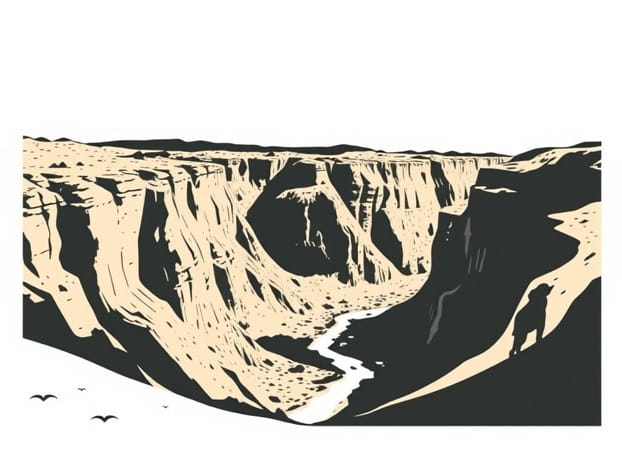
Olduvai Gorge, located in northern Tanzania, is one of the most significant archaeological and paleoanthropological sites in the world. Often referred to as the Cradle of Mankind, this deep ravine has provided critical insights into early human evolution and prehistoric life. Stretching approximately 48 kilometers long and up to 90 meters deep, Olduvai Gorge has been the site of countless fossil discoveries, including early hominid remains and stone tools that date back millions of years. The gorge offers a unique window into the past, allowing scientists to reconstruct ancient environments and understand how early humans adapted to their surroundings. Its rich deposits have made it a cornerstone in the study of human origins, bridging the gap between prehistoric life and modern anthropology.
Geographical and Geological Features
Olduvai Gorge is situated in the Great Rift Valley, a massive geological trench that stretches from the Middle East to Mozambique. The gorge itself is a steep-sided canyon formed by tectonic activity and erosion over millions of years. Its layers of volcanic ash and sediment have preserved an extraordinary fossil record. Geologists have divided these layers into distinct strata, allowing archaeologists to date fossils and artifacts with remarkable precision. The combination of sedimentary and volcanic deposits has made Olduvai Gorge an ideal site for studying the environmental conditions that shaped early human evolution. Its unique geology continues to reveal the interplay between climate, landscape, and human adaptation over time.
Early Discoveries and Excavations
The history of research at Olduvai Gorge began in the early 20th century, but it was not until the 1930s that systematic excavations took place. German geologist Wilhelm Kattwinkel first explored the site in 1911, identifying fossilized animal remains. However, it was the work of the Leakey family, particularly Louis and Mary Leakey, that brought Olduvai Gorge to international attention. Starting in 1931, the Leakeys conducted extensive excavations, uncovering a wealth of hominid fossils and stone tools. Their discoveries fundamentally changed our understanding of human evolution, providing concrete evidence that early humans lived in Africa millions of years ago. The Leakeys’ meticulous documentation and stratigraphic studies set new standards for archaeological research and established Olduvai Gorge as a world-class site for paleoanthropology.
Significant Fossil Discoveries
Olduvai Gorge has yielded some of the most important fossil finds in human history. The site has produced fossils of Australopithecus boisei, Homo habilis, and other early hominids. These discoveries have provided insight into the physical characteristics, behavior, and evolution of our ancestors. One of the most famous finds is the partial skeleton of Homo habilis, which Louis and Mary Leakey uncovered in 1960. This specimen, often referred to as OH 7,” helped to confirm that early humans were capable of using tools. The fossil record at Olduvai Gorge also includes a variety of animal remains, which help researchers reconstruct the environment in which early humans lived. By studying these fossils, scientists gain a clearer picture of the diet, mobility, and survival strategies of prehistoric populations.
Stone Tools and Cultural Evidence
In addition to hominid fossils, Olduvai Gorge is renowned for its extensive collection of stone tools. These artifacts provide evidence of early human ingenuity and the development of technology. The earliest tools discovered at the site belong to the Oldowan industry, characterized by simple, flaked stones used for cutting and processing food. Later layers contain more advanced tools, indicating technological progression over time. The presence of these tools suggests that early humans at Olduvai Gorge engaged in hunting, scavenging, and food preparation, reflecting the emergence of complex behavior and cultural adaptation. By analyzing tool-making techniques and usage patterns, archaeologists can better understand the cognitive and social development of early human species.
Impact on Understanding Human Evolution
The discoveries at Olduvai Gorge have had a profound impact on the study of human evolution. The site provides a continuous record of hominid development over millions of years, allowing scientists to trace the evolutionary trajectory of early humans. Fossils and tools from Olduvai Gorge demonstrate that Africa was the primary cradle of human evolution, supporting the theory that modern humans originated on the continent. The evidence collected at the site also highlights the adaptability of early humans to changing environments, as they developed new tools, hunting strategies, and social behaviors to survive. As a result, Olduvai Gorge remains central to discussions about human ancestry and the factors that shaped our species over time.
Educational and Research Significance
Olduvai Gorge is not only important for scientific research but also serves as an educational resource. The site attracts researchers, students, and tourists from around the world who are eager to learn about early human history. Institutions such as the National Museum of Tanzania collaborate with archaeologists to preserve and study the gorge, ensuring that its valuable fossils and artifacts are protected. Educational programs and guided tours provide insight into the processes of excavation, fossil analysis, and the interpretation of archaeological findings. By connecting the public with the origins of humanity, Olduvai Gorge helps foster an appreciation for anthropology, archaeology, and the ongoing quest to understand our past.
Conservation and Preservation Efforts
Maintaining the integrity of Olduvai Gorge is essential to preserving its historical and scientific value. Conservation initiatives aim to protect the site from natural erosion, human interference, and potential damage from tourism. Researchers carefully manage excavation activities to minimize disturbance to the surrounding environment, ensuring that future generations can continue to study this invaluable site. Additionally, international collaboration and funding support ongoing preservation efforts, enabling the continuation of research and education. These measures help safeguard the gorge’s rich fossil record, which remains a critical resource for understanding the origins and evolution of humans.
Legacy of the Leakey Family
The work of Louis, Mary, and Richard Leakey at Olduvai Gorge has left a lasting legacy in the field of paleoanthropology. Their discoveries not only provided groundbreaking evidence of early human life in Africa but also inspired generations of researchers to continue exploring human origins. The Leakeys’ dedication to meticulous excavation, documentation, and analysis set a benchmark for scientific inquiry in archaeology. Today, their contributions are celebrated as pivotal in shaping our understanding of prehistoric life, ensuring that Olduvai Gorge continues to be recognized as a site of immense historical and scientific importance.
The history of Olduvai Gorge is a testament to the importance of careful scientific investigation and the enduring quest to understand human evolution. From its geological formation in the Great Rift Valley to the groundbreaking discoveries of hominid fossils and stone tools, the gorge has revealed invaluable insights into our prehistoric past. The contributions of the Leakey family and other researchers have cemented Olduvai Gorge as a cornerstone in the study of anthropology and archaeology. Today, it remains a symbol of scientific curiosity, preservation, and the remarkable story of humanity’s origins, continuing to educate and inspire people around the world.