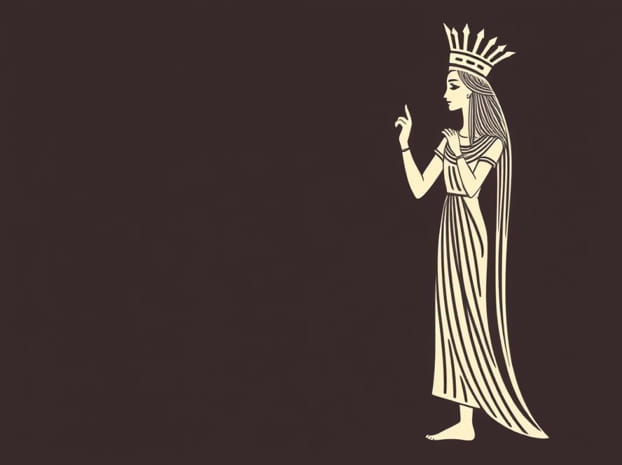
Goddess Of Love In Mesopotamian Religion
Among the many deities of ancient Mesopotamia, the goddess of love stands out as one of the most complex and influential figures in the region’s mythology. Revered for her power over passion, fertility, beauty, and even warfare, she embodied both tenderness and ferocity. Known by different names across Sumerian, Akkadian, Babylonian, and Assyrian traditions, she influenced not only religion but also art, literature, and daily life. Exploring her role in Mesopotamian religion helps us understand how ancient societies viewed love, desire, and the forces that shape human existence.
The Identity of the Goddess of Love
In Mesopotamian religion, the goddess of love is most famously recognized as Inanna in Sumerian mythology and Ishtar in Akkadian, Babylonian, and Assyrian traditions. While their attributes often overlap, each name reflects slightly different aspects shaped by cultural context. Inanna is one of the earliest deities recorded in written history, while Ishtar became more widely known as Mesopotamian civilizations expanded.
Domains of Power
The goddess of love in Mesopotamia was not limited to affection and beauty. Her influence extended across multiple domains, making her one of the most versatile figures in the pantheon
- Love and DesireShe was the embodiment of passion, intimacy, and sexual attraction, influencing relationships and fertility.
- Fertility and GrowthShe symbolized the cycles of nature, agricultural abundance, and human reproduction.
- Warfare and VictoryDespite her connection to tenderness, she was also a fierce goddess of war, embodying the chaos and destruction of battle.
- Political PowerMany kings associated themselves with her to legitimize their rule, often through symbolic sacred marriage rituals.
This duality being both the goddess of love and the goddess of war set her apart from deities in many other traditions, highlighting the Mesopotamian view of love and conflict as intertwined forces.
Mythological Stories
The Descent of Inanna
One of the most famous myths involves Inanna’s descent into the underworld. Seeking to expand her influence, she entered the realm of her sister Ereshkigal. Stripped of her power at each gate, Inanna was eventually killed and hung on a hook. Only through intervention was she revived, symbolizing themes of death, rebirth, and renewal. This myth tied her role to cycles of fertility and the natural world.
The Epic of Gilgamesh
Ishtar also appears in theEpic of Gilgamesh, where she proposes marriage to the hero. Gilgamesh rejects her, listing the misfortunes of her past lovers. Enraged, Ishtar sends the Bull of Heaven to punish him, which ultimately fails. This episode illustrates her passionate but vengeful nature, emphasizing both the rewards and dangers of aligning with her.
Symbols and Representations
The goddess of love was associated with powerful symbols that reinforced her identity
- The StarOften represented by an eight-pointed star, symbolizing her cosmic power and connection to Venus, the morning and evening star.
- LionsShe was frequently depicted with lions, representing her strength and dominance in both love and war.
- WeaponsArtistic depictions sometimes included bows, arrows, or other weapons, linking her beauty with martial prowess.
These symbols reminded worshippers that she embodied both nurturing and destructive qualities.
Worship and Temples
The goddess of love held a central role in Mesopotamian religion. Temples dedicated to Inanna and Ishtar were prominent across cities such as Uruk and Babylon. Worship practices often included offerings, hymns, and elaborate festivals celebrating her power. One of the most notable rituals was the sacred marriage, a symbolic union between the goddess and a king, enacted through priests or priestesses. This ceremony reinforced fertility, political authority, and cosmic harmony.
The Role of Priests and Priestesses
Priestesses in particular held important roles in her cult. They served as intermediaries between the goddess and the people, performing rituals and preserving hymns in her honor. In some cases, ritual practices tied to sexuality and fertility were part of her worship, though historians debate the exact nature of these rites. What is clear is that her temples were not just places of prayer but also centers of political and cultural influence.
Influence Beyond Mesopotamia
The goddess of love did not remain confined to Mesopotamia. As cultural exchange spread, her identity influenced other ancient religions. In Canaanite culture, parallels can be seen with Astarte. In Greece, aspects of her myth were echoed in the stories of Aphrodite. This transmission shows how central her figure was to the broader ancient world and how ideas of love and power traveled across civilizations.
The Dual Nature of Love and War
One of the most fascinating aspects of the Mesopotamian goddess of love is her duality. While many deities were assigned either benevolent or destructive qualities, she embodied both. This dual nature reflects Mesopotamian understanding of human life, where passion and conflict were inseparable. Love could inspire creation, fertility, and joy, but it could also lead to jealousy, vengeance, and destruction.
Literary and Artistic Legacy
Thousands of years later, the goddess of love in Mesopotamian religion continues to inspire literature, art, and scholarship. Ancient hymns dedicated to Inanna are among the oldest recorded religious texts in the world. Statues, carvings, and cylinder seals depicting Ishtar have been uncovered by archaeologists, offering a glimpse into how deeply she was revered. Modern interpretations of her myths often emphasize her independence, power, and complexity as a female deity who defied simple categorization.
Lessons from the Goddess of Love
Studying the goddess of love in Mesopotamian religion provides valuable insights into ancient beliefs about human emotion, power, and the divine. Her myths remind us that love is not a simple force but one tied to struggle, sacrifice, and transformation. They also highlight how societies used deities to explain natural cycles and political structures, embedding meaning into both personal relationships and collective life.
The goddess of love in Mesopotamian religion, known as Inanna or Ishtar, was far more than a figure of romance. She embodied fertility, desire, warfare, and political legitimacy, shaping the mythology and daily life of one of the world’s earliest civilizations. Her dual nature as both a loving and vengeful deity reflects the complexity of human experience itself. From temple rituals to epic tales, she stood as a reminder of the powerful forces that drive creation and destruction. Even today, her legacy continues to fascinate historians, archaeologists, and those who seek to understand the roots of love and power in human history.